A cat tree is more than just a piece of furniture; it's a central hub in your cat's life. It serves for sharpening claws, climbing, observing, and sleeping. However, choosing the right model can be a challenge. An unstable or undersized cat tree is often ignored, while a design that clashes with your decor can disrupt your living space. This guide is designed to help you make an informed decision by presenting objective criteria and a selection of functional models for various needs and living situations.
What to Look for When Buying a Cat Tree
To find the perfect model, three key aspects should be considered: stability, functionality, and material quality.
1. Stability and Construction
A stable cat tree is essential for your cat's safety. This is especially crucial when choosing a cat tree for large cats or in households with multiple pets. Look for the following features:
- Base Plate: A wide, heavy base plate forms the foundation and prevents the tree from tipping over when your cat leaps onto it with momentum.
- Post Diameter: Posts with a larger diameter (e.g., over 9 cm) offer greater resistance and durability.
- Wall Mount: Many larger models come with an anti-tip kit for securing the tree to the wall. This provides additional safety.
- Tension Rod: A floor-to-ceiling cat tree, often designed as a tension-rod cat tree, is braced between the floor and ceiling, utilising the full height of the room for maximum stability.
2. Functionality and Space Utilisation
Modern cat furniture is often multifunctional and tailored to the needs of both the pet and the owner.
- Retreats: A cat tree with a condo provides a sheltered place to sleep and rest, which many cats prefer. Hammocks and padded perches are also popular resting spots.
- Space-Saving Solutions: In smaller apartments, a multifunctional model like a cat tree with a litter box enclosure can be a smart solution. Here, the litter box is discreetly integrated into the lower part of the furniture. Floor-to-ceiling models make optimal use of vertical space without taking up much floor area.
- Activity Level: The number of levels, toys, and scratching surfaces should match your cat's age and temperament. Active and young cats require more climbing opportunities than older, calmer pets.
3. Materials and Maintenance
The longevity of a cat tree depends heavily on the materials used.
- Scratching Surfaces: The posts should be tightly wrapped with durable sisal. Natural sisal is resilient and satisfies a cat's natural scratching instinct.
- Upholstery: The lounging surfaces are usually covered in plush fabric. Check if cushions or covers are removable and washable to make cleaning easier.
- Platforms: The platforms are typically made of engineered wood (e.g., particleboard). The thickness and density of the material contribute to the overall stability.
Curated Cat Tree Choices
Here, we present three models that stand out for their different concepts and functional features.
1. Feandrea Large Cat Tree, 174 cm
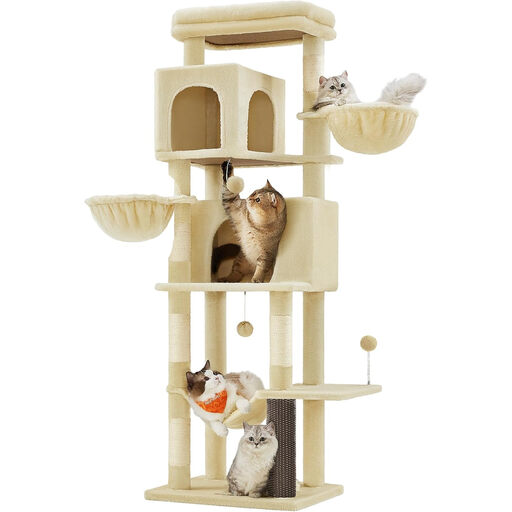
Why This Model Stands Out: This large cat tree is a classic all-in-one model that offers a variety of play, scratch, and rest options on multiple levels, making it particularly suitable for multi-cat households.
Pros:
- Extensive Features: With a height of 174 cm, two condos, two perches, a hammock, and a top viewing platform, the tree provides ample space for several cats at once.
- Thoughtful Scratching Options: Sisal-wrapped posts are located on every level, inviting cats to stretch and sharpen their claws. A self-grooming arch at the base aids in coat care.
- High Comfort: The entire tree is covered in soft plush fabric, making it a warm and cosy retreat.
- Safety Features: The sturdy particleboard construction is supplemented by an included anti-tip kit, which can be attached to the wall for extra stability.
Who It's For: Ideal for owners of one or more active cats who are looking for a comprehensive play and rest area with many different elements.
2. Feandrea Cat Tree with Integrated Litter Box Enclosure
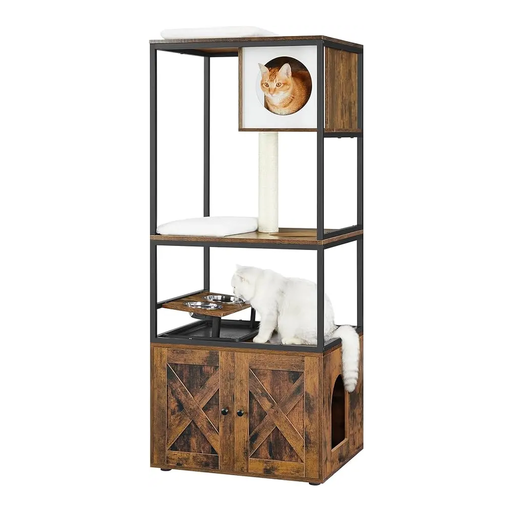
Why This Model Stands Out: This 4-in-1 piece of cat furniture is a space-saving solution that combines a cat tree, litter box cabinet, feeding station, and resting spot into a single, compact unit.
Pros:
- Multifunctional Design: Combines essential functions in a small footprint. The bottom cabinet conceals the litter box, which helps reduce odours and litter tracking.
- Ergonomic Feeding Station: The elevated position of the food bowls supports a more natural eating posture and can aid digestion.
- Stylish Integration: The rustic wood-look design blends harmoniously into home decor as a piece of furniture, rather than looking like a typical pet product.
- Easy to Maintain: The soft lounging mat is removable and washable, which simplifies cleaning.
Who It's For: Perfect for cat owners in smaller apartments who appreciate an aesthetic, tidy, and space-saving all-in-one solution for their cat's needs.
3. PAWZ Road Cactus Floor-to-Ceiling Cat Tree (229–275 cm)
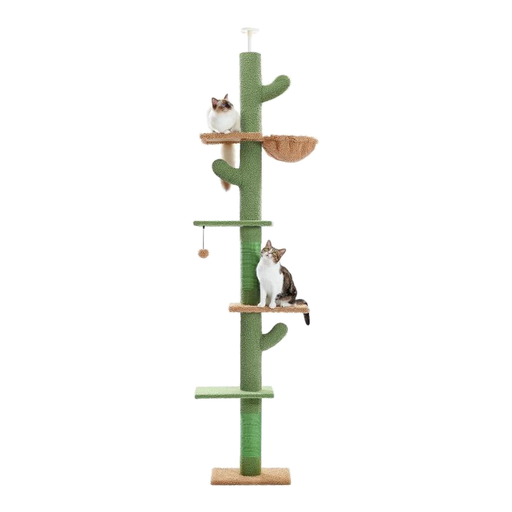
Why This Model Stands Out: This tension-rod cat tree utilises the full height of the room and offers high stability through its tension pole system without any drilling. The playful cactus design adds a decorative accent.
Pros:
- Maximum Space Utilisation: The adjustable height from 229 to 275 cm allows for a secure fit between the floor and ceiling, which is especially advantageous in small spaces.
- Sturdy Construction: The main post with a 9 cm diameter and the secure tension system ensure high stability, even during wild climbing sessions.
- Diverse Activities: Despite its slim design, the tree offers multiple platforms, a cosy hammock, and dangling balls for entertainment.
- High-Quality Scratching Surface: The main post is fully wrapped in 100% natural sisal, providing a generous area for claw sharpening.
Who It's For: An excellent choice for apartments with limited floor space where vertical height can be utilised. The design appeals to owners looking for cat furniture that is both functional and decorative.
Looking for More Options?
If the cat furniture presented doesn't exactly meet your needs or you're looking for other practical furnishing solutions for your home, you'll find a selection of functional products in our [Bed Rail] category.
Frequently Asked Questions (FAQ)
How do I get my cat used to a new cat tree?
Place the cat tree in a spot where your cat likes to spend time, such as near a window or in the living room. Make the tree more appealing by attaching toys, placing treats on the platforms, or rubbing some catnip on the scratching surfaces. Praise your cat whenever it uses the tree.
How tall should a cat tree be?
The ideal height depends on your cat's age, activity level, and preferences, as well as the available space. Many cats prefer high vantage points to survey their surroundings. A model that is at least 150 cm tall or a floor-to-ceiling tree is often a great choice for active climbers. For older or less mobile cats, a shorter model with easily accessible levels may be more suitable.
How do you clean a cat tree properly?
Hair and dust are best removed regularly with a vacuum cleaner. Stains on plush surfaces can often be treated with a damp cloth and a mild soap solution. Check if any cushions or covers are removable and machine-washable. The sisal posts can be brushed off if needed. Regularly check all screw connections to ensure they are tight.


