
Lieferung heute & morgen

Qualitätsgarantie

Willkommens-Angebote freischalten: KOSTENLOSE Lieferung | Bis zu 80 % RABATT | Kostenlose 30-Tage-JoyPlus-Testphase
App herunterladen
A cat tree is far more than just a piece of furniture for cats. It's an essential part of a cat-friendly home that satisfies natural instincts like scratching, climbing, observing, and resting. However, choosing the right model can be a challenge given the variety of sizes, materials, and designs. Scratched furniture and under-stimulated cats are often the result of an unsuitable choice.
This guide is designed to help you make an informed decision. We'll introduce objective criteria for your selection and present a range of models that cater to different needs and living situations.
To find the right cat tree for your pet and your home, three key aspects should be considered: stability, material, and functionality.
Stability is the most important criterion. A wobbly cat tree will be avoided by cats and poses a safety risk. Look for a wide, heavy base plate that serves as a solid foundation.
cat tree for large cats requires extra-thick posts (diameter over 9 cm) and a sturdy construction to withstand their weight and the force of their jumps.small cat tree or a single scratching post can be a space-saving solution.floor-to-ceiling cat tree makes optimal use of vertical space and offers maximum climbing opportunities. Models with a tension rod provide extra stability, often without any drilling.The material determines the cat tree's durability and how well your cat accepts it.
cat tree with a condo offers a secure retreat. Additional elements like hammocks, toys, or platforms at different heights encourage your cat's playfulness and curiosity.Modern cat scratching furniture no longer needs to be hidden away. It comes in a variety of designs that blend harmoniously into your living space. For example, a cactus cat tree can be a fun and colourful accent, while models in subtle grey or beige tones are more discreet. The location is also crucial: place the cat tree where your cat has a good view of the action, such as near a window or in the living room.
Based on the criteria mentioned, we have compiled a selection of models that stand out for their design and functionality.
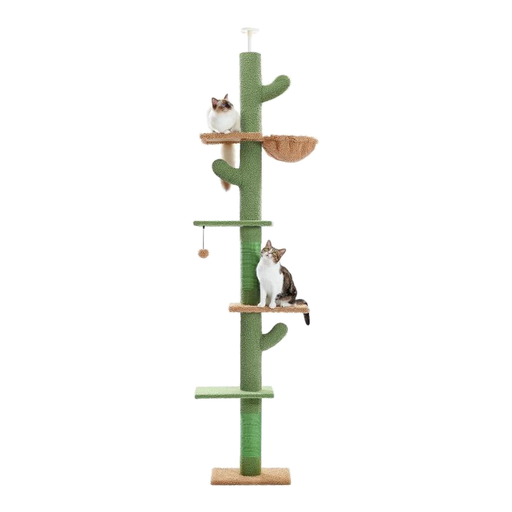
Why It Stands Out: This model combines a striking design with maximum functionality on a small footprint. As a floor-to-ceiling cat tree, it utilizes the full room height from 229 to 275 cm and is securely fixed between the floor and ceiling using a tension system—no drilling required. The main post, with a 9 cm diameter, is fully wrapped in natural sisal, offering an extensive surface for scratching and climbing.
Advantages:
cactus cat tree designWho is it for? Ideal for cat owners in apartments who want to make the most of their vertical space and are looking for a functional piece of furniture with decorative appeal. Suitable for cats of all ages.
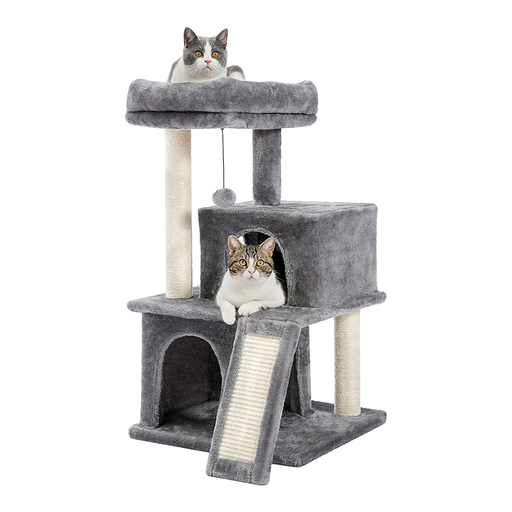
Why It Stands Out: With a height of 90 cm and a base of 49 x 44 cm, this cat tree is a well-designed solution for smaller spaces. It still offers a variety of activities: two fully sisal-wrapped posts, an additional scratching ramp, a cosy condo, and two perches at different levels. The top perch is equipped with a removable and washable cushion, making cleaning easy.
Advantages:
Cat tree with a condo and a top cradle bedWho is it for? A great choice for households with medium-sized cats looking for a functional all-rounder for a smaller apartment or as a secondary cat tree.
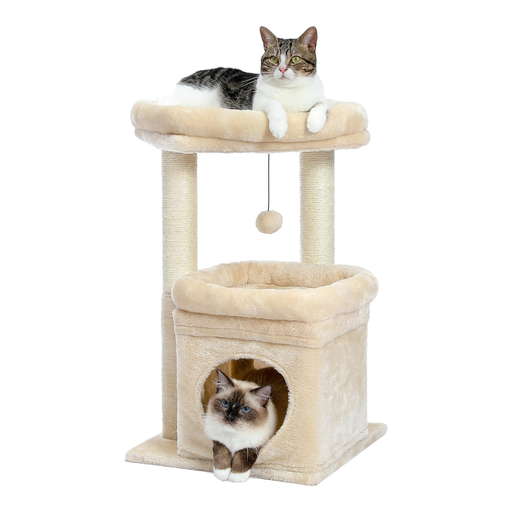
Why It Stands Out: This small cat tree, at a height of 42 cm, proves that even compact models can offer great comfort. Its standout feature is the extra-large top perch measuring 40 x 30 cm, which is equipped with a soft cushion and a raised edge—perfect as a lookout spot. Two posts wrapped in natural sisal provide ample scratching opportunities, while the reinforced base plate ensures necessary stability.
Advantages:
Who is it for? Perfect for cat owners looking for a stable yet space-saving spot for scratching and sleeping. Especially suitable for cats that enjoy lounging up high and observing their surroundings.
Cats have individual preferences, and sometimes a different kind of retreat is needed. If you want to discover more well-designed cat scratching furniture or alternative resting spots, you can find a wider selection in our Comfortable Beds category.
1. How do I get my cat used to the new cat tree? Place the cat tree in an attractive location, such as near a window. Make it interesting by attaching toys or placing treats on the different levels. You can also sprinkle catnip on the scratching surfaces. Praise your cat generously when they use the tree.
2. What is the most durable material for a scratching post?Sisal is considered the most robust and popular material among cats for scratching surfaces. Its fibres are resilient and allow for effective claw maintenance. Make sure the sisal rope is wrapped tightly and securely around the post.
3. How tall should a cat tree be? The ideal height depends on your cat and the available space. Active cats that love to climb often prefer tall, floor-to-ceiling models. For older or less active cats, a medium-height or small cat tree with easily accessible perches may be sufficient. As a general rule, a cat tree should be at least tall enough for your cat to get a full stretch.