
Lieferung heute & morgen

Qualitätsgarantie

Willkommens-Angebote freischalten: KOSTENLOSE Lieferung | Bis zu 80 % RABATT | Kostenlose 30-Tage-JoyPlus-Testphase
App herunterladen
As a cat owner, you know that your cat's natural instinct to scratch is non-negotiable. Without a suitable alternative, your sofas, chairs, and wallpaper will quickly fall victim. A well-chosen cat tree is more than just a piece of furniture—it's a playground, a sanctuary, and an essential tool for claw maintenance.
But the selection is vast, and making a choice can be overwhelming. This article serves as a practical guide. We'll explain the objective criteria you should look for and present a selection of models for different needs to make your purchasing decision easier.
Choosing the right model depends on the size of your home, the number of cats you have, and their individual preferences. You should consider three key aspects in your decision.
A stable cat tree is essential for your cat's safety. Look for a wide and heavy base plate that serves as a solid foundation. Especially for a large cat tree or an XXL cat tree, an additional wall mount using an included anti-tip kit is a sensible precaution to prevent it from toppling over during wild climbing and play sessions. The materials used, such as particle board, and the thickness of the posts also contribute to the overall stability.
The ideal size of the cat tree depends on your available space and your pets' needs. For households with just one cat in a smaller apartment, a compact model may be sufficient. A cat tree for multiple cats, on the other hand, should offer various perches, condos, and levels at different heights so that each cat can find its own space. A cat tree with a condo and hammock meets the need of many cats to retreat or doze in a sheltered spot. A tall cat climbing tree encourages their natural urge to move and allows them to observe their surroundings from above.
The scratching posts are the centerpiece of any cat tree. They should be wrapped in a durable material that can withstand their claws. Natural sisal has proven to be the standard material here. The thickness of the sisal posts and the density of the wrapping are indicators of durability. Make sure the posts are tall enough for your cat to fully stretch out while scratching.
Based on the criteria above, we have compiled a selection of models that meet different requirements.
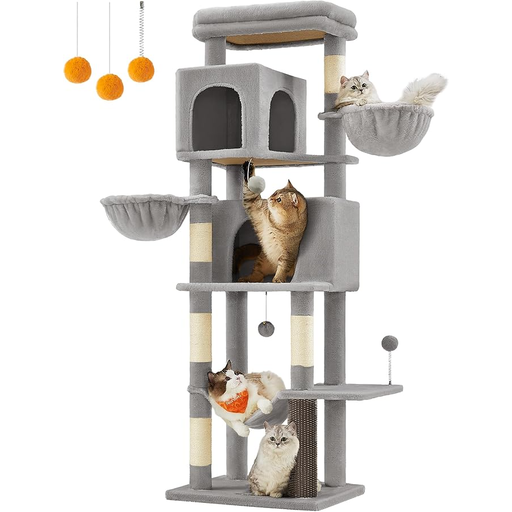
Why it stands out: With a height of 175 cm and a versatile set of features, this model is a comprehensive solution for active cats. It combines various elements like condos, lounging baskets, and a hammock to satisfy both play and rest needs.
Pros:
Who it's for: This model is a great choice for households with multiple cats that need a varied landscape for climbing, playing, and resting.
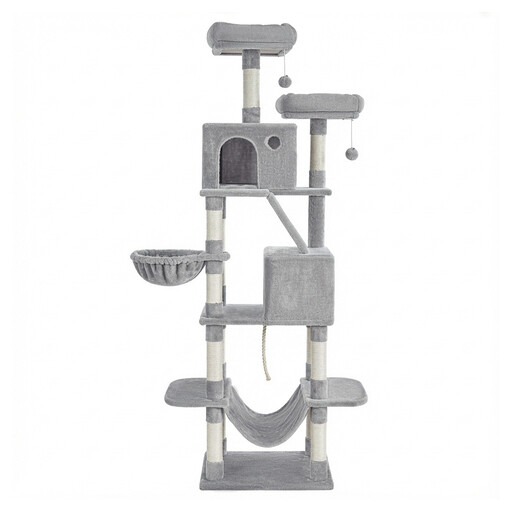
Why it stands out: At an impressive height of 206 cm, this XXL cat tree is designed for cats that love to climb high. The high number of scratching posts and the additional scratching ramp offer maximum opportunities for claw care.
Pros:
Who it's for: Ideal for owners of very active, climbing-enthusiast cats, larger cat breeds, or multi-pet households that require an extra-large and stable structure.
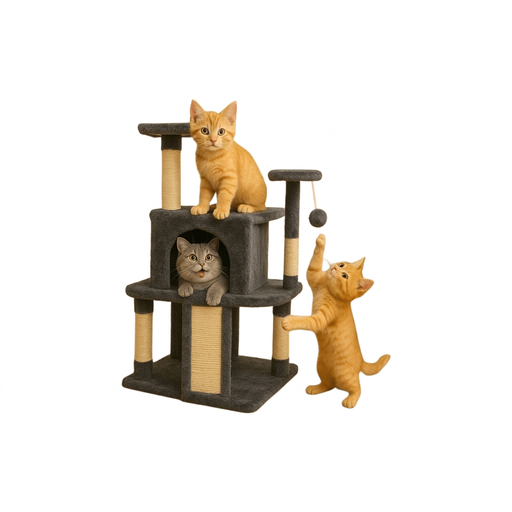
Why it stands out: This model is distinguished by its compact and space-saving design. With a height of 102 cm, it still offers multiple levels for climbing and resting on a small footprint.
Pros:
Who it's for: A good option for owners of smaller cats (under 5 kg, according to the manufacturer) in homes with limited space, or for those looking for a compact addition to their existing setup.
Not every cat is an agile climber. Older animals or cats with limited mobility need structures that are easily accessible. For these cases, there are models with lower levels, wider steps, and additional ramps.
If you're looking for a solution to meet the special needs of your senior cat, explore our selection of senior cat trees to find the right model.
Place the cat tree in a central location where the family often gathers. Make it more appealing by using catnip or placing treats on the different levels. Encourage your cat to play on the new furniture with a cat wand. Patience is key here.
The height depends on your cat's activity level and the available space. A tree should be at least tall enough for the cat to fully stretch out while scratching the post. Active and young cats often prefer tall models that give them a good overview of the room.
Plush surfaces should be regularly vacuumed to remove hair and dust. Stains can be spot-cleaned with a damp cloth and a mild detergent. Always follow the manufacturer's specific care instructions to avoid damaging the materials.