
Lieferung heute & morgen

Qualitätsgarantie

Willkommens-Angebote freischalten: KOSTENLOSE Lieferung | Bis zu 80 % RABATT | Kostenlose 30-Tage-JoyPlus-Testphase
App herunterladen
For indoor cats, a cat tree is more than just a piece of furniture—it's an essential part of their living space. It serves their scratching needs, acts as a climbing paradise, a lookout post, and a safe retreat. However, the selection is vast, and the needs of cats and their owners vary. Scratched furniture and an under-stimulated cat are often the consequences of the wrong choice.
This guide is designed to help you understand the key features of a cat tree and make an informed decision. We will present objective criteria to make it easier for you to select the right model for your living situation and your cat.
Before you decide on a model, several fundamental aspects should be considered. The size of your cat, the number of pets, and the available space in your home are crucial factors.
Stability is the most important criterion. A wobbly cat tree will be avoided by cats and poses a safety risk. Look for a heavy and wide base plate that serves as a solid foundation. This is especially essential for a large cat tree or a cat tree for large cats like Maine Coons or Norwegian Forest Cats. The posts should have a sufficient diameter (often 9 cm or more is recommended) to withstand even wild climbing and jumping manoeuvres. An XXL cat tree is often equipped with thicker posts and a reinforced structure to handle the greater weight and strength of large breeds.
A good cat tree offers more than just a place to scratch. Various elements promote your cat's well-being and activity:
Not everyone has room for a giant cat tree. Fortunately, there's a suitable solution for every living situation:
Based on the criteria mentioned, we have compiled a selection of different models that cover various needs.
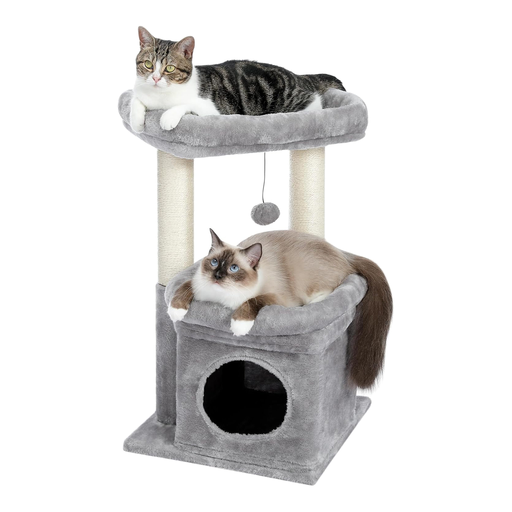
Why this model stands out: This compact cat tree combines a small footprint with thoughtful details. A standout feature is the extra-large, padded perch at the top, which offers a comfortable lookout spot even for larger cats.
Pros:
Who is it for? This model is a great choice for owners of a single cat in smaller apartments or as a supplement to an existing, larger cat tree.
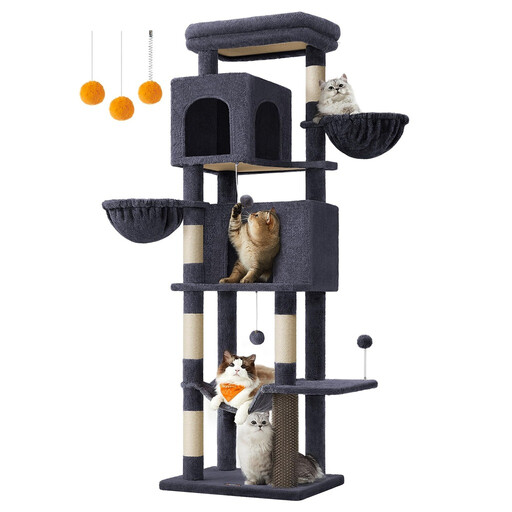
Why this model stands out: With its impressive height of 175 cm and a multitude of levels and features, this large cat tree is a true activity hub. It was specifically designed to meet the needs of multiple cats.
Pros:
Who is it for? Ideal for households with multiple cats or for very active single cats who need a varied climbing tree with many options for rest and play.
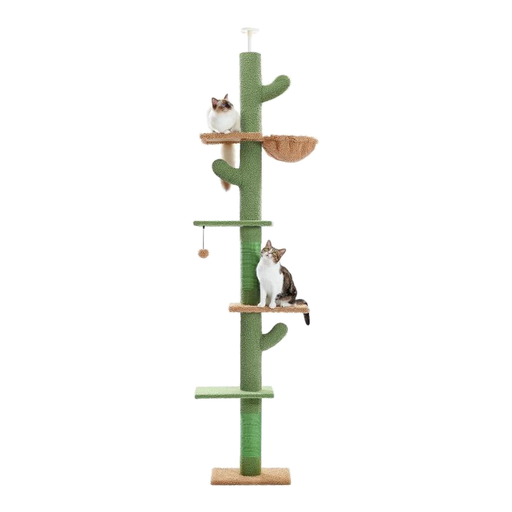
Why this model stands out: This model is a floor-to-ceiling cat tree that combines functionality with a unique design. The cactus shape is a visual highlight, while the tension system provides maximum stability on a minimal footprint without any drilling.
Pros:
Who is it for? Perfect for cat owners looking for a very stable, vertical climbing solution for their home who also value a standout design.
The needs of every cat and the conditions of every home are unique. If the models presented here don't exactly match what you're looking for, or if you need other specific features, it's worth exploring a wider range of products.
If you're looking for more models or have specific requirements, you can find a broader selection in our Cat Tree with Perch category.
Place the new cat tree in a spot where your cat likes to spend time, such as near a window or in the living room. Make the tree more appealing with toys or catnip. Praise your cat generously when they use it, and avoid forcing them onto it.
For a cat tree for large cats, three things are crucial: a heavy, large base plate for a secure stand, thick posts with a diameter of at least 9 cm, and sufficiently large perches and condos where the cat can comfortably stretch out. An XXL cat tree or a sturdy floor-to-ceiling model are often the right choice here.