
Lieferung heute & morgen

Qualitätsgarantie

Willkommens-Angebote freischalten: KOSTENLOSE Lieferung | Bis zu 80 % RABATT | Kostenlose 30-Tage-JoyPlus-Testphase
App herunterladen
As a Joybuy Product Recommendation Officer, I see cat owners every day trying to make the right choice for their feline friends. A cat tree is often one of the most important purchases. However, the market is flooded with models that promise more than they deliver. Many buyers get frustrated with products that become unusable or even dangerous after just a few months. This guide will help you avoid common purchasing pitfalls and make a durable, species-appropriate choice.
The most common problems that lead to a bad purchase are often the same:
A well-thought-out purchase not only saves you money but also ensures the safety and well-being of your pet.
To avoid a bad purchase, don't be swayed by marketing promises, but by objective features. Focus on three core parameters that determine the quality and longevity of a cat tree.
A stable cat tree is absolutely essential. Stability is primarily determined by two factors: the base plate and the diameter of the posts.
The quality of the materials used determines whether you'll need to buy a new cat tree after six months or after many years.
The best cat tree is one that fits both your cat and your living space.
Based on these objective criteria, we have put together some models for different requirements and living situations.
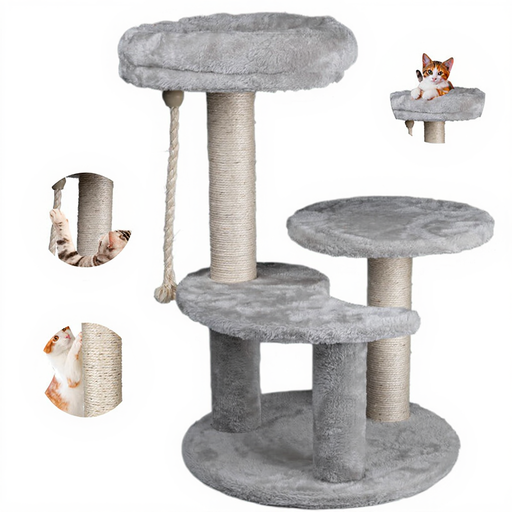
Why This Fits Their Persona: Ideal for smaller apartments or as a secondary scratching post. It offers scratching, playing, and lounging options in a compact footprint without dominating the room. Fits well in corners or next to the sofa.
Despite its compact size, the wide base plate and the arrangement of the three posts provide solid stability for average-sized cats. The sisal posts offer a functional scratching surface.
Space-Saving Design: Very compact with a height of 62 cm and a footprint of 42 x 56 cm. Includes a play rope: Provides an additional source of entertainment.
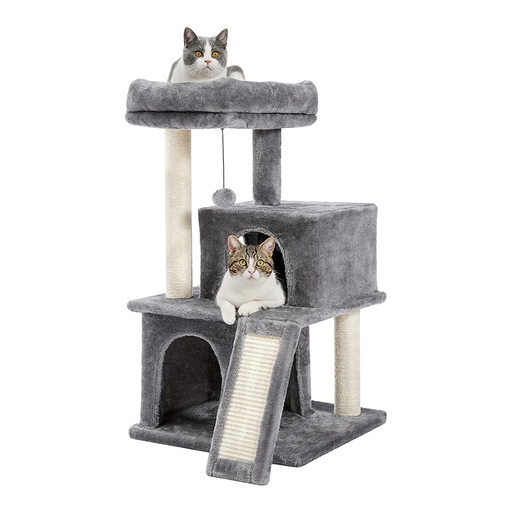
Why This Fits Their Persona: A great all-rounder for most households. The 90 cm height allows cats to fully stretch while scratching, and the various levels, including a cave and a lounge bed, offer variety.
The combination of two fully sisal-wrapped posts and an additional scratching board distributes wear and tear. The top mat is removable and washable, which increases its lifespan.
Multi-Functional Levels: Offers a top perch, a curved lounge bed, and a cave. Easy to Clean: The removable and washable mat on the top platform makes cleaning easier.
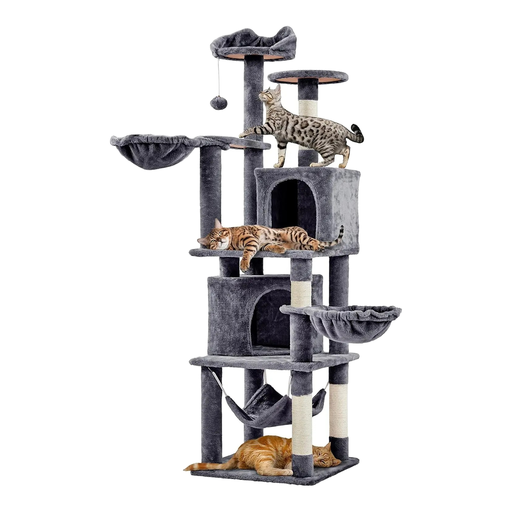
Why This Fits Their Persona: Designed for households with multiple cats or large breeds like Maine Coons. The 175 cm height and the multitude of perches, caves, and a hammock provide ample space and prevent competition for the best spots.
The large, square base plate and the solid construction from FSC-certified particleboard ensure the necessary stability for this height. Multiple continuous sisal posts offer sufficient scratching surface even for large cats.
High Capacity: With 2 lounge beds, 2 caves, and a hammock, it's ideal for multiple cats. Extensive Scratching Options: Numerous posts wrapped in natural sisal redirect scratching instincts away from furniture.
A cat tree provides rest, observation posts, and opportunities for claw maintenance. But for daily enrichment and strengthening the bond between human and animal, additional cat toys are essential. Interactive games stimulate their hunting instinct and prevent boredom.
Products like the Zeze “Really?” Rope Ball Toy are a great addition. It combines a sturdy rope knot with a ball and is excellent for games of fetch, tug, and retrieve. The cotton rope can also help with dental cleaning during chewing.
We have compiled a complete, real-time list of products that fully satisfy these strict selection criteria and UK safety regulations.
Place the cat tree in a spot where your cat likes to spend time, such as near a window or in the living room. Make the tree interesting by placing treats or their favourite toy on the different levels. You can also rub some catnip on the scratching surfaces to attract your cat's attention. Praise them lavishly when they use the tree.
The lifespan of a cat tree depends heavily on the material quality and the intensity of use. A high-quality model with thick sisal posts and a robust construction can last for several years. With cheaper models, the sisal posts often need to be replaced after just 6 to 12 months. An indicator of longevity is the availability of replaceable parts like posts or cushions.
Cats love to survey their surroundings. A spot by the window is therefore often ideal. Alternatively, a corner in the living room from which the cat can observe family activities without being in the way is also suitable. It's important that the cat tree stands on a level, solid surface and does not wobble. Avoid remote, unused rooms, as the tree will likely be ignored there.