
Lieferung heute & morgen

Qualitätsgarantie

Willkommens-Angebote freischalten: KOSTENLOSE Lieferung | Bis zu 80 % RABATT | Kostenlose 30-Tage-JoyPlus-Testphase
App herunterladen
A cat tree is far more than just a piece of furniture for cats. It's an essential part of a fulfilling indoor cat's life—a place to climb, sharpen claws, observe, and sleep. However, choosing the right model can be a challenge given the variety of sizes, materials, and features. An unsuitable tree will be ignored, while an unstable model can even pose a safety risk.
This guide is designed to help you make an informed decision. We'll explain what to look for when choosing a cat tree and present a selection of different models that cater to various needs—from a compact tree for small apartments to a large activity centre for multiple active cats.
To find the perfect climbing tree for your cat, three criteria are particularly important: stability, size, and the features it offers.
A stable cat tree is fundamental to your cat's safety. A secure base is essential, especially for a cat tree for multiple cats or for large, heavy breeds like Maine Coons or Norwegian Forest Cats. Look for a wide, heavy base plate that forms the foundation of the entire structure. Thick posts (with a diameter of at least 8 cm) also contribute to stability. For floor-to-ceiling or very large models (XXL cat tree), an additional wall mount using the included anti-tip kit is strongly recommended to prevent it from tipping over during vigorous play.
The size of the cat tree should suit both your cat and your living space. A large cat tree offers more climbing and lounging areas, which can reduce conflicts over prime spots, especially in a multi-cat household. Cats love elevated vantage points from which they can survey their territory. A model with at least one high platform caters to this natural instinct.
For smaller apartments or as a starter tree for a kitten, a small cat tree may be sufficient. It provides the necessary scratching opportunities and a place to retreat without taking up much space. It's important that even a small model is stable and offers at least one scratching surface made of durable sisal.
The durability of a cat tree largely depends on the materials used. The scratching posts should be fully wrapped in durable sisal rope so your cat can satisfy its claw-sharpening instincts without damaging your furniture. The lounging surfaces are usually covered with soft plush for added comfort.
A cat tree with a condo and hammock offers additional places to retreat and sleep. Condos provide a sense of security, while hammocks and loungers are particularly popular with many cats for relaxing. Consider your cat's preferences: does it enjoy observing from up high, prefer to hide, or love to curl up in a cosy nook?
Here are three models that are well-suited for different requirements and living situations.
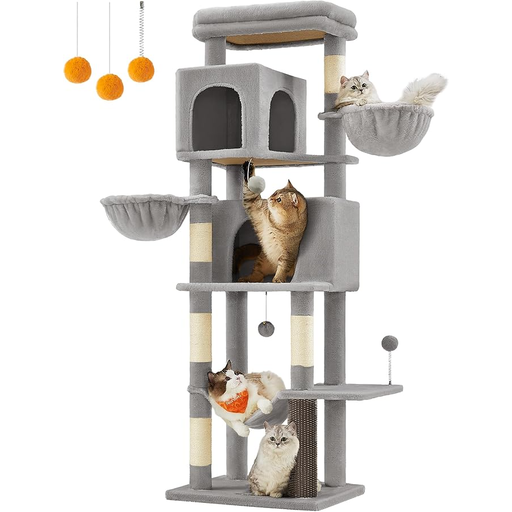
What makes this model stand out: This grey cat tree from Feandrea, with its 175 cm height and versatile features, is a well-designed solution for households with multiple cats. It combines various levels and functional elements on a stable base.
Key Specifications:
Who is this model for? This model is a great choice for owners of two or more average-sized cats. It offers enough separate lounging and retreat spots to minimise territorial disputes and provides a good balance between height and footprint.
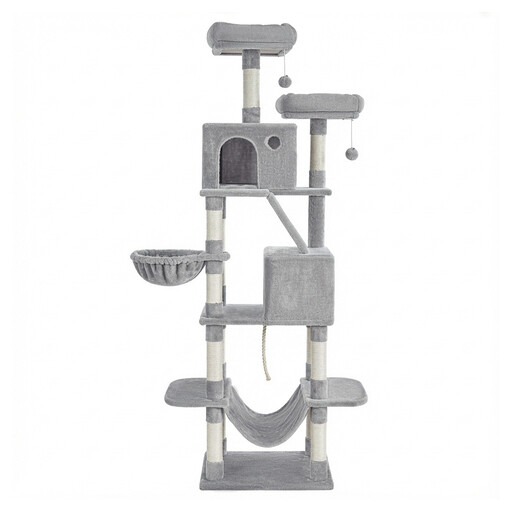
What makes this model stand out: With an impressive height of 206 cm, this XXL cat tree from JOYFURNOS is a true climbing paradise. The high number of scratching posts and the additional scratching ramp offer maximum opportunities for claw care.
Key Specifications:
Who is this model for? This activity tower is ideal for owners of very active, climbing-enthusiast cats, large breeds, or a larger multi-cat household. It requires sufficient ceiling height but rewards this with an exceptionally large and varied play area.
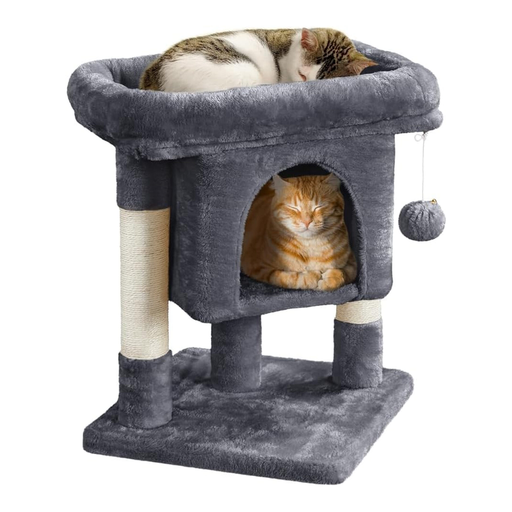
What makes this model stand out: This compact and small cat tree from Yaheetech offers the most essential features at a height of just under 60 cm: a condo for hiding, a top perch for observing, and two sisal posts for scratching.
Key Specifications:
Who is this model for? This model is a suitable solution for small apartments, as a secondary cat tree, or as a starter option for kittens. It meets a cat's basic needs without dominating the living space.
Haven't found the perfect model for your needs yet? A cat tree is a highly personal purchase. Discover our full range of models in various sizes and designs.
? Discover more cat trees and activity centres here
Place the new cat tree in an appealing spot, for example, near a window or where the family often gathers. Make the tree interesting by attaching toys or placing treats on the different levels. You can also rub some catnip on the sisal posts. Avoid forcing your cat onto the tree. Patience is key.
Cats are social animals and enjoy observing their surroundings. Therefore, the ideal location is not in a remote corner but in a room where family life happens, like the living room. A spot with a view out the window is often particularly popular. Place the tree so that it stands securely and doesn't wobble.