
Lieferung heute & morgen

Qualitätsgarantie

Willkommens-Angebote freischalten: KOSTENLOSE Lieferung | Bis zu 80 % RABATT | Kostenlose 30-Tage-JoyPlus-Testphase
App herunterladen
A cat tree is more than just a piece of furniture for cats; it's a cornerstone of their environment. It serves as a climbing frame, an observation deck, a private sanctuary, and a tool for claw maintenance. However, the selection is vast, and not every model delivers on its promises. Many cat owners invest in a climbing tree that is ignored after a short time or, worse, poses a safety risk. This guide will help you avoid common purchasing pitfalls and make an informed decision.
Purchasing a cat tree can quickly become a poor investment if you fall for typical marketing claims without checking the fundamental quality features.
To make a good choice, focus on three objective criteria that determine the longevity and safety of your cat tree.
Stability is the most critical factor. Look for the following features:
A good climbing tree for your cat is an investment that pays off in durability.
A cat tree should cater to your cat's natural instincts.
Here are some models tailored to the specific needs of cats and their owners.
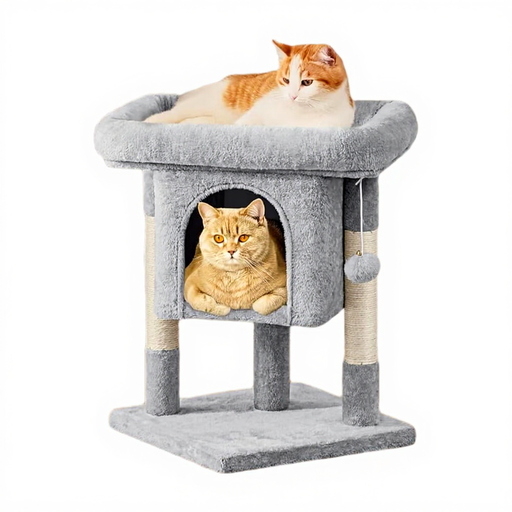
Why This Fits Their Persona: This compact model is ideal for kittens, smaller cat breeds, or households with limited space. It provides all the basic functions without overwhelming the room.
Despite its modest height of 59 cm, its 40.5 x 40.5 cm square base provides a solid foundation, avoiding the instability typical of smaller models.
Combines scratching posts, a sheltered cave, and a lounger in a minimal footprint. Efficient use of space, perfect for room corners.
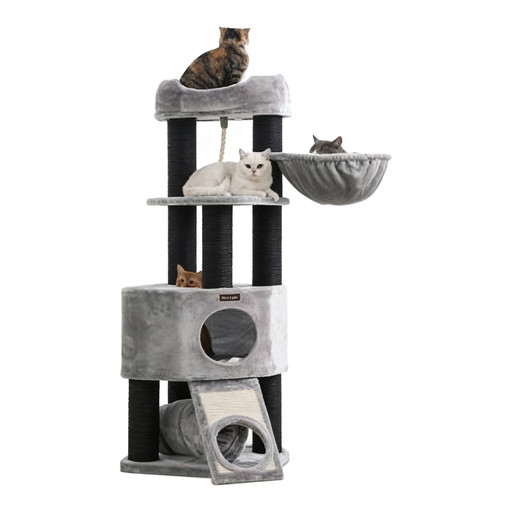
Why This Fits Their Persona: This model was specifically designed for the demands of large or very active cats. It focuses on maximum stability and safety.
It directly addresses the wobble trap with extra-thick sisal posts (11.3 cm diameter), a double-reinforced base plate, and a mandatory anti-tip kit for wall mounting.
The robust construction creates a secure climbing experience. The combination of a cave, a deep hammock, and a high observation platform meets all needs.
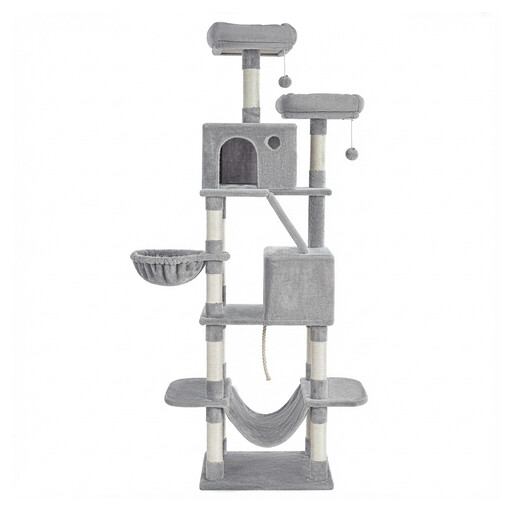
Why This Fits Their Persona: This XXL cat tree is the solution for households with multiple cats or for pets with extremely high climbing and playing needs. It offers maximum vertical space and a variety of zones.
Avoids the sizing miscalculation by providing enough separate retreats for multiple cats with two caves, two observation platforms, a hammock, and a basket. The high static load capacity of up to 75 kg (according to the manufacturer) ensures stability.
An enormous height of 206 cm and 13 sisal posts plus a scratching ramp maximise species-appropriate enrichment. Ideal for reducing conflicts in multi-cat households.
We've curated a complete, up-to-date list of products that fully meet these strict selection criteria and safety regulations.
1. How do I get my cat used to a new cat tree? Place the cat tree in a spot where your cat likes to spend time, such as near a window or in the living room. Make the tree more appealing by placing treats or their favourite toy on the different levels. Rubbing a little catnip on the sisal posts can also help spark their curiosity. Give your cat time to explore the new structure at their own pace.
2. How do I clean a cat tree properly? Regular cleaning is important for hygiene. Use a vacuum cleaner with a brush attachment to remove cat hair and dust from the plush surfaces and inside the caves. Stains can usually be treated with a damp cloth and a mild soap solution. For models with removable cushions or covers, these can be cleaned according to the manufacturer's washing instructions.
3. When should a cat tree be replaced? The lifespan of a cat tree depends heavily on its quality and the intensity of use. A replacement is necessary if the structure becomes unstable and can no longer be secured by tightening the screws. Heavily worn or shredded sisal posts are also a reason for replacement, as they no longer serve their purpose. On many high-quality models, individual posts can be purchased as spare parts and replaced.