
Lieferung heute & morgen

Qualitätsgarantie

Willkommens-Angebote freischalten: KOSTENLOSE Lieferung | Bis zu 80 % RABATT | Kostenlose 30-Tage-JoyPlus-Testphase
App herunterladen
As a Joybuy Product Recommendation Officer, I see cat owners every day searching for the ideal solution to satisfy their pets' natural scratching and climbing instincts while also protecting their own furniture. A well-chosen cat tree is more than just a toy; it's a central part of a cat's environment, offering security, comfort, and enrichment.
The selection is vast, and making a choice can be overwhelming. This guide is designed to help you understand the features of a suitable cat tree and make an informed decision that meets both your cat's needs and your home's layout.
Before you decide on a model, several fundamental criteria should be considered. These will help ensure the functionality and durability of your cat furniture.
A sturdy cat tree is essential, especially if you have a large or very active cat. Look for a wide and heavy base that prevents wobbling or tipping over when your cat leaps onto it with full force. Models with a significant own weight or an additional anti-tip kit for wall mounting offer maximum safety. A construction of robust materials like thick particleboard or solid wood also contributes to stability. This is a crucial factor, particularly for a cat tree for large cats or an XXL cat tree.
The ideal size depends on your cat and the available space. A tall cat climbing tree with multiple levels appeals to their instinct to observe their surroundings from an elevated vantage point. A large cat tree often offers a combination of different elements:
Measure the designated spot before purchasing to ensure the new cat furniture fits well in the room.
The posts of a cat tree are typically wrapped with sisal rope. This natural fibre material is extremely durable and provides the ideal texture for claw maintenance. Pay attention to the thickness of the rope and ensure it is cleanly and tightly glued to the post. This ensures the scratching surfaces will last a long time, even with intensive use.
Based on the criteria mentioned, we have compiled a selection of models that cover a range of different needs.
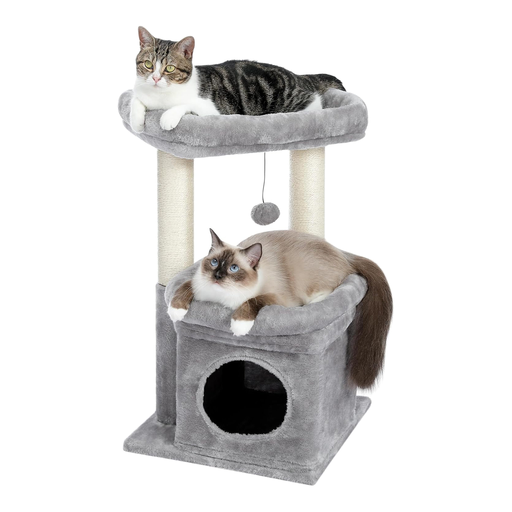
Why We Love This Model This compact model is a thoughtful solution for smaller living spaces or as a supplement to an existing cat tree. Despite its small footprint, it offers a comfortable and secure lookout spot with an extra-large, padded perch measuring 40x30 cm and raised edges. Two sisal-wrapped posts provide ample surface for daily claw care.
Pros
Who is it for? This model is ideal for households with limited space, for kittens, or as a secondary cat tree in another room. It is suitable for cats weighing up to approximately 9 kg.
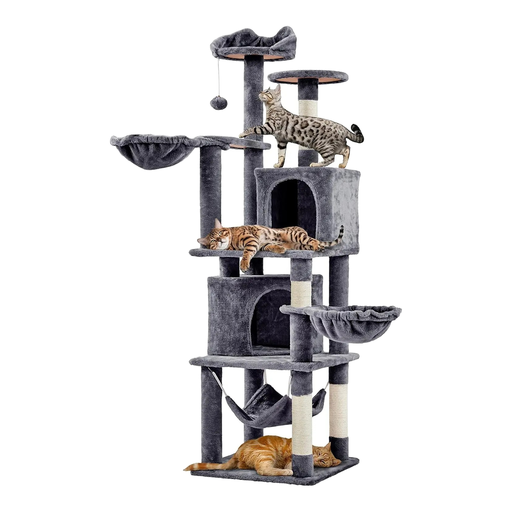
Why We Love This Model At a height of 174.5 cm, this XXL cat tree is a true climbing paradise. It was specifically designed for active cats, large breeds, or multi-cat households. The diverse features, including two lounging cradles, two condos, a hammock, and multiple platforms, ensure that every cat will find their favourite spot. The posts made of robust sisal offer numerous opportunities for scratching and stretching.
Pros
Who is it for? This cat climbing tree is the right choice for owners of large cat breeds like Maine Coons or Norwegian Forest Cats, as well as for households with multiple pets that need a varied and spacious playground.
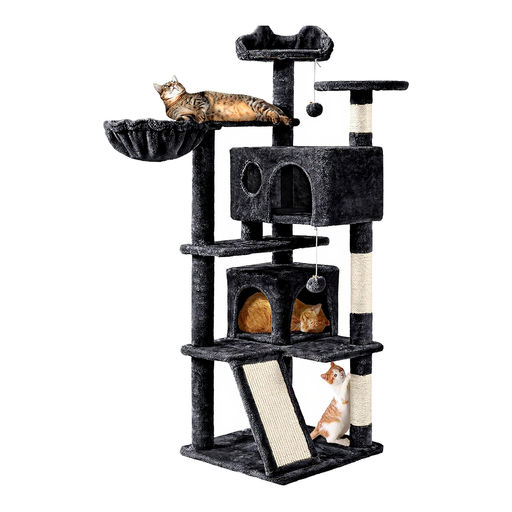
Why We Love This Model This model offers an excellent balance of size, function, and stability. With a height of 145 cm, two cozy condos, and three observation platforms, it meets the needs of most cats. A special feature is the included anti-tip kit, which allows the cat tree to be secured to the wall for added safety. This makes it an exceptionally sturdy cat tree.
Pros
Who is it for? A versatile option for owners of one or more cats who are looking for a functional and secure cat tree. It is especially recommended for owners of very active or heavy cats who value maximum stability.
The models presented here are just a sample of the available options. If you are looking for specific designs like a Wooden Cat House with Sisal Scratching Board or simply want to discover more alternatives, you will find a wider selection of cat furniture in our category that suits your style and your cat's needs.
The ideal location is a place where the family often gathers, such as the living room. Cats are social animals and enjoy watching the action. A spot near a window provides additional entertainment with a view of the outdoors. Avoid placing the cat tree in an isolated corner, as it may be used less there.
Patience is key here. Make the new cat tree attractive by placing treats on the different levels or by playing with a toy like a feather wand on it. Rubbing some catnip on the sisal posts can also spark interest. Praise your cat as soon as they explore the tree on their own or scratch on it.