
Lieferung heute & morgen

Qualitätsgarantie

Willkommens-Angebote freischalten: KOSTENLOSE Lieferung | Bis zu 80 % RABATT | Kostenlose 30-Tage-JoyPlus-Testphase
App herunterladen
A cat tree is more than just a piece of furniture for your cat; it's an essential part of their habitat, especially for indoor cats. It serves as a playground, a retreat, and a tool for claw care. However, the market is flooded with models of widely varying quality. A bad purchase not only leads to wasted money but can also jeopardise your cat's safety and leave your furniture unprotected. Before you make a decision, it's crucial to know the most common pitfalls.
The three most common mistakes when buying a cat tree are:
To avoid a bad buy, you should focus on objective and measurable criteria. These three parameters are decisive for the functionality and longevity of scratching furniture for indoor cats.
A stable cat tower is paramount. Stability is primarily determined by three factors:
The sisal post is the most important component for claw care. Ensure that the sisal rope has a diameter of at least 6 mm and is wrapped tightly and seamlessly around the post. Glued rope is more durable than rope that is only stapled. The cover fabric should be robust and easy to clean. Removable and washable cushions are a practical feature that makes hygiene easier.
Consider which behaviours your cat prefers.
Instead of making a blanket recommendation, we have selected models based on specific user profiles and requirements.
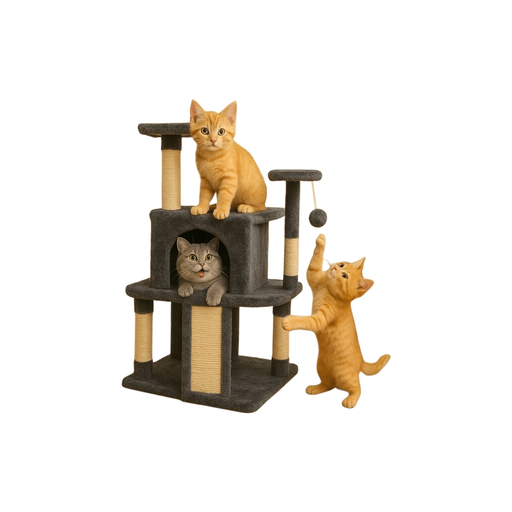
Why this model is a good fit: With its compact dimensions of 102 x 43 x 43 cm, this cat tree makes optimal use of vertical space and is ideal for smaller apartments. It still offers multiple levels for climbing and resting for cats up to 5 kg.
It bypasses the trap of unsuitable design for small spaces by integrating a condo, scratching posts, and play balls into a small footprint, without compromising on functionality for lighter cats.
Combines resting, scratching, and play functions in a space-saving, vertical design.
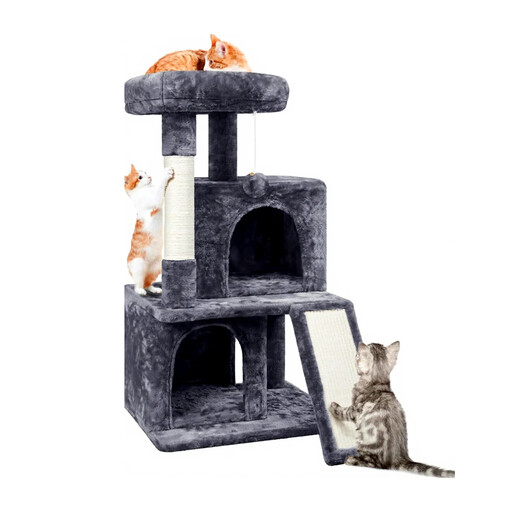
Why this model is a good fit: This model is designed for stability. The wide base plate and included anti-tip device make it a safe choice for households with multiple or very active cats. Two separate condos provide ample retreat options.
Directly addresses the instability trap with a wide base (49 x 45.5 cm) and an additional wall anchor. The material, made from FSC-certified particleboard, suggests a more solid construction than no-name products.
High stability due to a wide base plate and anti-tip device; two condos are ideal for multiple cats.

Why this model is a good fit: With a height of 212.5 cm, eight sisal posts, and a double-layered base, this climbing tree is specifically designed for the most demanding users: large cat breeds and households with multiple climbing enthusiasts.
This model counteracts the trap of improper sizing. The large platform (65x45 cm) and robust structure are explicitly designed for the load of multiple cats (up to 6.8 kg per animal) and offer sufficient space even for large breeds.
Maximum stability from a reinforced, double-layered base and an enormous height of 212.5 cm for demanding climbers.
We have compiled a complete, up-to-date list of products that fully meet these strict selection criteria and German safety requirements.
Place the cat tree in a location where the family often gathers, such as the living room. Make it interesting by hanging toys on it or placing treats on the different levels. You can also rub some catnip on the sisal surfaces. Never force your cat onto the tree; let them explore it at their own pace.
The ideal height depends on your cat's personality and the available space. For most indoor cats, a model between 120 cm and 170 cm is a good choice, as it offers enough vertical space for climbing. However, more important than the absolute height is a stable construction and a high observation perch, ideally near a window.
The lifespan of a sisal post depends on the intensity of use and the quality of the material. A high-quality, thickly wrapped post can last for several years. A replacement is necessary when the rope is heavily frayed and the core of the post is exposed. On some cat tree models, the sisal posts can be purchased and replaced individually, which extends the life of the entire piece of furniture.