
Lieferung heute & morgen

Qualitätsgarantie

Willkommens-Angebote freischalten: KOSTENLOSE Lieferung | Bis zu 80 % RABATT | Kostenlose 30-Tage-JoyPlus-Testphase
App herunterladen
As a cat owner, you know that your pet's natural instinct to scratch can be at odds with the preservation of your furniture. A cat tree is a functional solution to this problem. It not only provides an appropriate outlet for claw care but also serves as a playground, observation deck, and secure retreat. However, the selection is vast, and making a decision can be challenging.
This guide is designed to give you objective criteria to help you find a cat tree that meets your cat's needs and fits your home's environment. We will focus on the crucial features: stability, size, and material.
To make an informed decision, three main aspects should be considered. These will help you evaluate a model's functionality and safety.
A cat tree must be stable. Tip-over resistance is a key criterion, especially for active cats or multi-cat households. Look for a wide, heavy base plate that serves as a solid foundation. Models with an additional anti-tip kit for wall mounting offer the highest level of safety. The materials used, such as certified engineered wood panels, and the diameter of the posts also contribute to the structure's overall stability.
The right size depends on the number, age, and breed of your cats.
The durability of a cat tree is largely determined by the quality of its materials. The posts should be fully and tightly wrapped with resilient sisal to ensure a long-lasting scratching surface. The plush covering should be durable and, ideally, easy to clean. Models with removable and washable cushions offer a distinct advantage, as they significantly simplify the regular removal of fur and dirt.
Based on the criteria mentioned, we have compiled a selection of models that cover a range of different needs.
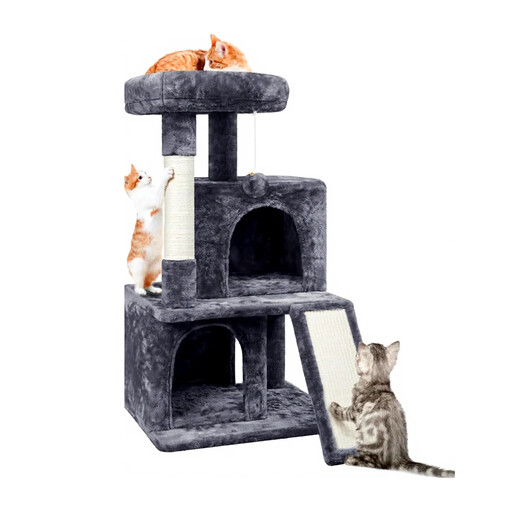
Why it stands out: This model combines a compact design with thoughtful stability features. Its wide base and the included anti-tip kit make it a safe choice for active cats.
Pros:
Who it's for: Ideal for households with one or two small to medium-sized cats looking for a space-saving yet stable solution with multiple functional areas.
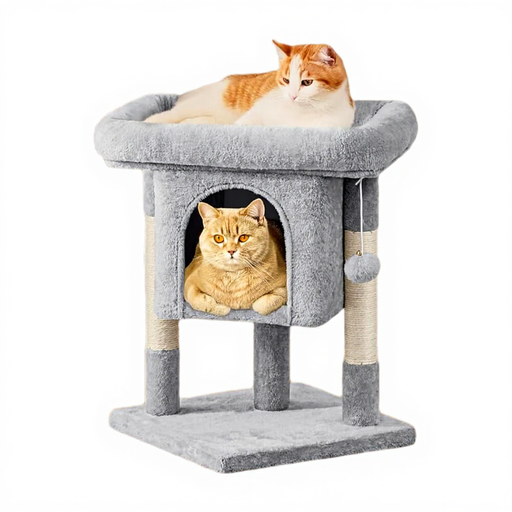
Why it stands out: This model is specifically tailored to the needs of kittens and small cat breeds. With its low height and cosy retreats, it provides a safe introduction to the world of climbing trees.
Pros:
Who it's for: Perfect for owners of kittens or very small cat breeds who want to set up a first, non-intimidating scratching and sleeping spot.
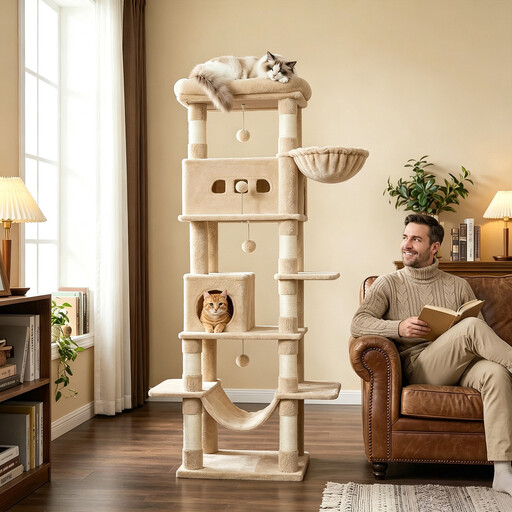
Why it stands out: This large cat tree, designed to be nearly ceiling-height, is a comprehensive solution for a multi-cat household. Its thoughtful layout with numerous levels and retreats is engineered to meet the needs of several animals.
Pros:
Who it's for: Households with multiple cats, including large cats, that need a vertical playground with enough individual resting zones to promote harmonious coexistence.
If these recommendations don't include the perfect model for you, there is a wider selection to explore. Different designs, sizes, and features may better suit your specific needs.
Discover our entire selection of Sisal Cat Trees to compare more models and find the ideal solution for your cat and your home.
The ideal location is a room where the family often gathers, such as the living room. A spot near a window is particularly appealing, as cats love to watch their surroundings. Avoid placing the cat tree in an isolated corner, as it may be used less frequently.
To help your cat acclimate to the new cat tree, you can place treats, their favourite toy, or some catnip on the different levels. Praise your cat when they explore or use the tree on their own. Avoid forcing your cat onto it, as this can create a negative association.
Regular cleaning is important for hygiene. Cat fur is best removed with a vacuum cleaner. Stains on the plush can be treated with a damp cloth and a mild detergent. For models with removable cushions, they can be cleaned according to the washing instructions. Additionally, regularly check that all screw connections are tight.