
Lieferung heute & morgen

Qualitätsgarantie

Willkommens-Angebote freischalten: KOSTENLOSE Lieferung | Bis zu 80 % RABATT | Kostenlose 30-Tage-JoyPlus-Testphase
App herunterladen
A new cat tree should keep your cat's claws off the furniture while also serving as a playground and a private retreat. But the selection is vast, and not every model lives up to its promise. A wobbly cat tower quickly becomes a hazard, low-quality materials wear out in just a few months, and perches that are too small are ignored by your cat. The result: a wasted investment and an unhappy cat.
This guide will show you the most common pitfalls to avoid when buying a cat tree and highlight the crucial features you should look for to make a durable and species-appropriate choice.
Many cat trees look appealing in product photos but only reveal their weaknesses in daily use. Pay close attention to these three points to avoid disappointment:
To find the right climbing tree for your needs, you should carefully examine three technical parameters. These determine the safety, durability, and acceptance by your cat.
A sturdy cat tree is absolutely essential. Stability is determined by several factors:
The materials used determine how long you and your cat will enjoy the new scratching furniture.
The ideal size and features depend on the number, age, and personality of your cats.
Based on the quality criteria mentioned, we have identified some models that are suitable for different needs and living situations.
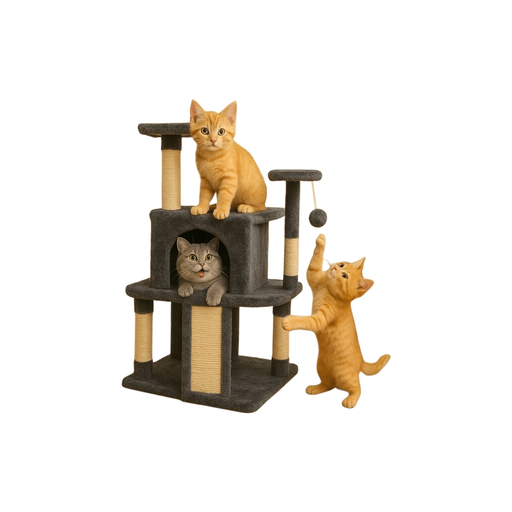
Why This Fits Their Persona: With its compact 43x43 cm footprint and a height of 102 cm, this model makes optimal use of vertical space. It is ideal for smaller apartments yet still offers multiple levels, a cave, and scratching options for cats up to 5 kg.
Avoids the "incorrect sizing" trap as it is explicitly designed for smaller cats. All elements are proportionally sized, ensuring the cat can actually use them.
Space-saving design that combines scratching, sleeping, and playing opportunities in a small footprint. Includes a sisal post, scratching board, and play balls.
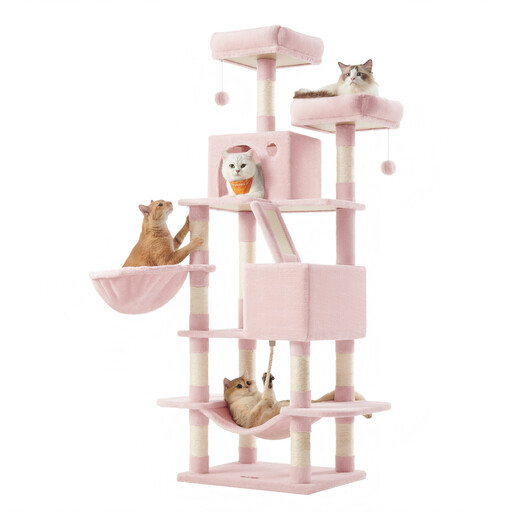
Why This Fits Their Persona: At 168 cm tall, with a reinforced base and a static load capacity of up to 65 kg, this cat tower is designed for heavy use by multiple or large cats. 13 scratching posts and various lounging areas provide ample space.
Directly counters the "unstable construction" trap. The large, reinforced base plate and high load capacity ensure a secure footing, even when several cats are playing at once.
Exceptionally high stability and a multitude of scratching and lounging options (2 caves, 2 platforms, basket, hammock) for demanding cat households.
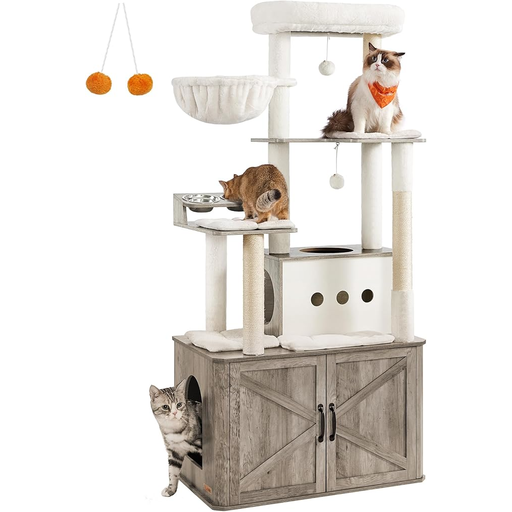
Why This Fits Their Persona: This all-in-one solution is ideal for owners who want to combine functionality with aesthetics. It integrates a 170 cm tall climbing tree, an elevated feeding station, and a cabinet for the litter box into a single, stylish piece of furniture.
Solves the problem of "wasted space" and clutter from cat accessories. Instead of multiple separate items, everything is bundled into one well-designed piece of furniture.
Multifunctional 3-in-1 design: cat tree, feeding station, and litter box cabinet. The cushions are removable and washable, making cleaning easier.
We have compiled a complete, up-to-date list of products that fully meet these strict selection criteria and rigorous safety standards.
Place the cat tree in a location where your cat likes to spend time, such as near a window or in the living room. Make the tree more interesting by placing treats or toys on the different levels. You can also rub some catnip on the sisal posts to attract your cat's attention. Praise your cat whenever it uses the tree.
Check the product specifications for the total weight and the dimensions of the base plate. A heavy, wide base is a good indicator of stability. Read the product descriptions to see if an anti-tip kit for wall mounting is included—this is an important quality feature, especially for models over 150 cm tall. Also, pay attention to the diameter of the posts.
The plush surfaces should be regularly cleaned of hair and dust with a lint brush or a vacuum cleaner. Stains can be removed with a damp cloth and a mild detergent. On some models, the cushions are removable and machine-washable. Regularly check all screw connections and tighten them if necessary to ensure long-term stability.