
Lieferung heute & morgen

Qualitätsgarantie

Willkommens-Angebote freischalten: KOSTENLOSE Lieferung | Bis zu 80 % RABATT | Kostenlose 30-Tage-JoyPlus-Testphase
App herunterladen
A new cat tree should improve your cat's quality of life and protect your furniture. But the reality is often different: after just a few weeks, the new cat tower wobbles, the sisal unravels, or the cat ignores it completely. Such bad purchases are not only frustrating but can also pose a safety hazard.
Many models are advertised with features that quickly reach their limits in practice. Before you make a decision, it's crucial to know the most common pitfalls that lead to disappointment.
cat tree for large cats.XXL cat tree often doesn't offer large enough perches or condos for breeds like Maine Coons or Norwegian Forest Cats. Conversely, a model sized as a small cat tree doesn't provide an active cat with the necessary space to climb and stretch.To avoid these problems, you should base your choice on objective criteria rather than being swayed by marketing promises.
A functional and durable cat tree must meet three core requirements. Focus on these parameters during your research to make an informed decision.
Your cat's safety is the top priority. A stable cat tree is the fundamental prerequisite for species-appropriate use.
cat climbing tree.The materials used determine how long you and your cat will enjoy the piece of furniture.
A good cat tree serves multiple functions at once: it's a playground, a retreat, and a lookout post.
cat tree with a condo must match the size of your cat. A large cat needs a lounging area of at least 45 cm in diameter to stretch out comfortably.cat tree should therefore offer at least one continuous, vertical scratching surface that is taller than your cat's full stretched length.Based on these objective criteria, we have identified some models that are suitable for different needs and living situations.
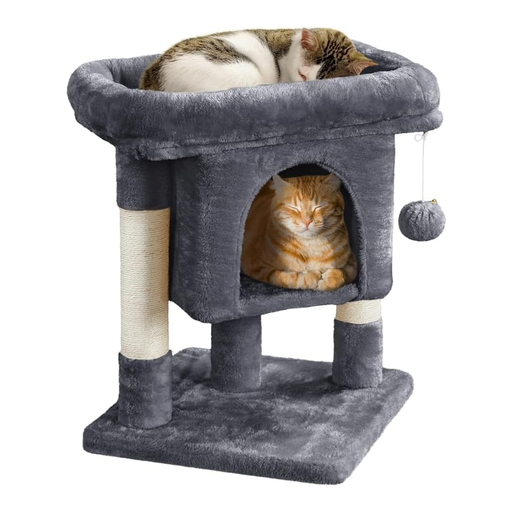
Why this model is a good fit: With its compact 40.5 x 40.5 cm footprint, this model is ideal for smaller rooms or as a starter tree for kittens. It provides the essential functions—scratching, sleeping, and observing—without taking up much space.
This model avoids the sizing pitfall as it is explicitly designed for small to medium-sized breeds and kittens. Its stability is tailored to the weight of this target group.
Combines a cosy condo with two sisal posts in a small footprint. The construction from FSC-certified particle board provides a solid base.
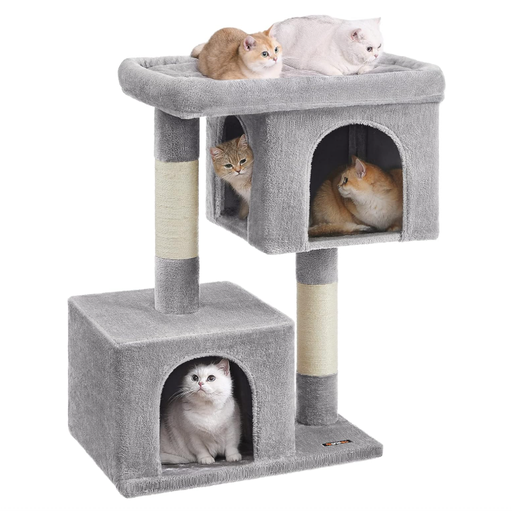
Why this model is a good fit: This model is specifically designed for the needs of large and heavy cats. The generous top perch (68 x 48 cm) and a weight capacity of up to 20 kg provide even stately animals with sufficient space and security.
It directly addresses the stability trap with thick 11 cm diameter posts, a robust particle board construction, and an included anti-tip kit. The dimensions are designed for large breeds.
High weight capacity and extra-large lounging areas. Two condos offer retreats for one or more large feline friends.
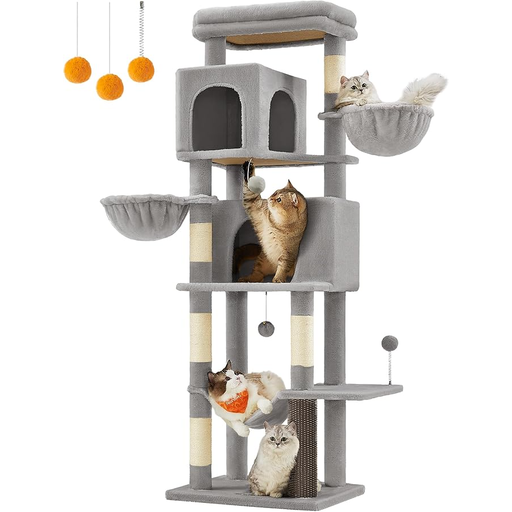
Why this model is a good fit: At 175 cm tall and with a multitude of levels—including two condos, two hammocks, a basket lounger, and a large top perch—this `cat tower` offers enough space and variety for several cats at once.
The material trap is avoided with numerous posts wrapped in robust sisal and a stable particle board construction. The included anti-tip kit provides the necessary safety for such a tall climbing tree.
Extremely high variety of lounging and play options on multiple levels. The integrated grooming brush at the base offers an additional option for coat care.
We have compiled a complete, up-to-date list of products that fully meet these strict selection criteria and UK safety regulations.
Place the cat tree in a spot where your cat likes to spend time, such as near a window or in the living room. Make the tree more interesting by placing treats or toys on the different levels. Rubbing the sisal posts with a little catnip can also pique their curiosity. Avoid forcing your cat onto it—patience is key.
The ideal location is a place from which your cat can observe the activity in the home and, ideally, the outdoors as well. A spot by a window is often very popular. Don't place the tree in a remote corner, as cats like to be part of family life. Ensure the surface underneath is level and solid.
Regularly check the cat tree for stability. If it wobbles excessively and the screws can no longer be tightened, it's time for a replacement. Other signs include heavily worn or torn sisal posts that no longer serve their scratching function, or broken platforms and hammocks. An unstable tree poses an injury risk.