
Lieferung heute & morgen

Qualitätsgarantie

Willkommens-Angebote freischalten: KOSTENLOSE Lieferung | Bis zu 80 % RABATT | Kostenlose 30-Tage-JoyPlus-Testphase
App herunterladen
A cat tree is more than just a piece of furniture for cats; it's an essential component for the well-being of indoor cats. It serves as a playground, a sanctuary, and a tool for claw maintenance, helping to protect your furniture from scratch marks. However, with so many options available, choosing the right model can be a challenge. This guide presents objective criteria to help you find a suitable and durable cat tree that meets your cat's needs and fits your home's layout.
To make an informed decision, several fundamental aspects should be considered. The following points will help you evaluate the features of different models.
A stable cat tree is crucial for your cat's safety. Look for a wide and heavy base plate that serves as the foundation. A solid foundation prevents wobbling or tipping over, especially for a large cat tree or models designed for multiple or very active cats. The connections between the individual elements should be robust. Many models also offer an anti-tip kit for securing the tree to a wall, which further enhances stability. The thickness and material of the posts, which are usually wrapped in sisal, also contribute to its longevity.
The ideal size of the cat tree depends on the number, size, and personality of your cats. A cat tree for large cats, such as Maine Coons or Norwegian Forest Cats, requires larger lounging areas and a more robust build. A tall cat climbing tree with multiple levels satisfies their natural climbing instinct and provides enough separate spots, especially in multi-cat households.
Look for a variety of features:
The materials used affect both durability and comfort. Most cat trees are made of engineered wood boards covered with plush fabric. The scratching posts are typically wrapped in natural sisal, a durable material well-suited for sharpening claws. The plush cover should be soft yet hard-wearing. Check the manufacturer's care instructions; many covers can be vacuumed or spot-cleaned with a damp cloth.
Here is a selection of models that cater to different needs—from compact designs for small apartments to large play and climbing landscapes.
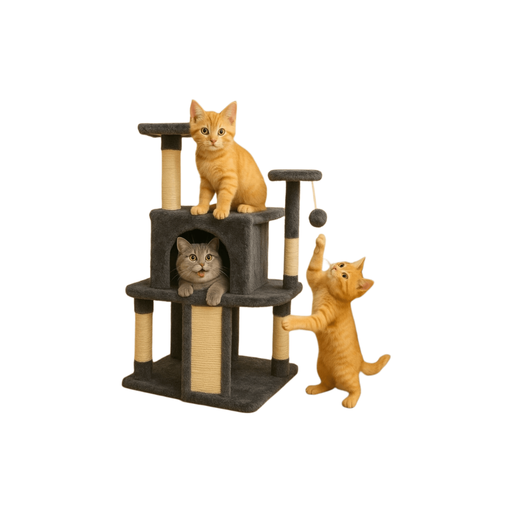
Why this model stands out: This model is distinguished by its space-saving, vertical design. Measuring 102 × 43 × 43 cm, it makes excellent use of vertical space, making it a great fit for smaller apartments.
Advantages:
Who it's for: This cat tree is designed for households with smaller cats weighing up to 5 kg where available space is limited.
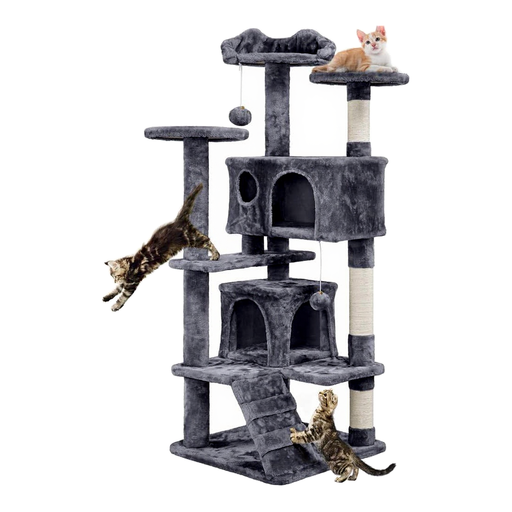
Why this model stands out: The Yaheetech cat tree offers a good balance of size and stability. The sturdy 49 x 49 cm base and an included safety strap for wall mounting ensure a secure footing, making it particularly suitable for young or cautious cats.
Advantages:
Who it's for: This model is suitable for owners of small cat breeds, kittens, or more timid cats who value an especially secure and stable cat climbing tree.

Why this model stands out: At a height of 206 cm, this large cat tree provides an extensive climbing and play landscape. Its features are designed to meet the needs of very active cats, large breeds, or multi-cat households.
Advantages:
Who it's for: This cat tree for large cats is a fitting choice for households with multiple cats, large breeds, or particularly climb-loving pets that need plenty of space and variety.
In addition to a cat tree, other accessories can enrich daily life with your pet. If you are interested in innovative solutions like a pet doorbell, you can find more practical products in our range.
1. Where should you place a cat tree? The ideal location for a cat tree is in a room where the family often gathers, such as the living room. A spot near a window offers the cat an interesting view. However, the tree should not block walkways and must stand firmly on the floor.
2. How do I get my cat used to the new cat tree? Patience is key. Place treats or your cat's favorite toy on the different levels. Play with your cat near the tree to create positive associations. Spraying the sisal posts with catnip can also help to spark interest.
3. How do you clean a cat tree? Hair is best removed regularly with a vacuum cleaner. For light soiling on the plush surfaces, a damp cloth is often sufficient. Always follow the manufacturer's specific cleaning instructions, as some materials may only allow for spot cleaning. Also, regularly check all screw connections to ensure they are tight.