
Lieferung heute & morgen

Qualitätsgarantie

Willkommens-Angebote freischalten: KOSTENLOSE Lieferung | Bis zu 80 % RABATT | Kostenlose 30-Tage-JoyPlus-Testphase
App herunterladen
As a cat owner, you know that cats need to climb, sharpen their claws, and survey their territory from a high vantage point. A suitable cat tree is therefore not a luxury, but an essential part of an enriching indoor life. It not only saves your furniture but also promotes your pet's physical and mental well-being.
However, the selection is vast, and making a choice can be overwhelming. This guide is designed to help you understand the key features and make an informed decision. We'll walk you through objective criteria and present a selection of models that cater to different needs.
Before you decide on a model, you should consider a few fundamental aspects that are crucial for safety, durability, and acceptance by your cat.
A sturdy cat tree is the most important requirement, especially if you are looking for a cat tree for large cats like Maine Coons or for a household with multiple cats. A wobbly cat tower will be avoided by cats and poses a safety risk. Look for the following features:
The ideal size depends on the number, age, and personality of your cats, as well as the available space. A climbing tree for a cat that is very active should offer plenty of vertical levels for climbing. Consider which features make sense for your pet:
A cat tree is a piece of furniture that should fit into your living space. Models in subtle colours like a beige cat tree or a grey cat tree are popular because they blend harmoniously into many interior design styles. The cover material is also relevant. Soft plush offers comfort, while the sisal posts cater to a cat's natural need to scratch.
Here is a selection of models that, with their different characteristics and features, are suitable for various requirements.

Why it stands out: At 168 cm tall and with a comprehensive set of features, this model is a complete activity centre. With 13 sisal posts, a scratching ramp, two condos, two viewing platforms, a basket, and a hammock, it offers an enormous variety of options for play and rest.
Pros:
Best for: This model is a great choice for households with multiple cats or for very active and large cats that need plenty of vertical space and variety.
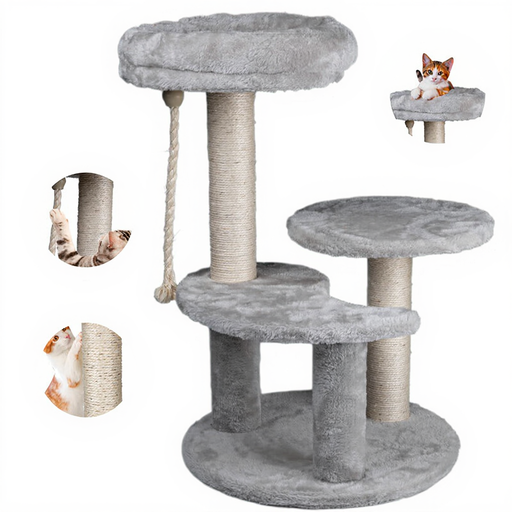
Why it stands out: This cat tree is distinguished by its compact design. At 62 cm tall, it fits well in smaller apartments or can serve as a secondary cat tree in another room. Despite its size, it offers three platforms, sisal posts, and a play rope.
Pros:
Best for: Ideal for owners of a single, calmer cat, for kittens to get accustomed, or as a supplement in homes with limited space.
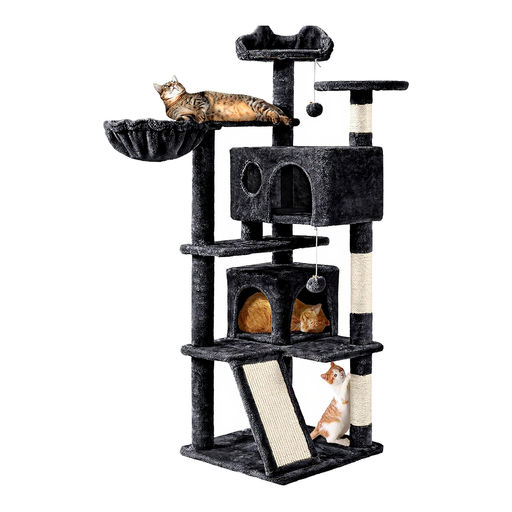
Why it stands out: This model in elegant black offers a good medium height at 145 cm. It combines multiple levels with two cosy condos and is made from FSC-certified particleboard, according to the manufacturer. An included anti-tip kit for wall mounting provides extra security.
Pros:
Best for: A suitable option for cat owners looking for a mid-height, stable climbing tree for their cat with multiple hideaways and a modern design.
The models presented cover many common needs. However, if you want to create a custom climbing landscape that is perfectly adapted to your space, modular systems could be an interesting alternative.
Discover various components and ideas for a DIY cat climbing frame and design a unique paradise for your feline friend.
Place the cat tree in a location where your cat likes to spend time, such as the living room. A spot near a window is often popular as it offers an interesting view. The tree should stand securely on a flat surface and not wobble.
Some cats take to a new cat tree immediately, while others are initially sceptical. Make the tree more appealing by placing treats or their favourite toy on the different levels. Rubbing the sisal posts with catnip can also help to attract your cat's attention.
Hair and dust are best removed with a vacuum cleaner. For cleaning the plush covers, a lint roller or a slightly damp brush works well. You can gently treat stains with a damp cloth and a mild soap solution. Avoid harsh cleaning agents, as their scent can deter cats.