
Lieferung heute & morgen

Qualitätsgarantie

Willkommens-Angebote freischalten: KOSTENLOSE Lieferung | Bis zu 80 % RABATT | Kostenlose 30-Tage-JoyPlus-Testphase
App herunterladen
As a Joybuy Product Recommendation Officer, I see the challenges cat owners face every day: scratched furniture, an under-stimulated cat, or simply the difficulty of choosing the right product from a vast selection. A cat tree is more than just a piece of furniture; it is an essential sanctuary, a playground, and a tool for claw maintenance.
This guide is designed to help you understand the features of different cat trees and make an informed decision that suits both your cat's needs and your living space.
Choosing the right model depends on several factors. Three criteria are particularly crucial: stability, features, and the right size for your home and your cat.
A sturdy cat tree is essential, especially if you have a large or very active cat. A wobbly model will be avoided by cats and can even pose a safety hazard. Look for a wide, heavy base plate that serves as a solid foundation. The diameter of the sisal-wrapped posts is also an indicator of stability—thicker posts offer more resistance to the forces generated during jumping and climbing. For owners of breeds like the Maine Coon or British Shorthair, a cat tree for large cats with a reinforced construction is a wise consideration. For particularly tall models, often called a cat tower, an additional wall anchor is recommended for safety.
A modern cat tree offers much more than just a scratching surface. A cat tree with a condo and hammock fulfils multiple needs at once. Condos serve as secure retreats where cats feel safe and can sleep undisturbed. Hammocks and padded perches provide comfortable vantage points. The scratching posts should be wrapped in durable natural sisal, as this material is ideal for claw care and instinctively encourages cats to sharpen their claws on it instead of on your furniture. A soft plush cover on the lounging areas provides extra comfort.
Measure the available space in your home before making a decision. A small cat tree under one metre in height may be sufficient to meet the basic needs of a single, less active cat or a kitten. Such models fit well in corners or next to a window. However, if you have 2 cats or more, a larger, multi-level large cat tree is the better choice. It provides enough separate lounging and scratching areas to prevent conflicts and encourages exercise through vertical climbing opportunities.
Based on the criteria mentioned, we have compiled a selection of models that cater to different requirements.
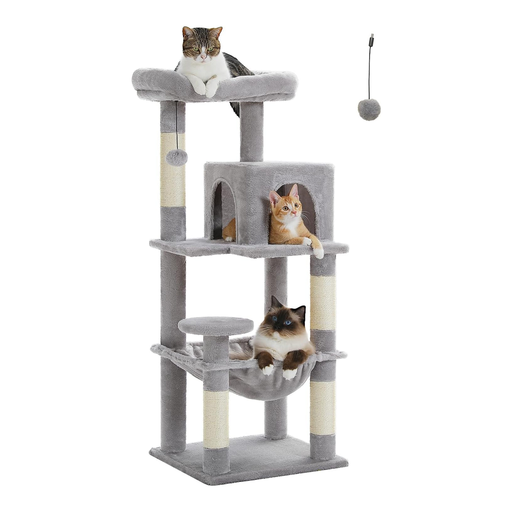
Why this model stands out: This model combines a medium height with thoughtful details. Particularly noteworthy is the unique hammock with a sturdy metal frame, which retains its shape even with active use. The easy-care features, such as the machine-washable top perch, make cleaning straightforward.
Benefits at a glance:
Who is this model for? Ideal for owners of small to medium-sized cats who are looking for a functional and low-maintenance cat tree for a single cat.
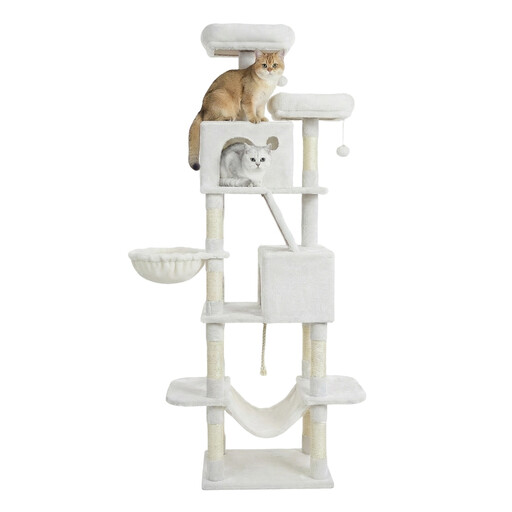
Why this model stands out: With a height of over two metres, this cat tower is a true climbing paradise. It was specifically designed for households with multiple cats or very active climbers. The high number of 13 scratching posts and the variety of lounging options ensure that every cat can find its own spot.
Benefits at a glance:
Who is this model for? Perfect for owners of multiple cats or large cats who have sufficient ceiling height and want to offer their pets a diverse climbing landscape.
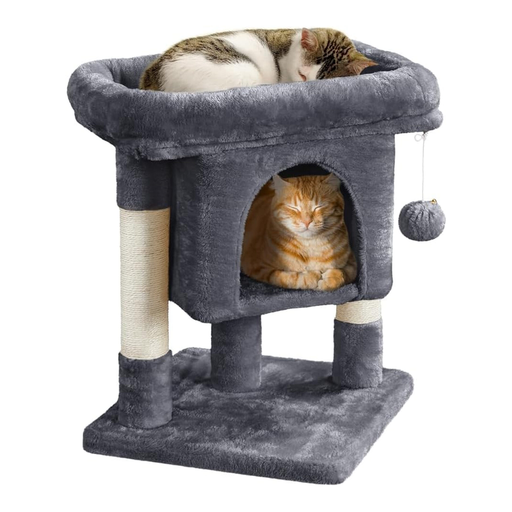
Why this model stands out: This small cat tree is the solution for homes with limited space. Despite its compact dimensions, it offers all the essential functions a cat needs, including a cosy condo, a lounging perch, and two scratching posts.
Benefits at a glance:
Who is this model for? An excellent choice for owners of kittens, small cat breeds, or anyone living in a smaller apartment who doesn't want to compromise on a functional cat tree.
Every cat's needs are unique. If the models presented here don't exactly match your requirements, there are many other variations to discover that differ in size, colour, and features.
Browse our entire selection of cat climbing trees to find the ideal model for your needs and those of your cat.
1. How do I get my cat used to a new cat tree? Place the cat tree in a location where your cat likes to spend time, such as near a window or their current favourite sleeping spot. You can encourage acceptance by placing toys or treats on the different levels. Rubbing catnip on the sisal posts can also help to spark interest.
2. How tall should a cat tree be? The ideal height depends on your cat and the available space. Active and young cats love to climb and benefit from a tall cat tower. For older cats, kittens, or cats with limited mobility, a small cat tree or a model with easily accessible steps is often more suitable. As a general rule: the more vertical space, the more opportunity for exercise.
3. How do I clean a cat tree? Most cat trees can be cleaned of hair and dust with a vacuum cleaner. Stains on the plush can often be removed with a damp cloth and mild soap solution. Some models, like the featured PAWZ Road cat tree, offer removable and washable cushions, which makes deep cleaning much easier. Regularly check the sisal posts for wear and tear.