
Lieferung heute & morgen

Qualitätsgarantie

Willkommens-Angebote freischalten: KOSTENLOSE Lieferung | Bis zu 80 % RABATT | Kostenlose 30-Tage-JoyPlus-Testphase
App herunterladen
As a Joybuy Product Recommendation Officer, I see cat owners every day looking for ways to enrich their feline friends' lives while also protecting their furniture. A cat tree is an essential investment for this purpose. However, the market can be overwhelming, and the selection is vast. This guide is designed to help you make an informed decision and find a cat tree that suits both your cat's needs and your living space.
Before you decide on a model, there are a few fundamental criteria to consider. These will help you narrow down the options to the most suitable candidates.
The most important feature of a cat tree is its stability. Cats will avoid a wobbly climbing tree, and it poses a safety risk. Look for a wide, heavy base plate and solid construction.
A modern cat tree is a playground, lookout point, and private retreat all in one. The features should match your cat's preferences.
Based on functionality, materials, and user feedback, we've selected a few models that cover a range of different needs.
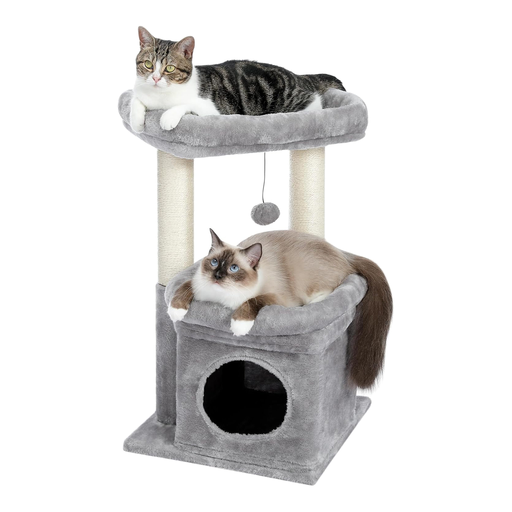
Why This Model Stands Out: This compact cat tree is a well-designed solution for smaller apartments or as a secondary tree to complement a larger one. Despite its modest height of 70 cm, it offers a variety of features.
Pros:
Who Is It For? This model is suitable for owners of one or two cats who are looking for a space-saving yet functional spot for scratching and napping. It's also a great choice for kittens or senior cats that can no longer make high jumps.
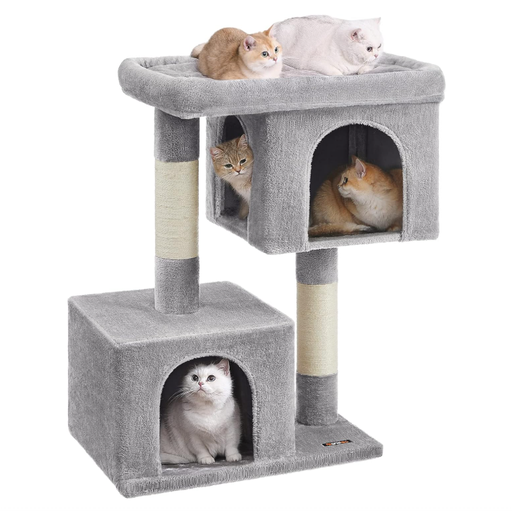
Why This Model Stands Out: This large cat tree from Feandrea is specifically designed to meet the needs of large cat breeds or multi-cat households. Its sturdy construction and generous dimensions set it apart from many standard models.
Pros:
Who Is It For? Ideal for owners of large cats or households with two to three pets who are looking for an exceptionally sturdy cat tree. Anyone who values safety and durability will find this to be an excellent solution.
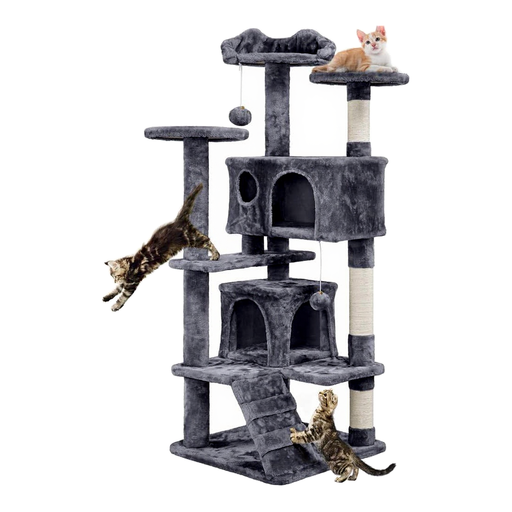
Why This Model Stands Out: This mid-sized cat climbing tree offers a varied landscape of play, sleep, and scratching opportunities across multiple levels. Its design as a grey cat tree blends discreetly into many home decor styles.
Pros:
Who Is It For? This cat tree is an all-rounder for households with average-sized cats that are both playful climbers and in need of a quiet place to rest. It offers a great balance of size, stability, and a variety of features.
The models featured here already cover many needs. However, if you prefer a different colour or specific features, numerous other options are available.
Explore our extensive selection of models, for instance, if you're specifically looking for a grey cat tree that will blend harmoniously with your home decor.
? Discover more grey cat trees here
1. How do I get my cat used to the new cat tree? Place the cat tree in a spot where your cat likes to spend time, such as near a window or in the living room. Make the tree more appealing by placing toys on it or spraying it with catnip. Praise your cat whenever they use it.
2. What is the best location for a cat tree? Cats love to survey their territory. A spot in the living room or near a window is often ideal. Avoid isolated corners, as the tree might be ignored. It should also not block any main pathways.
3. How often should a cat tree be replaced? The lifespan of a cat tree depends on its quality and how heavily it's used. When the sisal posts are heavily worn, the fabric is torn, or the structure becomes unstable, it's time for a replacement. With modular systems, you can often replace individual parts, such as the scratching posts.