
Lieferung heute & morgen

Qualitätsgarantie

Willkommens-Angebote freischalten: KOSTENLOSE Lieferung | Bis zu 80 % RABATT | Kostenlose 30-Tage-JoyPlus-Testphase
App herunterladen
As a Joybuy Product Recommendation Officer, I see the challenges that owners of large cat breeds like Maine Coons or Ragdolls face every day. A standard cat tree is often not enough. It wobbles, the perches are too small, and the material wears out within a few months. This guide will show you what to look for when choosing a model for large cats to create a safe, durable, and species-appropriate environment for your pet and avoid bad investments.
Many products on the market are not designed for the weight and strength of large cats. Watch out for these three typical weak points to prevent disappointment:
To avoid the flaws mentioned above, you should check three core parameters before buying. These determine whether a cat tree for large cats is truly suitable.
Stability is the most important criterion. A sturdy cat tree is characterized by several features:
A large cat tree is an investment. The quality of the materials determines how long you and your cat will enjoy it.
The size of the individual elements must be appropriate for the pet.
Here are some recommendations that are aligned with the criteria mentioned and cover different needs.
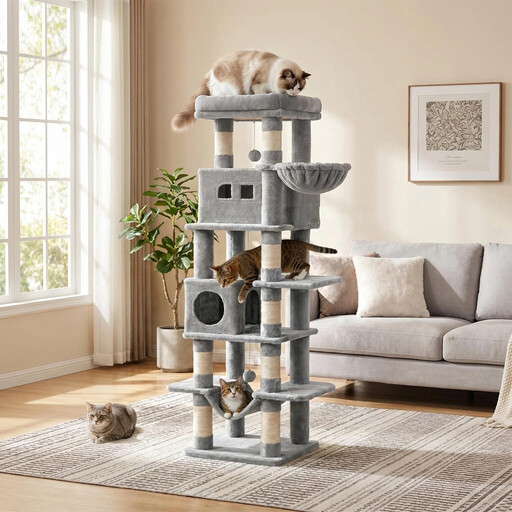
Why This Fits Their Persona: This model offers a good balance of height, a variety of features, and an accessible price point. It's a solid starter option for owners looking for a large, but not oversized, cat tree.
The widened, double-reinforced base plate and a total of 17 support posts counteract typical instability. The spacious cat condo (50x40 cm) is also suitable for larger breeds.
With two condos, a hammock, and a basket, it offers multiple places to retreat. Removable, washable cushions make cleaning easier.

Why This Fits Their Persona: At over 2 meters tall and with a high load capacity, this tower is designed for households with multiple, very active, or particularly heavy cats that need a lot of vertical space.
The specified total static load capacity of up to 75 kg (165 lbs) and the reinforced base directly address concerns about instability. 13 sisal posts and an additional scratching ramp prevent rapid material wear.
Its very tall design offers maximum climbing and observation space. The combination of 13 posts and a ramp creates numerous scratching opportunities.
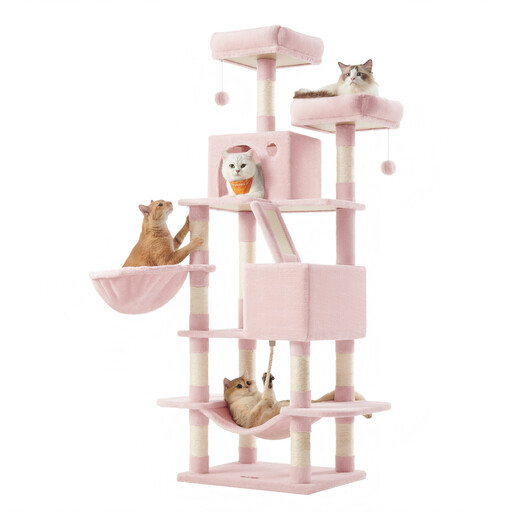
Why This Fits Their Persona: For owners who want a functional cat tree for their large cat that also integrates into their home decor as a stylish piece of furniture, rather than looking purely utilitarian.
Despite its focus on aesthetics, it makes no compromises on stability. The reinforced base and 13 sisal posts ensure the structure is safe and durable enough for large cats.
The unique pastel pink color is a visual highlight. Its static load capacity of up to 65 kg (143 lbs) also makes it suitable for multiple cats.
We have compiled a complete, up-to-date list of products that fully meet these strict selection criteria and relevant safety regulations.
Place the cat tree in a central location where the family often gathers. Make it appealing with treats, catnip, or toys. Initially, place your cat on the lower levels and praise them when they use it. Avoid forcing your cat onto it.
Yes, for models over 150 cm (59 inches) high, a wall anchor is strongly recommended, especially with heavy or very active cats. It prevents tipping and ensures maximum safety. Most high-quality models include a corresponding anti-tip kit.
A replacement is necessary when the sisal rope is badly frayed or completely worn through, exposing the material underneath (usually cardboard or plastic). The scratching function is no longer effective at that point. Some manufacturers offer replacement posts, which can extend the life of the entire cat tree.