
Lieferung heute & morgen

Qualitätsgarantie

Willkommens-Angebote freischalten: KOSTENLOSE Lieferung | Bis zu 80 % RABATT | Kostenlose 30-Tage-JoyPlus-Testphase
App herunterladen
As a cat owner, you know that a cat tree is much more than just a piece of furniture. It's a playground, a sanctuary, and an essential tool for claw maintenance. Scratched sofas and wallpaper are often a sign that a proper outlet for this natural behaviour is missing. However, with so many options available, choosing the right model can be a challenge.
This guide is here to help. We'll explain the key criteria to consider when buying a cat tree and present a selection of different models to make your decision easier.
To find a model that your cat will love and that is built to last, you should consider a few fundamental aspects.
Stability is the most important criterion. A wobbly climbing tree will be perceived as unsafe by cats and avoided. Look for a heavy, wide base plate that serves as a solid foundation. Especially for a large cat tree or for use by multiple cats, high stability is essential to prevent it from tipping over during jumping and playing. Models with an additional wall mount offer maximum security. The thickness of the connecting elements and posts also contributes to the overall stability of the cat furniture.
A good cat tree meets various needs of your cat. The scratching surfaces should be made of a durable material like sisal. A sisal scratching post provides the ideal resistance for daily claw care and redirects their natural scratching instincts away from your furniture.
Also, pay attention to the features:
The size of the cat tree should match your cat's size and activity level. A large, heavy breed like a Maine Coon needs a much sturdier and larger cat tree than a petite domestic cat. If you have multiple cats, models with several perches and condos are recommended to avoid competition for the best spots. A tall climbing tree with many levels caters to a cat's natural desire to observe its surroundings from up high.
Here is a selection of models that stand out for their different features and are suited for various needs.
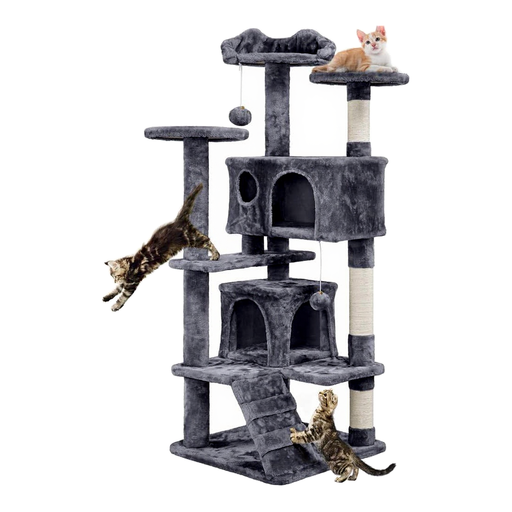
Why this model stands out This medium-sized cat tree from Yaheetech combines a stable construction with diverse play and retreat options on a compact footprint. The included anti-tip kit for wall mounting provides extra stability.
Advantages
Best for: This model is a great choice for households with young, playful, or even shy cats of small to medium size. With two caves, it's also suitable for two cats that appreciate having their own space.
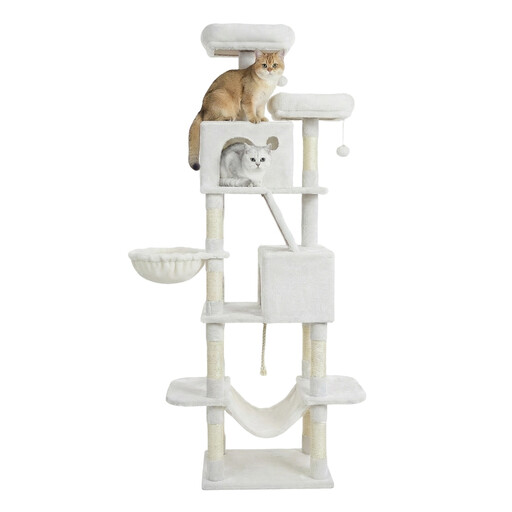
Why this model stands out At over two metres tall, this climbing tree for cats is a true paradise for felines that love to climb. It offers an exceptionally wide variety of lounging and scratching options and is designed to meet the needs of multi-cat households.
Advantages
Best for: Ideal for households with multiple cats or for very active and large cat breeds that need plenty of vertical space to climb, play, and rest.
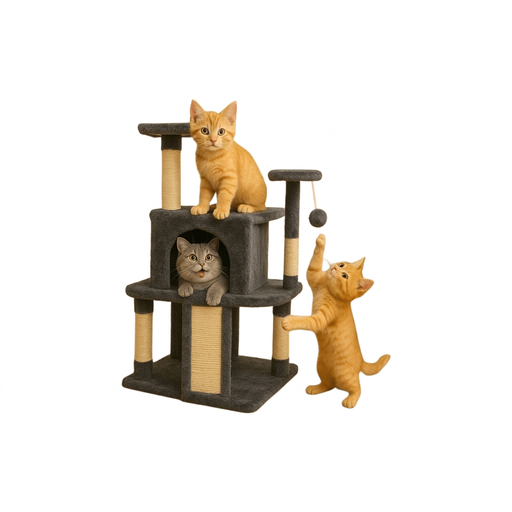
Why this model stands out This model from H.XUN is designed for space-saving use without sacrificing key features. It utilises height to create various levels for climbing and resting on a small footprint.
Advantages
Best for: This model is designed for owners of small to medium-sized cats (up to 5 kg) living in homes with limited space. It offers the essential functions of a cat tree in a compact design.
Didn't find the perfect model for your needs in our selection? Every feline friend has individual preferences. In our broader product category, you'll find many more models that differ in size, features, and design.
? Discover more models in the Leisure Cat Tree category here.
The ideal location for a cat tree is in a room where the family often gathers, such as the living room. Cats are social animals and enjoy observing the action. A spot near a window offers additional entertainment. Avoid hiding the cat tree in a remote corner, as it might not be used.
Patience is key here. Gently place your cat on one of the lower levels. Praise them and offer a treat. You can also play with a toy, like a cat wand, on and around the tree to create positive associations. Rubbing some catnip on the sisal posts can also spark their curiosity.
The lifespan of a sisal post depends on the intensity of scratching and the number of cats. Replacement is advisable when the sisal rope is heavily frayed and no longer provides sufficient resistance for claw maintenance. On many modular cat trees, individual posts can be purchased and replaced separately.