
Lieferung heute & morgen

Qualitätsgarantie

Willkommens-Angebote freischalten: KOSTENLOSE Lieferung | Bis zu 80 % RABATT | Kostenlose 30-Tage-JoyPlus-Testphase
App herunterladen
A new cat tree is supposed to enrich your cat's life and protect your furniture. Yet, the reality is often disappointing: within weeks, the structure starts to wobble, the sisal unravels, or the cat ignores the new furniture entirely. As a Joybuy Product Recommendation Officer, I analyse product information and customer feedback daily. I consistently see the same costly pitfalls, which, with the right knowledge, are easy to avoid.
This guide will show you what truly matters in your selection process, helping you find a durable, stable, and cat-friendly tree that your pet will love and use.
Many models look appealing at first glance but reveal their weaknesses only through everyday use. Pay close attention to these three points to avoid a poor investment:
cat tree for large cats or for two cats.cat tree with a cave is too cramped, the lounging surface too small for a nap, or the layout of the levels illogical, your cat will avoid it. Many models are simply not designed with a cat's true size and behaviour in mind.To avoid these traps, you should check three core parameters before buying. These define the quality, safety, and durability of any model.
Stability is the most critical criterion. The stability of a stable cat tree depends on three factors:
XXL cat tree completely secure.The quality of the materials determines how long the cat tree will fulfil its purpose and remain visually appealing.
A good cat climbing tree is more than just a place to scratch; it's a vertical habitat.
2 cats, multiple caves and separate lounging areas are particularly important, allowing each pet to find its own undisturbed territory.Based on the criteria mentioned above, we have identified several models that represent a thoughtful choice for different requirements and living situations.
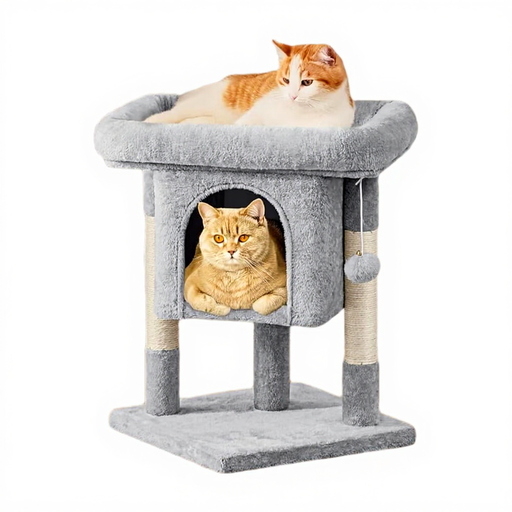
Why this model works: Ideal for kittens, smaller cat breeds, or households with limited space. Its compact design offers all the essentials on a small footprint: scratching posts, a cave, and a lounging area.
The wide base plate (40.5 x 40.5 cm) ensures good stability relative to its low height, bypassing the typical "stability trap" of small models. The features are tailored to the needs of young or timid cats.
Space-saving design with a secure cave for retreat, which is especially beneficial for kittens during their adjustment period.
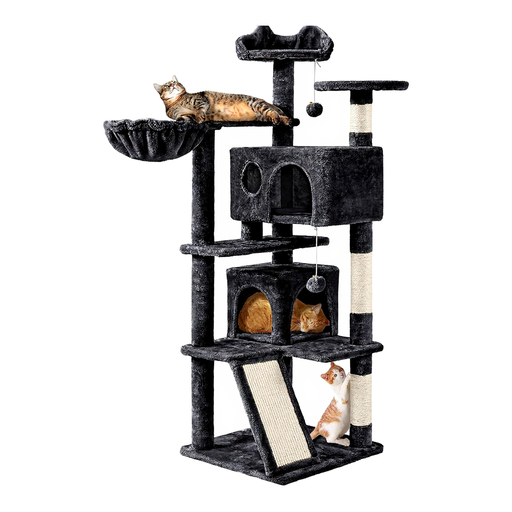
Why this model works: A great choice for households with two medium-sized cats or one very active cat. The 145 cm height and multiple levels satisfy the natural climbing instinct.
The "design trap" is avoided with two separate caves and three perches, reducing potential conflicts in a multi-cat household. The included anti-tip kit for wall mounting proactively addresses stability concerns.
Versatile structure with multiple levels and retreats. The construction from FSC-certified particle board is a bonus for sustainability.
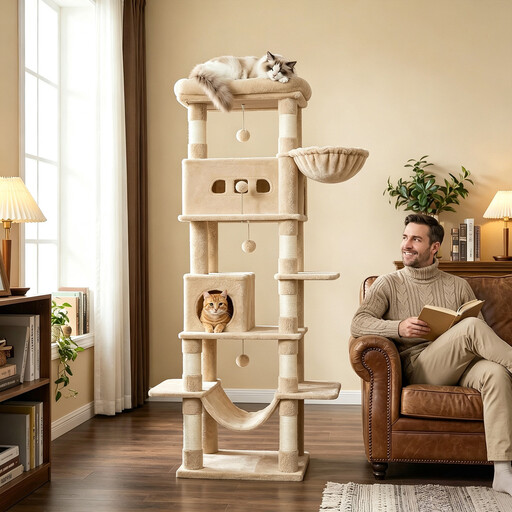
Why this model works: Designed for the most demanding needs, such as for owners of large breeds like Maine Coons or Ragdolls, as well as for multi-cat households. This `large cat tree` offers maximum height and space.
The "stability trap" is thoroughly avoided with a thickened, reinforced base plate, 8 sisal posts, and an anti-tip kit. The "design trap" is addressed by the 60x40 cm top platform, which offers ample space even for very large cats.
Exceptional stability and spaciousness. The six tiers and thoughtful layout, including two caves and a hammock, provide enough room for even 5-6 cats.
We have compiled a complete, up-to-date list of products that fully meet these strict selection criteria and rigorous safety requirements.
1. How do I get my cat used to the new cat tree? Place the cat tree in a spot where your cat likes to hang out, such as near a window or in the living room. Make the tree more interesting by placing treats or toys on the different levels. Rubbing the sisal posts with a little catnip can also help capture your cat's attention.
2. How high should a cat tree be? The ideal height depends on your cat's age, activity level, and the available space. Active, young cats often prefer tall, floor-to-ceiling models that allow them to climb right up to the ceiling. For older or less mobile cats, a medium-height model with easily accessible steps may be a better choice. As a general rule: the more vertical space, the better for satisfying their natural climbing instinct.
3. How do I clean and maintain a cat tree? Regular maintenance is simple and extends the life of the cat tree. Loose hair and dust are best removed with a vacuum cleaner. Stains on the plush can be spot-treated with a damp cloth and a mild detergent. Additionally, regularly check all screw connections to ensure they are tight to maintain long-term stability.