
Lieferung heute & morgen

Qualitätsgarantie

Willkommens-Angebote freischalten: KOSTENLOSE Lieferung | Bis zu 80 % RABATT | Kostenlose 30-Tage-JoyPlus-Testphase
App herunterladen
As the owner of a large cat like a Maine Coon, Ragdoll, or Norwegian Forest Cat, you know the challenge: a standard cat tree is often too small, too wobbly, and is quickly ignored or, in the worst-case scenario, knocked over. Finding a model that can withstand the weight, strength, and energy of a large pet can be frustrating.
This article serves as your guide. We'll introduce the crucial criteria for selecting a suitable cat tree for large cats and present a selection of models designed for stability, size, and functionality. Our goal is to provide you with the information you need to make an informed decision, ensuring your cat has a safe and stimulating place to climb, scratch, and rest.
Before making a decision, you should consider three core aspects that are critical for the safety and longevity of a cat tree.
A stable cat tree is the most important requirement. Large cats generate significant force when jumping and climbing. Look for the following features:
An XXL cat tree is more than just tall. The individual components must be sized to fit your cat.
The quality of the materials used determines how long the climbing tree for your cat will remain attractive and functional.
Based on the criteria above, we have compiled a selection of models that cater to different needs and space constraints.
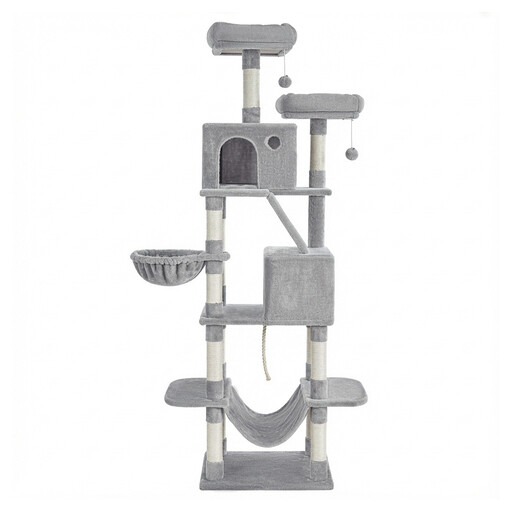
Why It Stands Out: At a height of 206 cm, this cat tree is large enough to satisfy even the most active climbers and multi-cat households. The thoughtful layout offers numerous functional areas on multiple levels.
Pros:
Best For: This model is the top choice for owners of very large cat breeds or for multi-cat households looking for a comprehensive, all-in-one solution with maximum space.
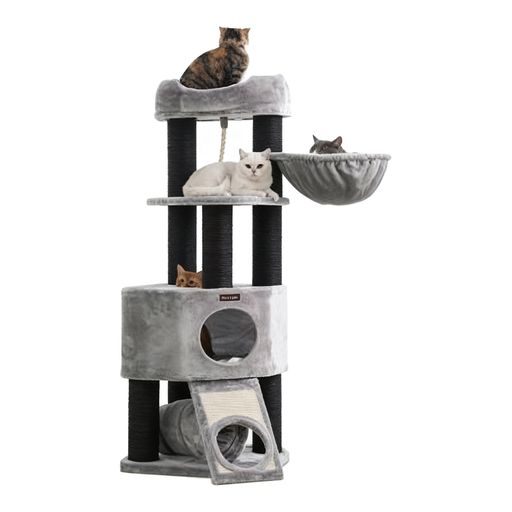
Why It Stands Out: This model makes zero compromises on stability. With its exceptionally thick posts and reinforced base, it is a very secure choice for strong and heavy cats.
Pros:
Best For: Ideal for owners of one or two large cats who place the highest value on safety and stability and prefer a robust, but not floor-to-ceiling, cat tree.
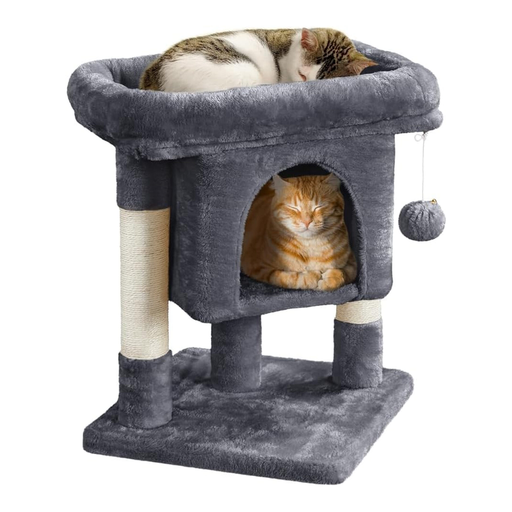
Why It Stands Out: This model is intentionally designed as a compact solution. It is not meant to be the primary climbing tower for a fully grown Maine Coon, but it can be a useful addition.
Pros:
Best For: This model is suitable for owners of medium-sized cats, as a first cat tree for kittens, or as a secondary cat tree in another room (e.g., the bedroom or office) to offer a scratching option there as well. It is not adequately sized as a standalone solution for large breeds.
A large cat tree offers activity and a view, but many cats also appreciate a separate, sheltered sleeping spot on the ground. A soft and enclosed cat cave can be the perfect complement.
Discover our selection of cozy plush cat caves to find the perfect retreat for your cat.
1. How can I identify a truly stable cat tree? A stable cat tree is characterized by a combination of a wide, heavy baseplate, thick scratching posts (over 10 cm in diameter), and solid screw connections for all components. For models over 150 cm tall, an included wall anchor (anti-tip kit) is an essential safety feature.
2. How tall should a cat tree for a large cat be? The ideal height depends on your cat's activity level. Models from 140 cm and up already offer good climbing opportunities. However, the stability of the overall structure and the size of the perches are more important than the absolute height. A very tall but wobbly tree will be avoided by cats.
3. How do I get my cat used to the new cat tree? Place the cat tree in a location where the family often gathers, such as the living room. Make it interesting through interactive play with a cat wand. You can also sprinkle some catnip on the posts and perches or place treats on the different levels to encourage exploration.