
Lieferung heute & morgen

Qualitätsgarantie

Willkommens-Angebote freischalten: KOSTENLOSE Lieferung | Bis zu 80 % RABATT | Kostenlose 30-Tage-JoyPlus-Testphase
App herunterladen
The selection of cat trees on the market can be overwhelming. As a cat owner, you want a solution that is not only durable and safe but also meets your pet's natural needs for scratching, climbing, and resting. A well-chosen cat tree is more than just a piece of furniture; it is an essential part of a fulfilling life for your cat and also protects your own furniture from scratch marks.
My name is Joybuy, and as a Product Recommendation Officer at Joybuy, my job is to provide you with clear and objective information. This guide is designed to help you understand the different options and make an informed decision that suits both your cat and your living space.
To make the right choice, you should consider a few basic criteria. These factors ensure that the cat scratching tree is safe, functional, and built to last.
A sturdy cat tree is paramount, especially if you have a large or very active cat, or if you have multiple cats in your household. Look for a heavy, wide base that prevents it from tipping over. The thickness of the posts also contributes to its stability.
The material is crucial for durability and acceptance. A robust sisal scratching post is ideal, as the coarse fibre satisfies a cat's natural scratching instinct and supports claw maintenance. Soft plush coverings on perches and in condos provide comfort and warmth. Models made from FSC-certified engineered wood indicate responsible material sourcing.
The size of the cat tree should suit both your cat and your living situation. A small cat tree is excellent for smaller apartments or as a starter piece for kittens. For adult cats who love to climb or for multi-cat households, a large cat tree or a floor-to-ceiling climbing tree for your cat is often the better choice, as it offers more vertical space for playing and observing.
The features should cater to your cat's preferences. A cat tree with a condo provides a secure hideaway. Viewing platforms at different heights satisfy their curiosity, while hammocks and lounging cradles invite them to relax.
Based on functionality, materials, and user feedback, we have compiled a selection of models for different needs.
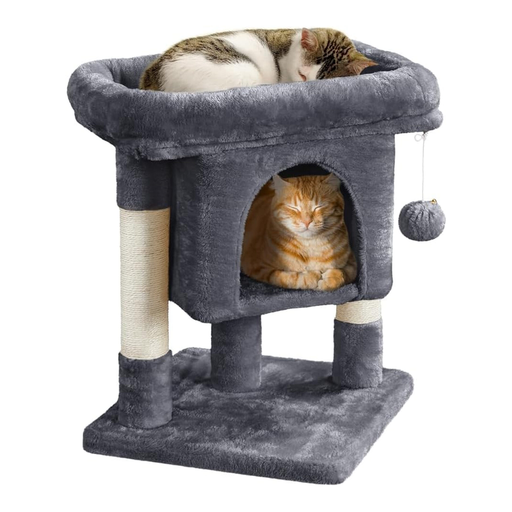
Why this model stands out: This model combines essential features in a minimal footprint. At just under 60 cm tall, it fits discreetly into any apartment while still offering a cosy condo and two scratching posts.
Advantages:
Who is this model for? This model is an excellent choice for owners of kittens or a single, smaller cat living in an apartment with limited space.
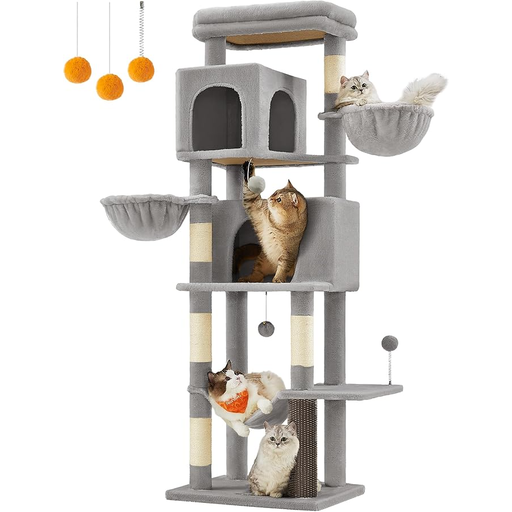
Why this model stands out: With a height of 175 cm and a variety of levels, this climbing tree for cats is a true playground. It was specifically designed for the needs of multiple cats, providing enough space to avoid conflicts over the best spots.
Advantages:
Who is this model for? Ideal for owners of two or more cats who are looking for a large, feature-rich, and above all, stable activity tower that combines climbing, playing, and resting.
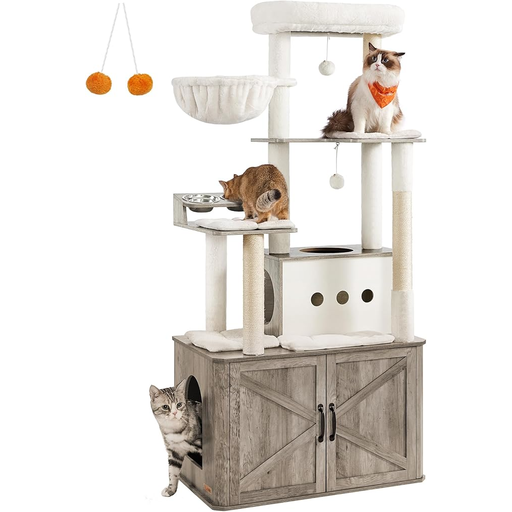
Why this model stands out: This innovative piece of cat furniture redefines functionality. It integrates not only play and rest areas but also a cabinet for the litter box and an elevated feeding station. It's a thoughtful solution that bundles multiple needs into one piece of furniture.
Advantages:
For whom is this model suitable? Perfect for cat owners seeking an extremely space-saving and functional all-in-one solution that enriches the cat's living space while keeping things tidy.
Every cat's needs are unique. If the models presented here don't quite match what you're looking for, there are many other options to discover. From minimalist scratching posts to expansive climbing landscapes, the selection is vast.
Browse our entire collection and find the perfect solution for your home. Discover more cat houses and activity centers here.
1. How do I get my cat used to the new cat tree? Place the cat tree in a spot where your cat likes to spend time, such as the living room or near a window. You can encourage acceptance by placing toys, treats, or some catnip on the different levels. Play with your cat on and around the new furniture to create positive associations.
2. How tall should a cat tree be? The ideal height depends on your cat and the available space. For kittens or calmer cats, a small cat tree to medium-height one (approx. 60–120 cm) is often sufficient. Active cats, avid climbers, or households with multiple cats benefit from a tall model (over 150 cm), as it offers more vertical space to play and observe.
3. What is the best material for a scratching post?Sisal is considered one of the most suitable materials for a scratching post. It is a very robust and durable natural fibre. Its coarse texture is ideal for claw maintenance, as it allows the cat to effectively remove the dead outer layers of their claws and mark their territory.