
Lieferung heute & morgen

Qualitätsgarantie

Willkommens-Angebote freischalten: KOSTENLOSE Lieferung | Bis zu 80 % RABATT | Kostenlose 30-Tage-JoyPlus-Testphase
App herunterladen
A cat tree is more than just a piece of furniture; it's an essential part of an indoor cat's environment. It not only satisfies their natural need to sharpen their claws—saving your furniture in the process—but also serves as a climbing gym, observation deck, and secure retreat. However, the market is vast, and choosing the right model can be overwhelming.
This guide is here to help. We'll outline objective criteria for making your selection and present a range of models that meet different needs for size, function, and space. Our goal is to provide you with a solid foundation for purchasing a durable and cat-friendly tree that will last for years.
Before you decide on a model, several key factors should be considered. These ensure that the new climbing tree for your cat is both safe and functional.
A sturdy cat tree is fundamental to your cat's safety. Look for a wide, heavy base plate that prevents tipping, especially if your cat loves to leap onto the tree with a running start. For households with multiple cats or large cats like Maine Coons or Norwegian Forest Cats, an XXL cat tree with thick posts and a solid overall build is essential. Models with an additional wall anchor (anti-tip kit) offer maximum security. Materials like FSC-certified particle board indicate a responsible and robust construction.
A cat tree's functionality is defined by its features. A good cat scratching tree combines several key elements:
Measure the intended space before you buy. A large cat tree requires a significant footprint but also offers more variety. Ideally, place the tree in a spot where the family often gathers or near a window to give your cat an interesting view. For smaller apartments or as a starter tree for kittens, more compact models that still fulfil all the essential functions are suitable.
Based on the criteria mentioned, we've compiled a selection of models that cater to various needs.
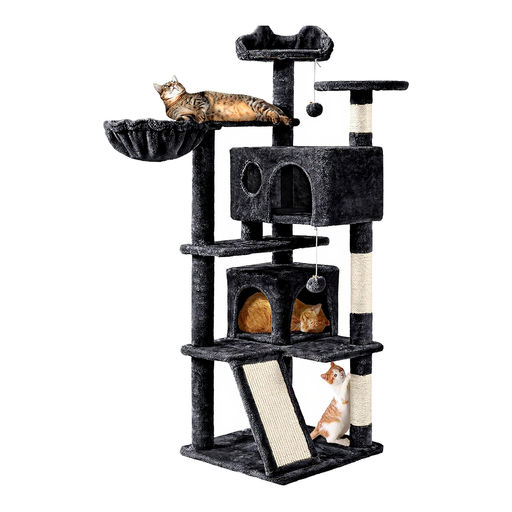
What makes it stand out: This mid-sized model is an all-rounder that enables climbing, scratching, and resting on multiple levels. Its construction of FSC-certified particle board, plush fabric, and sisal rope offers a balanced mix of comfort and durability. With two condos and three observation platforms, it's designed for a variety of activities.
Pros:
Who it's for: Ideal for households with one or more small to medium-sized cats looking for a versatile and stable climbing tree that doesn't take up excessive space.
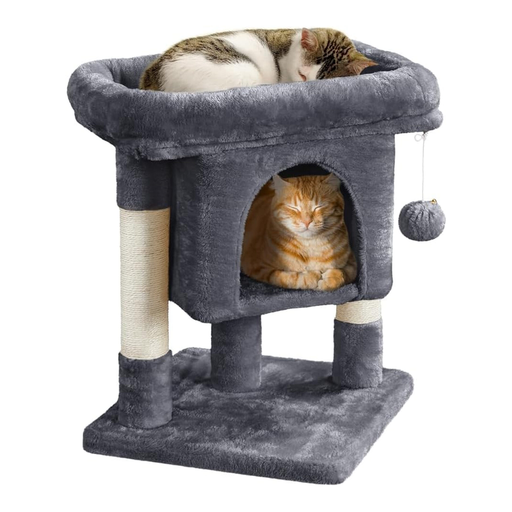
What makes it stand out: This compact cat tree is specially designed for small spaces and young cats. Despite its modest height of 60 cm, it provides all the basic functions with a cosy condo, a top perch, and two sisal-wrapped posts. The soft plush covering ensures high comfort.
Pros:
Who it's for: Perfect for owners of kittens or small cat breeds, as well as anyone living in an apartment with limited space who still wants a functional cat scratching tree.

What makes it stand out: This floor-to-ceiling XXL cat tree is a true climbing paradise for active and demanding cats. At 206 cm tall, with 13 scratching posts, two condos, a hammock, and multiple perches, it offers maximum vertical space and engagement. The reinforced base and a high static load capacity of up to 75 kg make it exceptionally stable.
Pros:
Who it's for: The top choice for owners of multiple cats or large cat breeds. This cat tree for large cats provides enough space and stability to satisfy the play and rest needs of an entire feline group.
Especially large breeds like Maine Coons place high demands on the stability and size of a cat tree's perches. If you're specifically looking for models that meet these requirements, you'll find a suitable pre-selection here.
? Discover our curated selection of Maine Coon Cat Tree models.
1. How do I get my cat used to the new cat tree? Place the cat tree in a central, busy area. To spark curiosity, you can initially place treats, catnip, or toys on the different levels. Praise your cat whenever they use the tree. Avoid forcing your cat onto it.
2. How tall should a cat tree be? The ideal height depends on your cat and the available space. Active cats often prefer tall models that give them a good overview of their surroundings. However, a sturdy construction is more important than sheer height. Even a mid-sized but well-equipped tree can meet all their needs.
3. How do I clean a cat tree? Hair and dust are best removed regularly with a vacuum cleaner. Stains on the plush fabric can be spot-treated with a damp cloth and a mild detergent. Occasionally check the sisal posts for heavy wear and brush off any loose fibres.
Your Joybuy Product Recommendation Officer