
Lieferung heute & morgen

Qualitätsgarantie

Willkommens-Angebote freischalten: KOSTENLOSE Lieferung | Bis zu 80 % RABATT | Kostenlose 30-Tage-JoyPlus-Testphase
App herunterladen
Whether you run a restaurant, café, catering business, event venue or are a private host: glasses for catering need to suit the drink, the frequency of use and the setting. An aperitif served indoors has different requirements from a large outdoor event. Appearance, storage, cleaning and break resistance also affect your ongoing costs.
A glass with a 24 cl capacity isn’t automatically intended for a 24 cl serve. With wine, cocktails and aperitifs, room is often needed for ice, garnish or an attractive presentation. Small 10 cl glasses, on the other hand, are better suited to tastings, side dishes or measured portions.
Before you buy, you should therefore check:
Plastic glasses made from PP or polystyrene are lighter than glass and can be useful for parties or outdoor areas. However, they have their own limitations. Some models are only intended for cold drinks, not for hot liquids or the microwave. Scratches from abrasive sponges can affect the transparent surface.
So pay attention to the material, the approved temperature range and the cleaning instructions. With frequent use, it’s also important whether the product is designed for reuse or should be disposed of after an event.
A low unit price can be misleading if glasses can only be washed by hand, take up a lot of space or aren’t stackable. For catering businesses, it’s not just the purchase cost that matters, but also:
The shape of the glass should support the intended serve. Cocktail glasses and small aperitif glasses are usually designed for smaller portions, spirits or decorative serving concepts. Sparkling wine glasses and champagne glasses are typically used for sparkling wine, while wine glasses can vary in size depending on the variety and serving amount.
For everyday use in a bar, café or restaurant, tumbler glasses with a stable base are practical. Depending on their volume, they are suitable for water, soft drinks, spirits or cocktails. Dessert glasses and verrine glasses are interesting when you want to present layered desserts, small starters or amuse-bouches visibly.
Glass offers a clear, classic presentation and is suitable for the indoor setting of many catering concepts. For outdoor events, by the pool or for self-service, lightweight plastic tableware can make handling easier.
Important material details:
For all products that come into contact with food, the manufacturer’s instructions on intended use and cleaning should be followed. For commercial use, it’s advisable to keep the product information and, where applicable, the conformity documents for food-contact suitability.
A drinking glass set of four to twelve pieces can be sufficient for small households or manageable events. For catering and hospitality, you should also plan for spare glasses. Different set sizes can simplify procurement if you need to equip multiple stations or event areas.
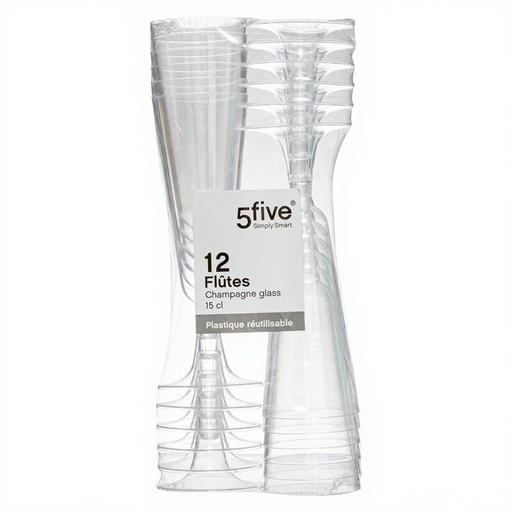
Why this product fits the profile: The 12-piece set provides a uniform setup for parties, picnics and events with many guests.
The details state 150 ml capacity, polystyrene and suitability for cold drinks. This allows you to plan for temperature and cleaning limitations before purchase.
12 pieces per set, transparent design, 150 ml volume and a low product weight of 0.2 kg.
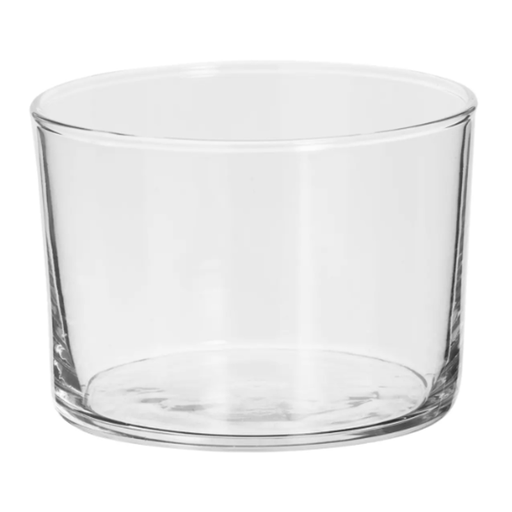
Why this product fits the profile: The glass tumbler combines a classic material with a compact format for restaurant, bar and private table use.
Material, dimensions and weight are clearly stated. The recommended hand washing makes the additional cleaning effort transparent.
24 cl capacity, glass material, compact dimensions of 8.2 × 8.2 × 5.8 cm and packaging units of eight pieces.
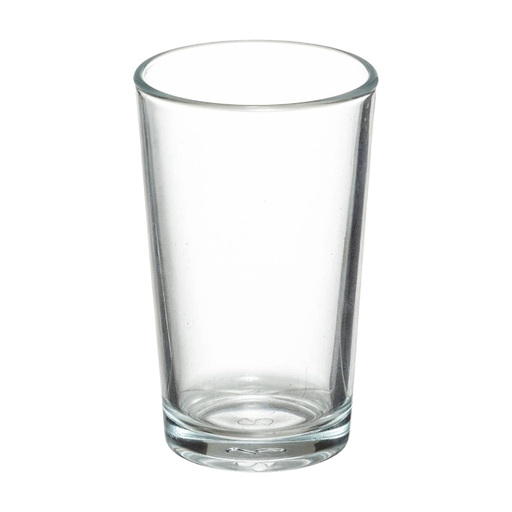
Why this product fits the profile: The 10 cl format is designed for aperitifs, small tastings and portioned side dishes.
The precisely stated volume prevents a small tasting glass from being mistaken for a standard drinking glass.
10 cl capacity, clear glass, 0.11 kg weight and compact dimensions of 8.4 × 5.1 × 5.1 cm.
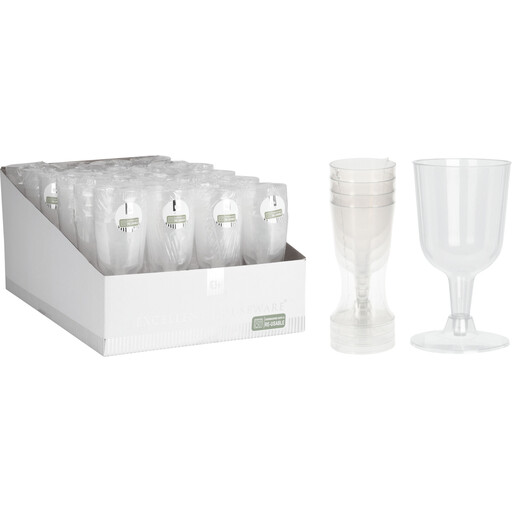
Why this product fits the profile: The four-piece set made from transparent PP is designed for easy handling at parties, picnics and outdoor events.
The product description states PP, 160 ml and a more break-resistant construction. This makes the difference from classic wine glasses clearly recognisable.
Four pieces per set, 160 ml volume, transparent PP and low weight for transport.
We’ve put together a full, regularly updated list of products that fully meet these strict selection criteria and the safety regulations in force in the EU.
For small serving sizes, aperitif glasses of around 10 to 15 cl are suitable. Small verrine or dessert glasses can also be used for canapés, desserts and layered dishes. What matters are the actual volume, stability and the opening for garnishes.
That depends on the material and the specific product information. Some plastic glasses are designed for repeated use, while others are offered as disposable items. For the 150 ml polystyrene set mentioned, hand washing is recommended; according to the product details, the glasses are not dishwasher-safe and are only suitable for cold drinks.
Start by planning based on seating capacity, drink types and changeover intervals. For a restaurant, extra glasses for cleaning, breakage and peak times make sense. For catering and events, the set size should also fit transport crates, service stations and the expected number of guests. A uniform glass shape simplifies storage and reordering.