
Lieferung heute & morgen

Qualitätsgarantie

Willkommens-Angebote freischalten: KOSTENLOSE Lieferung | Bis zu 80 % RABATT | Kostenlose 30-Tage-JoyPlus-Testphase
App herunterladen
As a cat owner, you know that your cat's natural need to scratch is just as important as their desire for a safe haven. A suitable cat tree not only protects your furniture from sharp claws but also provides your cat with their own space to climb, observe, and rest. However, the selection is vast, and making a decision can be challenging.
This article serves as a guide. We'll introduce you to various aspects to consider when choosing a cat tree and present a selection of models that cater to different needs.
To find the right climbing tree for your cat, several functional criteria are crucial. A well-considered decision ensures the tree will be accepted and enjoyed for a long time.
Above all, a cat tree must be stable. A heavy, wide base plate is the foundation for a secure footing, especially if you are looking for a cat tree for large cats or a cat tree for multiple cats. Models that wobble or tip over are avoided by cats and pose a safety risk. For particularly tall structures, an additional wall anchor, often included in the package, is a sensible measure to increase stability.
The size of the cat tree should be based on your cat and the available space. A large, floor-to-ceiling cat tree offers active and climbing-enthusiast cats plenty of vertical space. For smaller apartments or calmer cats, there are more compact alternatives. Pay attention to the features: A cat tree with a condo offers a sheltered sleeping spot, while lounging hammocks and observation platforms satisfy the desire to watch and relax. Multiple posts wrapped in sisal are essential for claw maintenance.
The durability of a cat tree largely depends on the materials used. The scratching posts should be wrapped in robust natural sisal that can withstand even intensive use. The cover for the lounging areas is usually made of soft plush for comfort. Check that all parts are well-crafted and free of sharp edges or loose parts that could injure your cat.
Here you will find a selection of models that, with their different features, are suitable for various requirements.
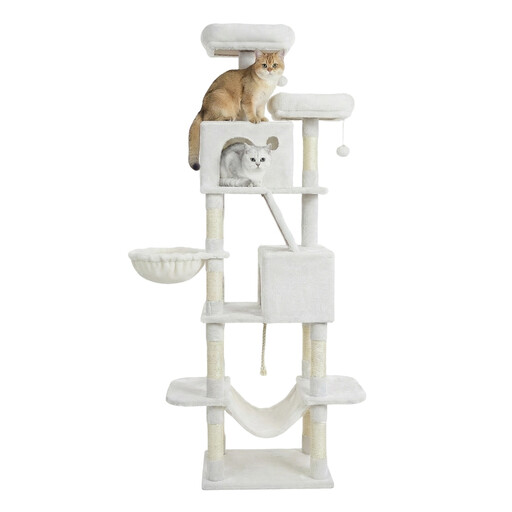
Why This Model Stands Out With a height of 206 cm, this floor-to-ceiling cat tree offers an impressive vertical playground. It is specially designed for households with multiple or very active cats. The sturdy construction and a high static load capacity of up to 75 kg, according to the manufacturer, ensure the necessary safety.
Advantages
Who Is It For? This model is a great choice for owners of multiple cats or large, active breeds like Maine Coons or Norwegian Forest Cats who need a robust and varied climbing and play area.
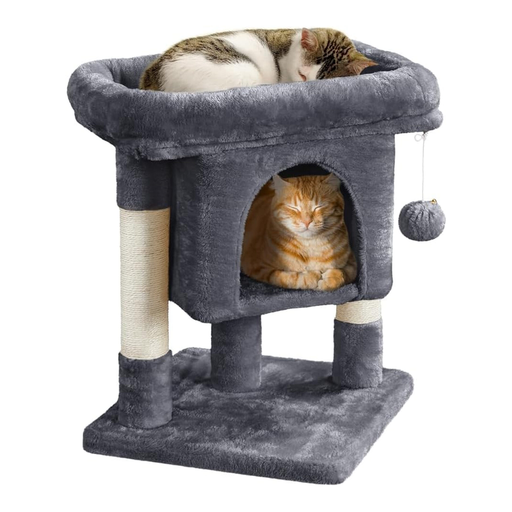
Why This Model Stands Out This compact cat tree from Yaheetech is a space-saving solution that still meets a cat's basic needs. With a height of just under 60 cm, it fits easily into smaller apartments or can serve as a supplement to a larger tree. The construction from FSC-certified particleboard demonstrates a conscious use of materials.
Advantages
Who Is It For? Ideal for owners of kittens, smaller cats, or older cats that no longer climb great heights. It is also suitable as a first cat tree or for apartments with limited space.

Why This Model Stands Out The model from Feandrea, at 143 cm high, offers a good compromise between size and functionality. The step-like arrangement of the levels also makes it easier for kittens or older cats to climb. A balanced mix of play, scratching, and rest areas makes it a versatile all-rounder.
Advantages
Who Is It For? This cat tree is a suitable choice for households with one or two normal-sized cats. Its design supports both the instinct to play and the need for rest, and its easy-to-climb structure makes it suitable for less agile pets.
Every cat's needs are individual. If the models presented here don't exactly match your requirements, you might find the right alternative in our broader selection.
Place the cat tree in an area where your family frequently gathers, such as the living room. Cats are social animals and enjoy observing the goings-on. A spot near a window is also popular as it offers a view of the outdoors. Avoid isolated or draughty corners.
Make the new cat tree interesting. Place treats or your cat's favourite toy on the different levels. You can also rub some catnip on the sisal posts to encourage scratching. Praise your cat when they use the tree, but never force them to do so.
The lifespan of a cat tree depends on its quality and the intensity of use. Regularly check it for stability and wear and tear. If the sisal posts are heavily worn, the plush fabric is torn, or the structure becomes unstable, it's time for a replacement or to repair individual parts, if possible. A stable and safe cat tree is essential for your cat's well-being.