
Lieferung heute & morgen

Qualitätsgarantie

Willkommens-Angebote freischalten: KOSTENLOSE Lieferung | Bis zu 80 % RABATT | Kostenlose 30-Tage-JoyPlus-Testphase
App herunterladen
The combination of rising summer temperatures and the demand for energy-efficient home solutions is bringing multifunctional devices into the spotlight. A ceiling fan with an integrated LED light and remote control is one such solution, combining illumination and climate control in a space-saving design. This article serves as a guide, presenting objective criteria and select models to support you in your purchasing decision.
Choosing the right model depends on several technical factors. An informed decision ensures the device will meet the specific needs of your space.
The effectiveness of a ceiling fan is largely determined by its diameter and the airflow it generates. Airflow is measured in cubic metres per minute (m?/min) and describes the volume of air the fan can move. For a mid-sized living room (approx. 20–25 m?), a model with a diameter of 122 to 132 cm and an airflow of at least 150 m?/min is recommended. Smaller spaces like home offices or bedrooms can be served by more compact models.
Modern devices offer much more than a simple light source. A dimmable LED ceiling fan allows you to seamlessly adjust the brightness to suit the time of day and mood. Models with light colour change (CCT - Correlated Colour Temperature) also let you choose between warm white, neutral white, and cool white light. Control is conveniently managed via a remote control. A smart ceiling fan can also be operated via an app or voice assistant and integrated into an existing smart home system.
A key advantage of many models is the switchable summer and winter modes.
Here is a selection of products that cover different requirements for lighting and functionality.
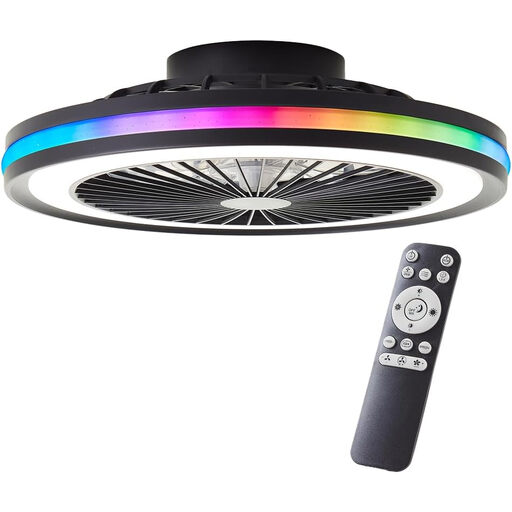
Why This Model Stands Out This model is a comprehensive 2-in-1 solution, combining a powerful light fixture with a fully-featured ceiling fan. It meets all the core requirements of a modern device: lighting, cooling, heating support, and smart control. Its modern black design blends seamlessly into contemporary interior designs.
Advantages
Who Is It For? This model is ideal for homeowners and apartment dwellers looking for an all-in-one solution for living rooms, bedrooms, or large home offices, who also value design, energy efficiency, and smart features.
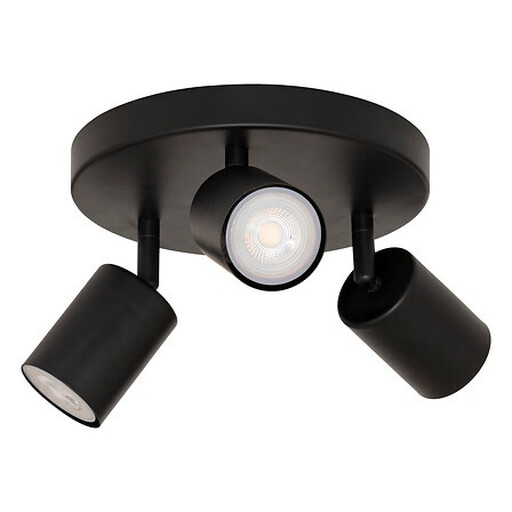
Why This Model Stands Out The Vico ceiling light focuses on one core function: flexible lighting. Instead of a fan, it offers three individually adjustable spotlights to direct light precisely where it's needed. The minimalist design in black metal adds a modern accent.
Advantages
Who Is It For? This light is an excellent choice for users whose priority is an adaptable, design-focused lighting solution and who can do without an integrated fan function or already have a separate climate control system.
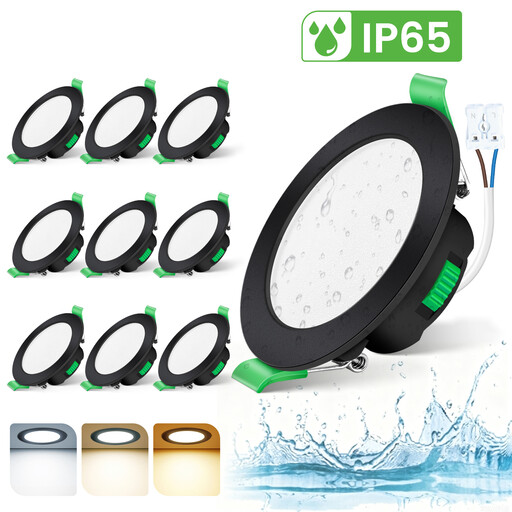
Why This Model Stands Out This set of six recessed spotlights is designed for special applications. With an IP65 protection rating, it is protected against water jets, making it ideal for installation in bathrooms, kitchens, or covered outdoor areas.
Advantages
Who Is It For? These spotlights are aimed at homebuilders and renovators who need a discreet, integrated, and safe lighting solution for damp rooms or for general ambient lighting with modern customisation options.
While the focus of this article is on functional general lighting and climate control, some spaces call for a more unique ambiance. For creating a special atmosphere in basements or home bars, specialised lights can be an interesting addition.
Discover our range of black light fixtures for extraordinary lighting concepts.
Modern devices are very energy-efficient. A ceiling fan with a direct current (DC) motor often consumes only 30 to 40 watts at its highest setting. The integrated LED lighting is also economical; for example, the featured Brilliant model uses 40 watts for high light output. Compared to running an air conditioner and separate lighting, the total consumption is significantly lower.
A ceiling fan does not actively cool the air. Instead, it creates a wind chill effect on the skin through air circulation, which can lower the perceived temperature by several degrees. It is an energy-efficient way to increase comfort on warm days. However, an air conditioner is still required to actually lower the room temperature. In winter, the fan helps to increase the efficiency of your heating system.
Installing a ceiling fan involves working with the building's electrical system and securely anchoring a heavy, moving device to the ceiling. For safety reasons, it is strongly recommended to have the installation carried out by a qualified electrician. They will ensure that the ceiling structure can support the weight and that the electrical connection is done correctly.