
Lieferung heute & morgen

Qualitätsgarantie

Willkommens-Angebote freischalten: KOSTENLOSE Lieferung | Bis zu 80 % RABATT | Kostenlose 30-Tage-JoyPlus-Testphase
App herunterladen
A ceiling fan with an integrated light and remote control is an elegant solution for regulating both room climate and lighting ambiance simultaneously. However, the market is flooded with models whose marketing promises often fall short in practice. Before you make a decision, it's crucial to understand the common pitfalls that can lead to disappointment and unnecessary expense.
As your Joybuy Product Recommendation Officer, I'll help you define objective criteria for your selection.
To avoid the pitfalls mentioned above, you should check three core technical features. These define the performance, comfort, and efficiency of your device.
The motor is the heart of any ceiling fan. There are two basic technologies here:
A ceiling fan with a light and remote control is standard today. Ensure the remote controls all essential functions: speed, light on/off, dimming, and ideally, switching between summer and winter modes. For tech-savvy users, a ceiling fan with app control offers added convenience. A smartphone app often allows you to program timers or seamlessly adjust the light colour.
An often-overlooked but very useful feature is the reversible forward and reverse rotation.
Here are some models that are well-suited for specific user profiles based on objective features.
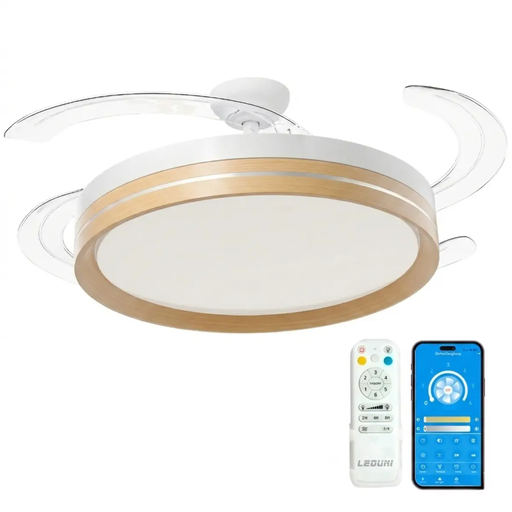
Why This Fits Their Persona: This model combines a modern wood aesthetic with smart technology. The standout feature is the fan with retractable blades: when switched off, the blades disappear, and the unit looks like a simple ceiling light. Perfect for a minimalist and uncluttered living environment.
It bypasses the inadequate lighting control trap with a full CCT function (3000K-6000K) and stepless dimming via the app. The quiet, 6-speed DC motor also addresses the issue of noisy fans.
Retractable blades for a clean aesthetic; control via remote and smartphone app; summer and winter modes.
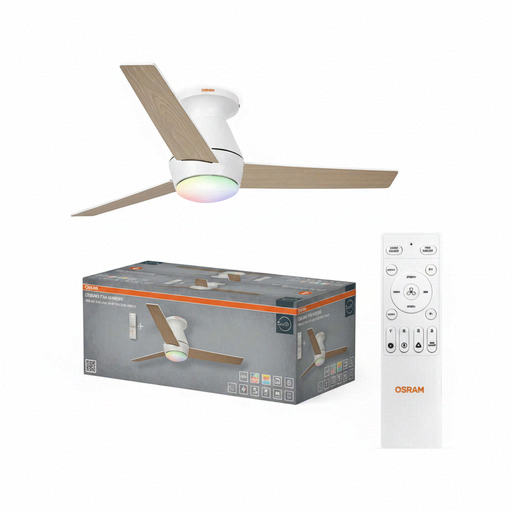
Why This Fits Their Persona: For those who value undisturbed sleep, quiet operation is the top priority. This Osram model is designed for living rooms and bedrooms, with a focus on quiet operation and convenient lighting control. The Osram brand is also renowned for its lighting technology.
The product description highlights its "quiet and comfortable operation," directly addressing the "Whisper-Quiet" trap. The CCT and RGB functions offer far more flexible lighting control than basic models.
Quiet operation ideal for bedrooms; flexible lighting ambiance with CCT and RGB control; convenient operation via remote control.
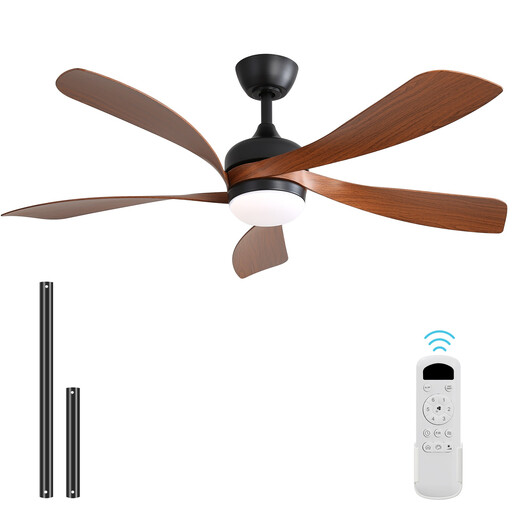
Why This Fits Their Persona: This user is looking for a robust and functional solution for larger rooms like the living room. The large 52-inch (132 cm) diameter ensures effective air circulation. The design is classic and blends unobtrusively into many interior styles without distracting from its core function.
It avoids the high energy consumption trap by using an energy-efficient DC motor, which the manufacturer claims is up to 75% more economical than AC models. With 6 speeds and a reversible function, it is technologically up-to-date.
Large diameter for high airflow; very energy-efficient DC motor; all core functions (CCT, dimming, 6 speeds, winter mode) controllable via remote.
We've curated a complete, up-to-date list of products that fully meet these strict selection criteria and adhere to rigorous safety standards.
1. How do you install a ceiling fan with a light? Installation requires an electrical connection in the ceiling and should always be performed by a qualified electrician. It is crucial to ensure that the ceiling structure can support the weight and dynamic load of the fan. Mounting on drywall or suspended ceilings without additional reinforcement is not recommended.
2. What is the difference in power consumption between AC and DC motors? A DC motor consumes, on average, up to 70% less power than a comparable AC motor. While an AC fan might require 70-100 watts on its highest setting, a DC model often operates on less than 35 watts. This makes a noticeable difference on your electricity bill with regular use.
3. Can a ceiling fan be useful in winter? Yes. By using the summer-winter mode (reverse rotation), a ceiling fan can support the efficiency of your heating system. It gently pushes the warm air that accumulates near the ceiling downwards, ensuring more even heat distribution throughout the room. This can make the room feel noticeably more comfortable and potentially reduce heating costs.