
Lieferung heute & morgen

Qualitätsgarantie

Willkommens-Angebote freischalten: KOSTENLOSE Lieferung | Bis zu 80 % RABATT | Kostenlose 30-Tage-JoyPlus-Testphase
App herunterladen
A new ceiling light should illuminate the room sufficiently, complement your interior style and be safe and reliable to install. In practice, however, poor purchases are not caused by design considerations alone. Brightness, bulbs, dimensions and suitability for the intended room are often checked too late.
This buying guide explains what private households in the UK should look for when choosing a ceiling lamp, and which models suit different usage profiles.
Wattage describes energy consumption, not the amount of light directly. For comparison, luminous flux in lumens is a more meaningful measure. For example, an LED ceiling light can provide a high level of brightness at 24 or 36 watts, while a traditional light fitting with a replaceable bulb depends on the bulb used.
With a light featuring an integrated LED module, you should also check whether the light source can be replaced. With E27 or E14 fittings, the bulb can be replaced separately.
Colour temperature is measured in kelvin:
A ceiling light with 6,500 kelvin appears noticeably cooler than a warm-white ceiling lamp with 3,000 kelvin. If you are looking for a dimmable ceiling light, check whether the light itself is dimmable and which dimmer is compatible with it. A replaceable bulb is not automatically dimmable.
Before ordering, your checklist should include the diameter, height, number of light sources and position of the connection point. A large light fitting can feel intrusive in a small hallway. With a ceiling light featuring 3 spotlights, you should also check whether the light heads can be adjusted and whether the ceiling provides enough space for the mounting plate.
Different requirements apply to damp areas. The models mentioned here are intended for indoor use, with some featuring IP20 protection. Bathrooms, balconies and sheltered outdoor areas require a suitable IP rating.
The brightness required depends on the room size, wall colour and intended use. A living room generally needs even ambient lighting, while a home office also requires focused light at the workstation. Spotlights can provide more targeted light distribution than a fully diffused shade.
Look for clear information about lumens, wattage and light colour. For example, the White LED Acrylic Ceiling Light is specified as having 4,000 lumens, 36 watts and 6,500 kelvin. These figures provide an objective description of the intended light output and colour temperature.
An E27 ceiling light with a ceramic fitting is flexible because suitable E27 bulbs can be selected separately. The Lameke light is designed for a Type A bulb with a maximum output of 60 watts and has an E27 ceramic fitting. Before buying, compare the fitting type and maximum wattage with the bulb you intend to use.
An integrated LED ceiling light, on the other hand, offers a compact design. The Brilliant Teranon is specified as having 24 watts, 2,300 lumens and 3,000 kelvin. According to the product information, this model is not dimmable. This is important information for buyers planning to control their lighting flexibly.
Materials such as wood, bamboo, metal, glass and fabric affect appearance, weight and maintenance requirements. A wooden ceiling light or a light with a wood-effect finish often complements natural interior schemes. A glass or fabric shade can diffuse the light more extensively, while open shades and spotlights create more directional lighting.
You should also look for:
Connection to the household electrical system in the UK should be carried out by a qualified electrician in accordance with the applicable regulations. A ceiling light with a glass shade or several spotlights also requires secure attachment to a suitable ceiling structure.
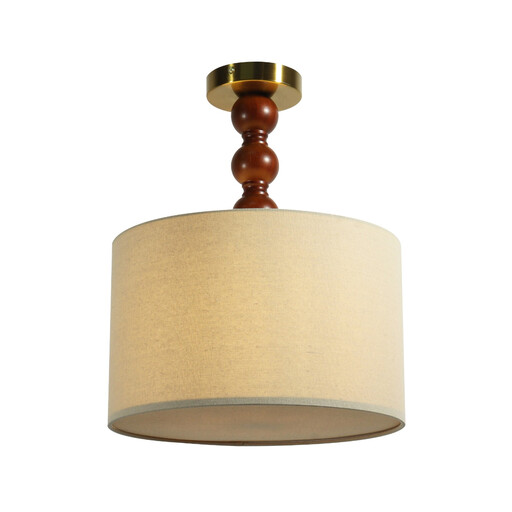
Why this product suits the profile: This light combines a 35 cm linen shade with wooden elements and an E27 ceramic fitting. This means you can choose the bulb separately and replace it later.
The fitting and maximum output of 60 watts are clearly specified. Buyers do not have to rely on an unclear integrated light source.
E27 ceramic fitting, linen shade, wooden elements and specified VDE cables according to the product description.
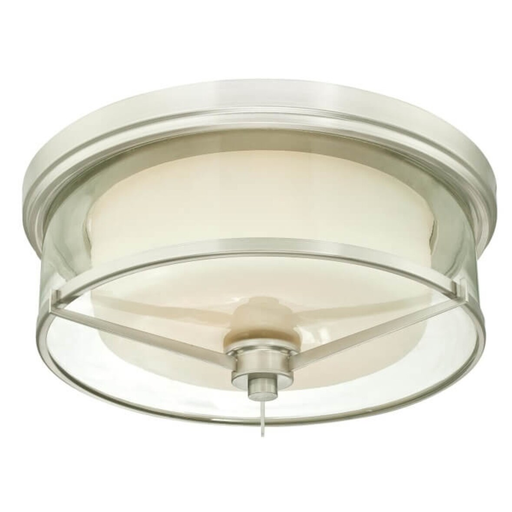
Why this product suits the profile: A nickel finish, clear and frosted glass, and two E27 bulbs combine decorative design with replaceable light sources.
The required fitting – 2 × E27 – is clearly stated. This allows you to choose the light colour, lumens and, where applicable, dimmability through the bulbs.
Two E27 fittings, a combination of metal and glass, and an open design for a visible lighting effect.
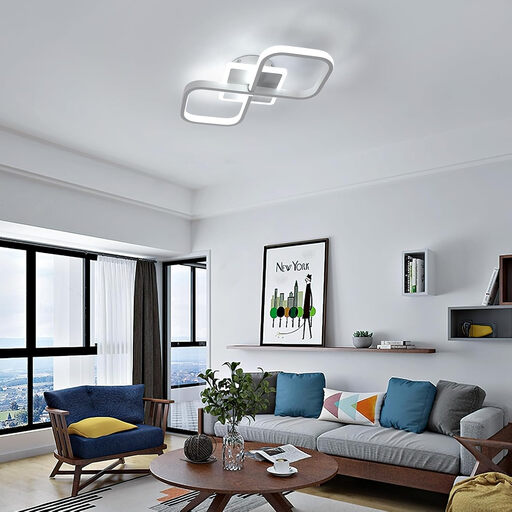
Why this product suits the profile: The integrated LED technology with 4,000 lumens and 6,500 kelvin is designed to provide bright, crisp lighting in living rooms, work areas, hallways or bedrooms.
Luminous flux, power consumption and colour temperature are specified. This makes it easier to compare the light with other LED models.
4,000 lumens, 36 watts, integrated LED technology and an acrylic shade with even light distribution according to the product information.
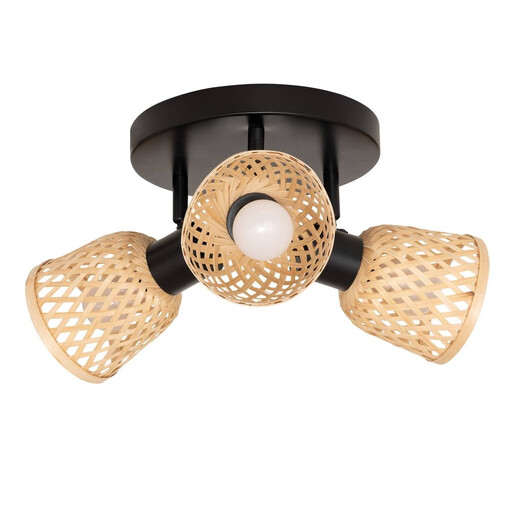
Why this product suits the profile: Three adjustable spotlights with woven bamboo shades are particularly suitable for small rooms, hallways and interiors featuring natural materials.
The light is specified for indoor use with IP20 protection. The three spotlights can be adjusted instead of directing the light in just one fixed direction.
Three E14 fittings, adjustable spotlights, bamboo shades with an FSC statement and compact dimensions of 25 × 25 × 18.8 cm.
We have compiled a complete, regularly updated list of products that fully meet these strict selection criteria and the safety regulations applicable in the EU.
This depends on the room size, intended use and desired lighting effect. For an initial selection, the manufacturer’s lumen specifications are more useful than the wattage. Work areas may require an additional desk lamp, even if the ceiling light has a high luminous flux.
The lifespan depends on the LED module, operating time, heat dissipation and usage. Manufacturer specifications should be treated as a guide. With an integrated LED, check whether the module can be replaced. With a light featuring an E27 or E14 fitting, the bulb can be replaced separately.
Running costs depend on power consumption, daily operating time and the electricity tariff. The calculation is: wattage divided by 1,000, multiplied by the number of operating hours and the price per kilowatt-hour. An energy-efficient ceiling lamp should therefore be chosen not only for its design, but also for its wattage and actual usage time.