Joybuy Insights

Complete Ceiling Light Buying Guide for Your Home

Choosing the right ceiling light is crucial for the atmosphere and functionality of a room. However, the market is flooded with options, and their technical specs and design features often create more confusion than clarity. A hasty decision frequently leads to buyer's remorse—whether it's a lamp that inadequately illuminates the space or a model whose installation proves unexpectedly complex. This guide will help you avoid common pitfalls and make an informed choice.

Common Mistakes When Choosing Ceiling Lights

Before diving into the details, it's helpful to know the most common problems that arise when purchasing ceiling lighting.

  1. The Proportions Dilemma: An opulent chandelier in a small room with a low ceiling will feel overwhelming. Conversely, a fixture that is too small gets visually lost in a large, high-ceilinged living room and provides insufficient light. The relationship between the size of the light and the dimensions of the room is often underestimated.
  2. Inflexible Lighting: Many buyers opt for a light without a dimming function, only to find later that the light is too harsh for cosy evenings. A living room lamp or dining room light benefits enormously from adjustable brightness. Likewise, an integrated LED module can be problematic if it fails, as the entire fixture often needs to be replaced.
  3. Overlooking Installation Complexity: The effort required for installation is often overlooked, especially with heavy pendant lights or intricate sputnik chandeliers. Not every ceiling is designed to support significant weight, and complex wiring typically requires a qualified electrician.

Key Parameters for the Right Decision

To avoid these mistakes, you should check three essential technical aspects before buying. These determine not only the look but also the long-term usability of your new ceiling light.

1. Socket and Bulb: Flexibility vs. Integration

The choice of light source is fundamental. There are two primary approaches here:

  • Standard Sockets (e.g., E27): Lights with an E27 socket offer maximum flexibility. You can replace the bulb at any time and choose between different types as needed: classic incandescent bulbs, energy-saving LEDs, smart bulbs, or special vintage lights in the Edison style. If you want a dimmable function, you simply need to use a dimmable bulb and a compatible wall switch.
  • Integrated LED Modules: An LED ceiling light with built-in LEDs is often characterised by a very slim, modern design and high energy efficiency. It is an "all-in-one" solution that requires no separate bulbs. The disadvantage is the lack of replaceability: if the LED module fails after its lifespan, the entire fixture usually has to be replaced.

2. Light Colour and Dimmability: Controlling the Atmosphere

The quality of light has a direct impact on well-being. Two values are crucial here:

  • Light Colour (in Kelvin): The colour temperature determines the lighting mood. Warm white light (approx. 2700–3000 K) creates a cosy, relaxed atmosphere, ideal for living rooms and bedrooms. Neutral white light (approx. 4000 K) appears more functional and is well-suited for kitchens or workspaces. Daylight white (over 5000 K) promotes concentration and is often used in offices or workshops.
  • Dimmability: The ability to adjust the brightness transforms a functional room into a versatile living space. Check whether the light is marked as dimmable. For lights with a socket, you will also need a dimmable bulb and a suitable dimmer switch.

3. Fixture Type and Room Height: From Pendant Lights to Flush Mounts

The design of the light must match the room height to ensure harmonious and functional illumination.

  • Flush Mount Ceiling Lights: These are mounted directly on the ceiling and are the ideal solution for rooms with low ceiling heights (under 2.40 m), as they don't take up any vertical space.
  • Pendant Lights: These hang from the ceiling on a cable or rod. They are excellent for targeted illumination of areas like dining tables or kitchen islands. As a rule of thumb, the distance between the tabletop and the bottom edge of the light should be 60–70 cm.
  • Chandeliers: As an opulent version of the pendant light, chandeliers require high ceilings and ample space to achieve their full effect. They are often the central design element in large living rooms, entrance halls, or dining rooms.

Our Selection for Different Needs

Here are some recommendations tailored to different needs and interior styles.
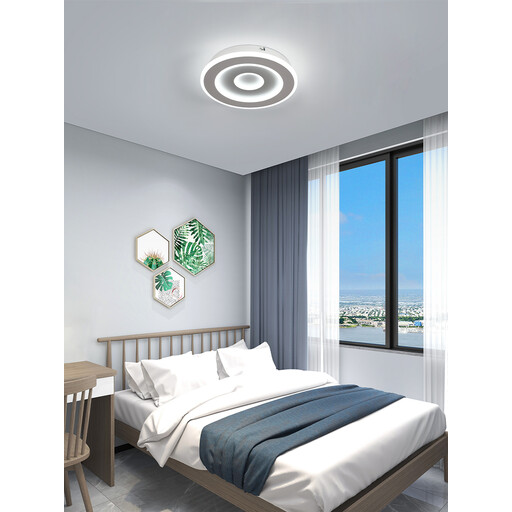
MATCH FOR: Purists and Pragmatists
Pheashine Ultra-slim acrylic ceiling light, white round, white light 6500K, 28W

Pheashine Ultra-slim acrylic ceiling light, white round, white light 6500K, 28W

Why This Fits Their Persona: Ideal for users seeking a straightforward, modern, and functional lighting solution. Its minimalist design blends seamlessly into almost any environment without being obtrusive.

How It Avoids the Trap

The ultra-slim profile solves the proportions dilemma in rooms with low ceilings. As an integrated LED solution, it eliminates the worry of choosing the right bulb.

Key Advantage & Pros

Energy-efficient LED technology; very slim profile, ideal for low ceilings; simple installation.
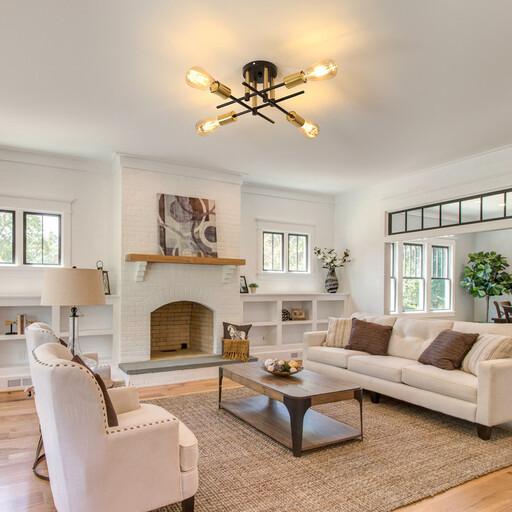
MATCH FOR: Industrial Design Aficionados
Pheashine Wrought iron pendant light, 4-light, black and gold two-tone finish, E27 sockets

Pheashine Wrought iron pendant light, 4-light, black and gold two-tone finish, E27 sockets

Why This Fits Their Persona: Perfect for anyone who appreciates the raw charm of an industrial design lamp. The combination of black and gold (a black and gold ceiling light) makes a bold statement in living rooms, kitchens, or cafés.

How It Avoids the Trap

This avoids the inflexible lighting trap. Thanks to its four E27 sockets, you can use bulbs of your choice (e.g., dimmable ones) to flexibly shape the atmosphere.

Key Advantage & Pros

Flexible bulb choice; adjustable arms for customised light direction; striking industrial design.
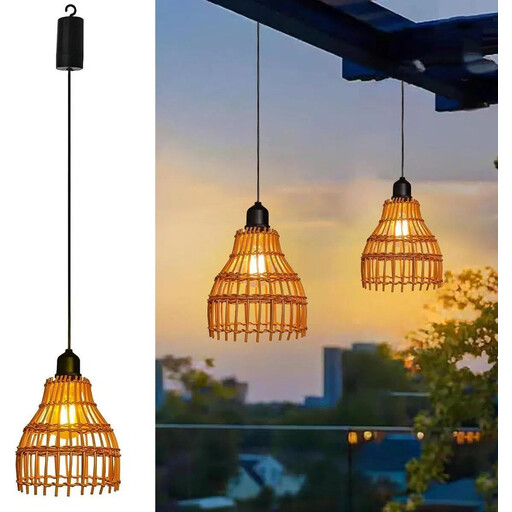
MATCH FOR: The Independent & Creative
Hanging Boho Lampshade Rattan Pendant Lamp, Battery Operated

Hanging Boho Lampshade Rattan Pendant Lamp, Battery Operated

Why This Fits Their Persona: For places without a power outlet—be it a reading nook, a covered balcony, or as decor for an event. This battery-operated pendant lamp in the popular Boho lamp style offers maximum freedom.

How It Avoids the Trap

Completely sidesteps the installation complexity pitfall. Since no power connection is needed, all wiring work is eliminated. Simply hang it up and insert batteries.

Key Advantage & Pros

No power outlet required; integrated timer function (6h on / 18h off); portable and versatile.

Looking for More Options?

We have compiled a complete, real-time list of products that fully satisfy these strict selection criteria and UK safety regulations.

Frequently Asked Questions (FAQ)

1. How high should a pendant light hang over a dining table?

A common recommendation is for the bottom edge of the pendant light to float about 60 to 70 centimetres above the tabletop. This ensures the table is well-lit without blocking the view of the person opposite or causing glare. For very high ceilings, the distance can be slightly greater.

2. Can I dim any E27 lamp?

No. To dim a light with an E27 socket, you need two things: a bulb that is explicitly marked as "dimmable," and a wall-mounted dimmer switch that is compatible with the bulb's technology (e.g., LED). Using a non-dimmable bulb in a dimmer circuit can cause it to flicker or become damaged.

3. What is the difference between a ceiling light and a pendant light?

A ceiling light (often called a flush mount light) is mounted directly and flush against the ceiling. It is ideal for rooms with low ceiling height. A pendant light hangs from the ceiling on a cable, chain, or rod and extends further into the room. It is often used to accentuate specific areas like dining tables or counters.