
Lieferung heute & morgen

Qualitätsgarantie

Willkommens-Angebote freischalten: KOSTENLOSE Lieferung | Bis zu 80 % RABATT | Kostenlose 30-Tage-JoyPlus-Testphase
App herunterladen
A ceiling light affects light distribution, the feel of a room and energy consumption for many years. Even so, buyers often focus only on appearance and price. This can result in a light that is too dim, cannot be dimmed or is unsuitable for the intended room.
Wattage indicates energy consumption, not brightness. When comparing an LED ceiling light, the luminous flux in lumens is more meaningful. Depending on its design, a 18-watt light can produce a different level of brightness from a 24- or 36-watt model.
Room size also plays a part. A small ceiling light in the living room should be chosen based on luminous flux, beam angle and the desired lighting effect, rather than wattage.
Product images do not reproduce light colour reliably. The value in Kelvin is crucial:
A warm-white ceiling light creates a different atmosphere from a light with 6,500 K. For rooms used in several different ways, an adjustable colour temperature can be more practical.
“LED” does not automatically mean that a light is dimmable. Check specifically whether it has a dimming function and whether this is controlled via a wall switch, remote control or app.
The IP rating is also important for bathrooms, kitchen areas and cellars. IP54, for example, indicates protection against water splashes. A light with IP20, on the other hand, is intended for dry indoor areas and should not be used where there is increased moisture.
Luminous flux, measured in lumens, indicates the amount of light emitted. The beam angle also affects whether the light is focused or spread widely. A ceiling light for a home office should illuminate the work surface sufficiently, while a bedroom may only require even, less intense ambient lighting.
With a three-spot ceiling light, adjustable lamp heads can direct the light towards specific areas. This is useful, for example, in a hallway or above a seating area.
Colour temperature is measured in Kelvin. Warm-white values of around 2,700 to 3,000 K are often suitable for living spaces. Neutral-white options can be more comfortable in kitchens and studies. The CRI or Ra value describes how naturally colours appear under the light. The Aigostar model, for example, is specified as having an Ra value of at least 80.
Before buying, measure the diameter, height and position of the connection. A low-profile LED ceiling light is suitable for low ceilings, while a model with a visible shade has a stronger impact as a design feature.
Also check:
In Germany, the electrical connection should be carried out by a qualified electrician in accordance with the applicable regulations.
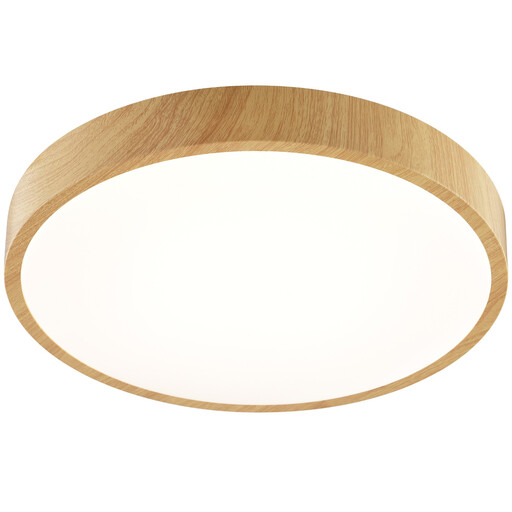
Why this product suits this profile: The integrated LED solution is designed for living rooms, bedrooms, hallways or dining areas, and does not require a separate bulb.
The specifications state 2,300 lumens, 3,000 Kelvin and explicitly confirm that there is no dimming function. This makes it easier to assess whether it is suitable before buying.
24 W LED, 2,300 lm, 3,000 K, 38.5 cm diameter and wood-effect finish.
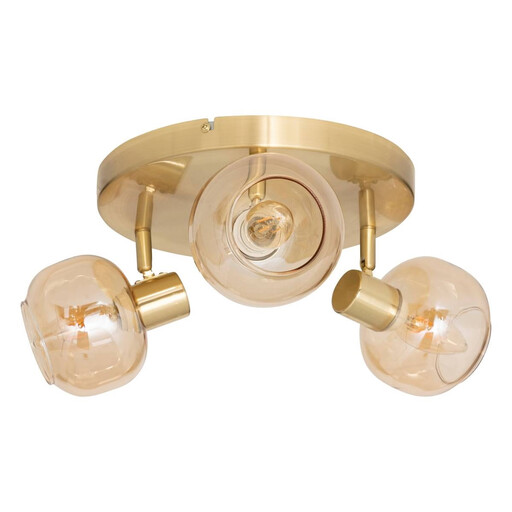
Why this product suits this profile: Steel, amber-coloured glass and three adjustable spotlights combine decorative styling with directional indoor lighting.
The construction and intended use in indoor areas are clearly described. The product information also recommends installation by a qualified electrician.
Three adjustable spotlights, steel and glass construction, 25 cm diameter and at least two years’ statutory warranty according to the product information.
Why this product suits this profile: This smart ceiling light is designed for households using app, voice or Matter control, and for rooms with changing lighting requirements.
Matter compatibility, 2.4 GHz Wi-Fi, IP54 and a maximum luminous flux of 1,800 lumens are specified in detail. The light is also continuously dimmable.
18 W LED, RGBW, 2,700–6,500 K, app and voice control, Matter support and IP54 splash protection.
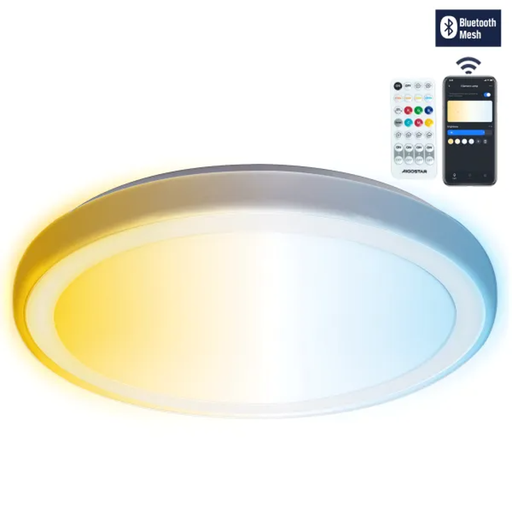
Why this product suits this profile: The wide beam and adjustable colour temperature make it suitable for living spaces, offices and other dry indoor areas.
The light is specified as dimmable and lists specific values for luminous flux, colour temperature, beam angle and IP20 rating. This makes its restriction to dry indoor areas clear.
36 W, 3,960 lm, 3,000–6,500 K, 120° beam angle and Bluetooth Mesh control.
We have put together a complete, regularly updated list of products that fully meet these strict selection criteria and the safety regulations applicable in the EU.
A wooden ceiling light or one with a wood-effect finish often suits natural interior styles. The Atmosphera Lio model features three bamboo shades, a steel frame and E14 fittings. Bulbs are not included; according to the product information, the maximum wattage is 25 watts.
For a classic interior, a light with E27 fittings may be a sensible choice. The Westinghouse Glenford requires two E27 bulbs and combines a nickel finish with clear and frosted glass. Before buying, check whether the bulbs you want are dimmable and compatible with the light.
If you are looking for automatic lighting in a hallway, you could consider a ceiling light with a motion sensor. With sensor lights, pay attention to the detection range, time delay, installation height and whether manual control is possible. The Yeelight Sensor Ceiling Light C300 includes the presence or sensor function in its product name; check the product description for specific installation requirements before buying.
This depends on the size of the room, ceiling height, wall colours and the desired lighting effect. As a guide, compare the stated luminous flux with the room size and beam angle. Several light sources can provide more even illumination than one very bright lamp.
Check the lifespan specified by the manufacturer, the warranty terms and whether the LED module can be replaced. With integrated LEDs, the entire light must be replaced if the module cannot be changed separately. A stated lifespan is a planning estimate, not a guarantee of a specific service life in every household.
For damp rooms, the installation location and IP rating are crucial. According to the available product information, a light with IP54 is protected against water splashes. Models with IP20 are intended for dry indoor areas. The light must also be installed in accordance with the bathroom’s protection zones and connected by a qualified professional.