
Lieferung heute & morgen

Qualitätsgarantie

Willkommens-Angebote freischalten: KOSTENLOSE Lieferung | Bis zu 80 % RABATT | Kostenlose 30-Tage-JoyPlus-Testphase
App herunterladen
Choosing a new ceiling light can quickly become overwhelming. The selection is vast, and the technical specifications are often confusing. A bad purchase doesn't just result in poor lighting; it also leads to unnecessary costs and installation hassles. To help you make an informed decision, we'll illuminate the most common pitfalls and explain which criteria truly matter.
Many buyers focus on design or price, overlooking crucial technical details. This often leads to three typical problems:
To avoid these pitfalls, you should focus on a few essential technical parameters. These determine whether a light is suitable for your purpose.
The two most important values for the lighting effect are lumens (lm) and Kelvin (K).
Modern LED ceiling lights are the top choice here, as they offer a high lumen output with low energy consumption and are available in all colour temperatures.
Making a dimmable ceiling light work requires more than just buying a dimmable fixture. The light's technology must match the dimmer on the wall (e.g., leading-edge or trailing-edge dimmers). Failure to do so can result in flickering.
A smart home ceiling light offers a simpler solution. The dimming function is controlled directly via an app, remote control, or voice assistants like Alexa and Google Assistant. This bypasses compatibility issues with wall switches and enables additional features like adjusting the colour temperature or setting lighting scenes.
For rooms with high humidity, like the bathroom, the IP rating is a crucial safety feature. The abbreviation "IP" stands for "Ingress Protection."
Besides the technical aspects, appearance naturally plays a role. The design influences the light distribution and the character of the room.
Based on these objective criteria, we have compiled a few models for different user profiles and needs.
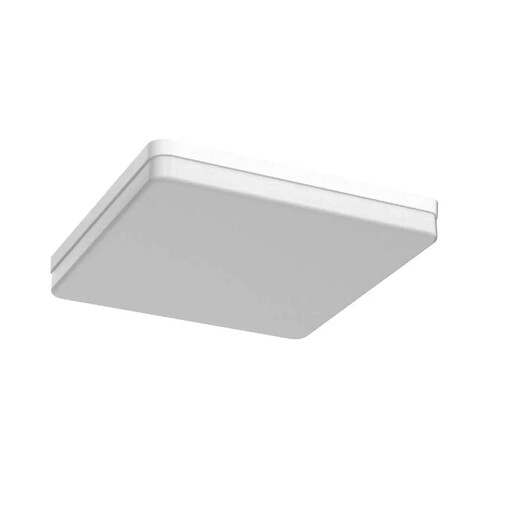
Why This Fits Their Persona: Ideal for anyone seeking functional, bright, and straightforward lighting for hallways, kitchens, or workspaces. The focus is on reliable performance without complex extra features.
This light avoids the brightness trap with clear specifications: 3300 lumens and 4500K Neutral White are perfect for rooms up to 20 m?. Since it is neither dimmable nor smart, compatibility problems are eliminated from the start.
High light output with low energy consumption (36W). The ultra-slim design ensures an unobtrusive integration into the ceiling.
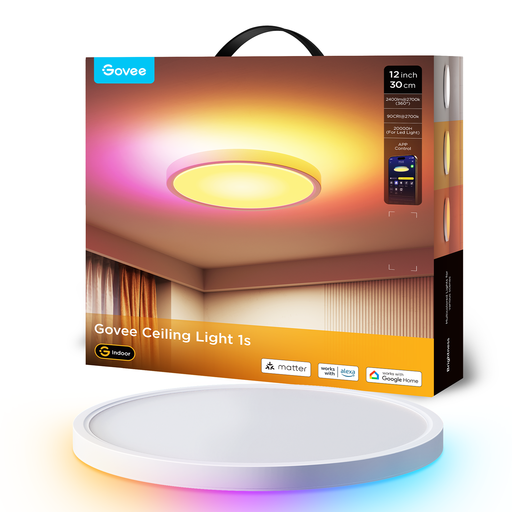
Why This Fits Their Persona: For users who want to fully personalise their lighting and integrate it into their smart home system. Perfect for living rooms, gaming rooms, or bedrooms to control moods via app or voice.
This model bypasses the compatibility trap, as control is managed via the Govee Home App and popular voice assistants (Alexa, Google Assistant). The closed system ensures smooth functionality without external dimmers.
Adjustable colour temperature (2200K–6500K), brightness (up to 2400 lumens), and over 16 million colours (RGBIC backlight). Music sync mode and various light scenes.
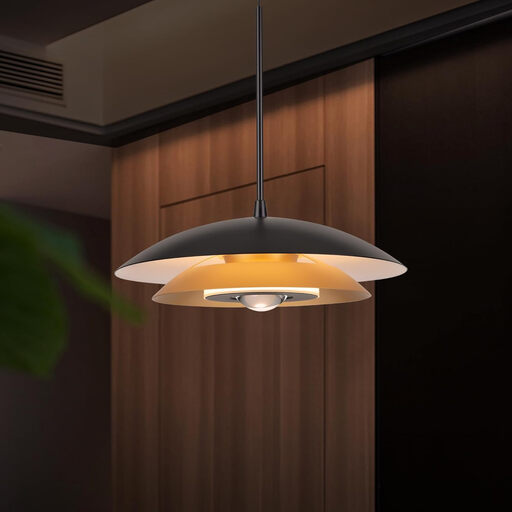
Why This Fits Their Persona: For those who view lighting as a central design element. This pendant light is an eye-catcher over a dining table or kitchen island, blending industrial design with modern elegance.
Instead of following short-lived trends, this model relies on high-quality materials like powder-coated aluminium and steel. This avoids the trap of visually appealing but poorly made lights. Dimmability is clearly linked to the use of a compatible dimmer.
The dual-shade design in black and gold creates a glare-free, warm light. The integrated 12W LED with 3000K ensures long-lasting and energy-efficient illumination.
We have compiled a complete, up-to-date list of products that fully meet these strict selection criteria and UK safety regulations.
1. How many lumens do I need for my living room? For comfortable ambient brightness in a living room, we recommend about 100 to 150 lumens per square meter. For a 25 m? room, you should choose a ceiling light with a total output of 2,500 to 3,750 lumens. For a cosier atmosphere, you can aim for a slightly lower value or use a dimmable light.
2. Can I use any dimmable LED ceiling light with my old dimmer switch? No, this is a common source of error. LED lights require a compatible LED dimmer (usually a trailing-edge dimmer). Older dimmers designed for halogen or incandescent bulbs are often incompatible and can cause flickering, humming, or damage to the light. Before purchasing, check the manufacturer's compatibility specifications or opt for a smart light with an integrated dimming function via an app.
3. What does IP44 mean for a bathroom ceiling light? The IP44 rating means the light is protected against splashing water from all directions. This is the minimum requirement for installation in a bathroom, especially in areas around the shower, bathtub, and sink. The first digit (4) stands for protection against solid foreign objects (>1 mm), and the second digit (4) stands for protection against water. A light with a lower rating (e.g., IP20) is unsuitable and unsafe for damp rooms.