
Lieferung heute & morgen

Qualitätsgarantie

Willkommens-Angebote freischalten: KOSTENLOSE Lieferung | Bis zu 80 % RABATT | Kostenlose 30-Tage-JoyPlus-Testphase
App herunterladen
A black LED ceiling light is more than just a light source; it's a design statement that lends a distinct profile to modern, minimalist, or industrial living concepts. However, the selection is vast, and not every model delivers on its visual promise. Certain defects in materials and technology can mean that the enjoyment of your new fixture is short-lived.
As your Joybuy Product Recommendation Officer, I'll help you identify common purchasing pitfalls and make an informed decision. We will focus on the objective criteria that define a durable and functional light fixture.
Before we turn to the positive attributes, it's important to be aware of the potential weaknesses that often only become apparent after installation.
To avoid the mistakes mentioned above, you should check three core technical aspects. These determine the function, atmosphere, and longevity of your new lighting.
Colour temperature, measured in Kelvin, describes whether the light appears warm-yellowish or cool-bluish. The choice depends entirely on the location:
A dimmable ceiling light with adjustable colour temperature offers the greatest flexibility, allowing you to adapt the lighting mood to the time of day and your needs.
Forget watts—the brightness of an LED light is measured in lumens (lm). The wattage only indicates energy consumption. As a rule of thumb for a room's ambient lighting, a value of about 100 to 150 lumens per square metre is recommended.
The shape is not just a matter of taste. A round black ceiling light often appears softer and blends harmoniously into many interior styles. In contrast, a square black ceiling light emphasizes clean, minimalist lines.
The material, usually metal or aluminium, is crucial for the perceived quality and heat dissipation. A solid metal construction ensures stability and efficiently dissipates the heat generated by the LEDs, which extends the life of the electronics. Models in the industrial ceiling light style often feature exposed sockets and robust metalwork.
Based on the criteria above, we have compiled a few products for different needs and style preferences.
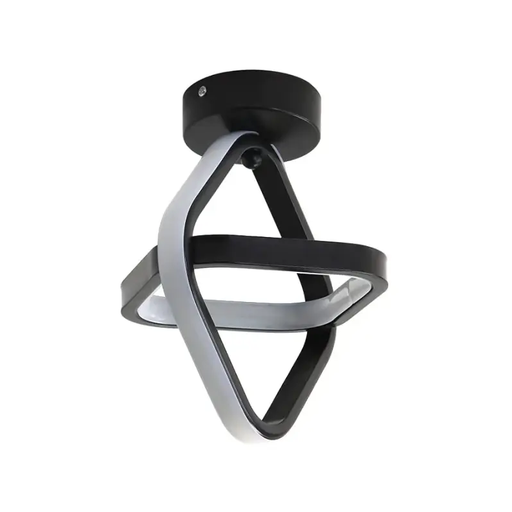
Why This Fits Their Persona: Ideal for hallways, balconies, or smaller rooms that need a straightforward yet atmospheric lighting solution. The simple design fits almost any modern interior style without breaking the bank.
With a colour temperature of 3000K (Warm White), this model avoids the pitfall of harsh, cold light and creates an inviting atmosphere.
Energy-efficient 24W output with 2700 lumens of brightness. Compact, low-profile design (?22 cm) that is unobtrusive even in rooms with low ceilings.
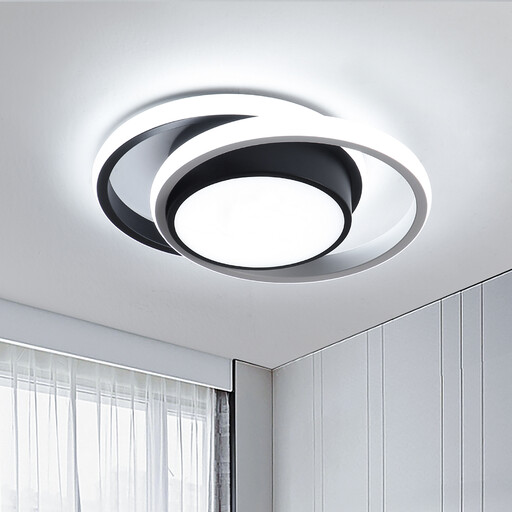
Why This Fits Their Persona: Perfect for the living room or bedroom where flexibility is key. Users can adjust the lighting via remote control for any situation—from bright task lighting to dim, warm evening light.
The adjustable colour temperature from 3000K to 6000K makes the 'wrong colour temperature' trap irrelevant. You have full control and can change the atmosphere at any time.
Maximum flexibility with stepless dimming and colour temperature control via remote. The modern, ring-shaped design is an eye-catcher.
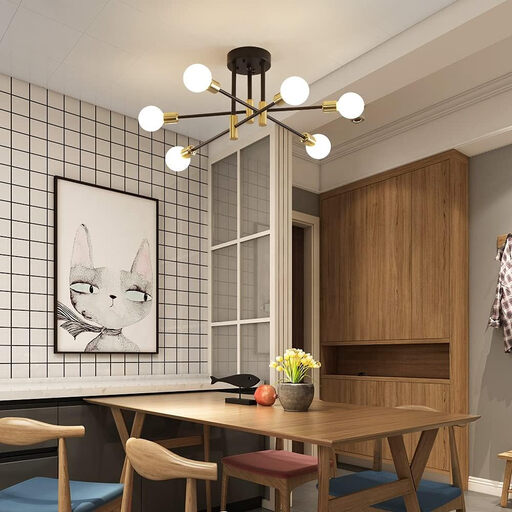
Why This Fits Their Persona: For anyone looking for a striking design object with an industrial character. The combination of black metal and gold accents, as well as the adjustable arms, make this light a customisable design element.
This model avoids the trap of integrated LEDs. Thanks to the standard E27 sockets, you have full control over the bulbs and can replace or upgrade them at any time.
Highly customisable thanks to adjustable arms and a free choice of bulbs (e.g., LED filament, smart home bulbs). Longevity through replaceable components.
We have compiled a complete, up-to-date list of products that fully meet these strict selection criteria and German safety regulations.
For good ambient lighting in an average-sized living room (approx. 20–25 m?), you should aim for a luminous flux of around 2000 to 3750 lumens. It is often wise to distribute this output across multiple light sources or to use a dimmable main light to adjust the brightness as needed.
Installing a ceiling light requires working with your home's 230-volt electrical system. For your own safety and to ensure compliance with insurance and local regulations, such work must be carried out by a qualified electrician.
Dimmability means that the brightness of the light can be adjusted. For lights with permanently integrated LEDs, the dimming function (often via remote control or app) is built-in. For lights with replaceable sockets (e.g., E27), both the bulb and an external wall dimmer switch must be compatible to use the dimming feature.