
Lieferung heute & morgen

Qualitätsgarantie

Willkommens-Angebote freischalten: KOSTENLOSE Lieferung | Bis zu 80 % RABATT | Kostenlose 30-Tage-JoyPlus-Testphase
App herunterladen
The right ceiling light should illuminate your room sufficiently, complement your décor and be safe to install. In practice, however, unclear technical details and unsuitable lighting plans are more likely to lead to disappointing purchases than the design itself. Before you buy, it’s worth checking the light output, bulb type, dimensions and installation requirements.
Wattage mainly describes energy consumption. The luminous flux, measured in lumens (lm), determines how bright a light appears. For example, a 24 W LED ceiling light can produce more light than an older fitting with a much higher wattage.
As a general guide:
The size of the room, wall colour and how you use the space will also affect your choice.
A non-dimmable LED ceiling light has a fixed brightness. This can work well in a hallway, cellar or functional utility room, but may not be right for a living or dining room. If you want to adjust the mood, check that the light is explicitly described as dimmable and compatible with your existing dimmer.
A wood-effect ceiling light might look compact in product photos but appear much larger in your room. Before ordering, check its diameter and height, as well as the position of the ceiling power outlet. With a ceiling light with a fabric shade, you’ll also need to consider the clearance from the ceiling and nearby furniture.
Light colour is measured in kelvins. Warm white at around 2,700 to 3,300 K creates a cosy feel and is often chosen for bedrooms, living rooms and dining areas. A warm white ceiling light at 3,000 K can be a good all-round choice for rooms where you need both clear visibility and a pleasant atmosphere.
Luminous flux, measured in lumens, indicates how much visible light a fitting gives off. Always consider this figure in relation to the size of your room. If the LED is built in, also check whether the light source can be replaced or whether you’ll need to replace the entire fitting if it develops a fault.
An E27 ceiling light has a standard screw fitting. This lets you choose a bulb to suit your preferred brightness and light colour, as well as your energy-use needs. Make sure you don’t exceed the fitting’s maximum wattage.
With an integrated LED ceiling light, the light source, colour and wattage are already set. This makes choosing easier, but gives you less flexibility to change things later. Before buying, check that details such as 24 W, 2,300 lm or 3,000 K are right for the room you have in mind.
Ceiling lights need a secure fixing, suitable wall plugs and a correctly isolated power supply. Work on fixed electrical wiring should be carried out by a qualified electrician. Always follow the installation instructions for your particular model.
With a ceiling spotlight with 3 lights, you’ll also need to think about how to position the beams. Adjustable and swivel lights can direct light towards seating areas, shelves or worktops. A black metal ceiling light often creates a bold contrast, so consider matching it with your furniture, door handles or other lights.
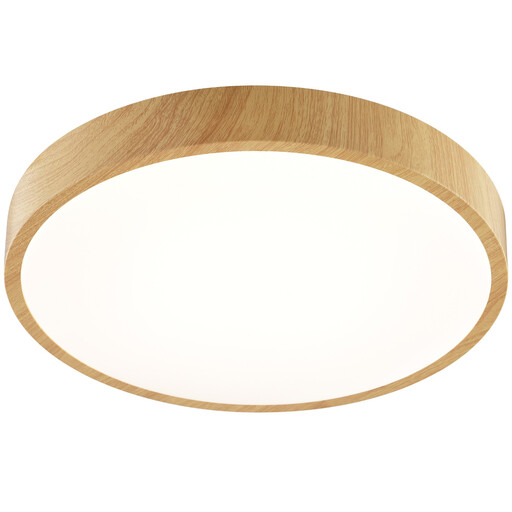
Why it suits this type of shopper: Its integrated LED technology and compact design make it a straightforward choice for anyone looking for ambient lighting in a living room, bedroom, hallway or dining area.
The figures of 2,300 lm, 24 W and 3,000 K make its light output, energy use and colour easy to understand. It’s also clearly stated that the light isn’t dimmable.
A 38.5 cm diameter, warm white light and decorative wood-effect finish. No separate E27 bulb is needed.
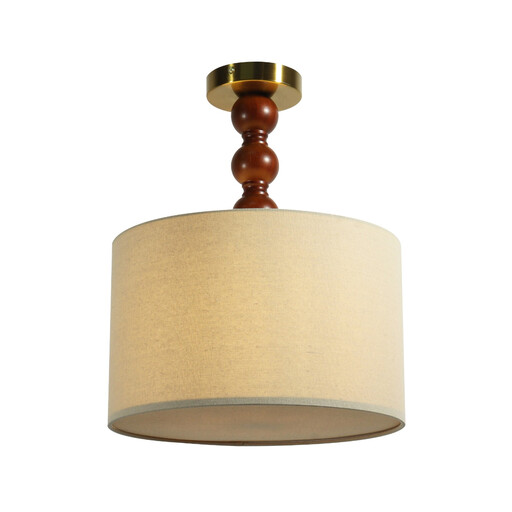
Why it suits this type of shopper: The combination of wood details, gold-coloured design and linen-look finish works well in living rooms and bedrooms where the light is intended to be a feature in its own right.
The E27 ceramic fitting and stated maximum wattage of 60 W make it easier to choose a suitable bulb. The dimensions of the shade and mounting plate are also clearly specified.
An E27 fitting, a linen-look fabric shade, and wiring and earthing details provided for professional installation.
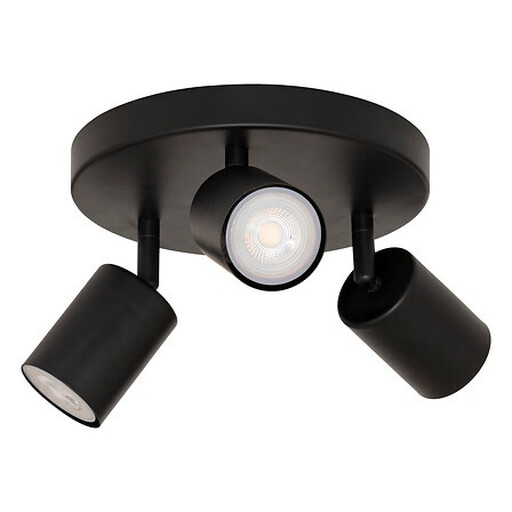
Why it suits this type of shopper: Its three adjustable spotlights are ideal for hallways, work areas, reading nooks or rooms where you want to direct light towards specific areas.
The number of lights, 20 cm diameter and adjustable direction are all clearly stated. This makes it easier to plan how the light will spread before installation.
A black steel body, three spotlights and a height of 14 cm. Installation by a qualified electrician is explicitly recommended.
We’ve put together a complete, regularly updated list of products that meet these strict selection criteria and comply fully with the safety regulations in force in the EU.
Before ordering a ceiling light, check the following:
It depends on the size of the room, how you use it and whether you have any additional lighting. A lower light output is often enough for small rooms, while living rooms and work areas need more brightness. Always consider the lumen rating alongside the floor area.
Its actual lifespan depends on the LED module, heat dissipation, how long it’s used for and the conditions it operates in. The manufacturer’s specifications are the best guide. With integrated LEDs, you usually can’t replace the module in the same way as an E27 bulb.
Running costs depend on the wattage, how many hours it’s used each day and your electricity tariff. A simple calculation is: wattage divided by 1,000, multiplied by the hours of use and the price per kilowatt-hour. For a useful comparison, consider not only the purchase price but also the light output and how long you’ll use the light.