
Lieferung heute & morgen

Qualitätsgarantie

Willkommens-Angebote freischalten: KOSTENLOSE Lieferung | Bis zu 80 % RABATT | Kostenlose 30-Tage-JoyPlus-Testphase
App herunterladen
A new ceiling light needs to illuminate the room properly, suit your interior style and work reliably day in, day out. Yet unclear product specifications, unsuitable dimensions or overhyped extra features often lead to a disappointing purchase. With an LED ceiling light in particular, it’s important not just to look at the wattage or a nice product photo.
The power consumption in watts describes electricity usage, not brightness directly. For comparison, the luminous flux in lumens is far more meaningful. A light with 24 W and 2,400 lm, for example, gives you much clearer information about the expected brightness than a wattage figure alone.
Room size also matters. A small ceiling light may be perfectly adequate in a hallway, whereas a ceiling light for the living room, kitchen or dining area usually needs a higher luminous flux or multiple light sources.
A dimmable ceiling light can be controlled via a wall switch, remote control, app or a separate dimmer, depending on the model. Some lights only offer three fixed brightness levels. That can be practical for many rooms, but it’s not the same as stepless adjustment.
So before you buy, check the following:
A ceiling light can look compact in product photos but still be intrusive in a low-ceilinged room. Diameter, height and mounting type are what really matter. For low ceilings, slim LED models are ideal. A wooden ceiling light or one with a fabric shade may project further into the room and should be coordinated with furniture, doors and circulation space.
A warm white ceiling light at around 3,000 Kelvin creates a cosy, inviting glow. That often suits living rooms, bedrooms, dining areas and hallways. For workspaces, a more neutral light colour can be better. Models with adjustable colour temperature – for example from 3,000 to 6,500 Kelvin – offer greater flexibility for different times of day and uses.
Don’t look at light colour in isolation. A high luminous flux with a colour temperature that’s wrong for the room can still feel impractical.
With an integrated LED ceiling light, the bulb is already built in. That allows a compact design and gives you a direct specification of luminous flux and colour temperature. With an E27 ceiling light, you can swap the bulb and choose your own light colour or brightness.
For E27 models, pay attention to the maximum wattage, the number of sockets and the suitability of the bulb. The Lameke Wood Beaded Ceiling Light, for example, has three ceramic E27 sockets and is rated for indoor use with a maximum of 25 W.
Work on a 230-volt connection must only be carried out by a suitably qualified person. Before ordering, check that the mounting plate, fixing materials and a clear instruction manual are included. Also make sure the ceiling, wall plugs and screws are compatible with the light and the surface.
The IP20 protection rating is for dry indoor spaces only. Bathrooms, balconies and other damp areas have different requirements. Always refer to the individual product specifications.
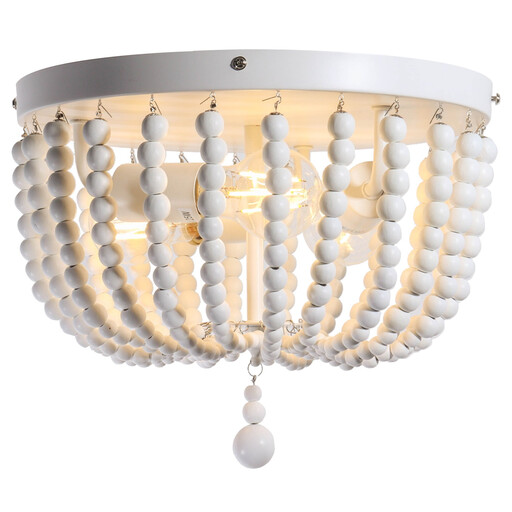
Why this product fits the profile: The three E27 sockets let you choose suitable bulbs. The wood bead design adds a decorative touch to hallways, bedrooms or dining areas.
The E27 design makes bulb selection straightforward. The maximum wattage of 25 W and indoor suitability are clearly stated.
Three ceramic E27 sockets; wood bead shade with stated dimensions of 326 × 228 mm.

Why this product fits the profile: If you’re after a modern ceiling light with a wood look and clear technical specs, this integrated LED model delivers warm white light and three brightness levels.
Luminous flux, diameter, colour temperature and dimming type are all clearly listed. That makes it easier to match the light to your room size and desired lighting effect.
24 W, 2400 lm, 3000 K; integrated 3-step dimmer with memory function and FSC certification as per product details.
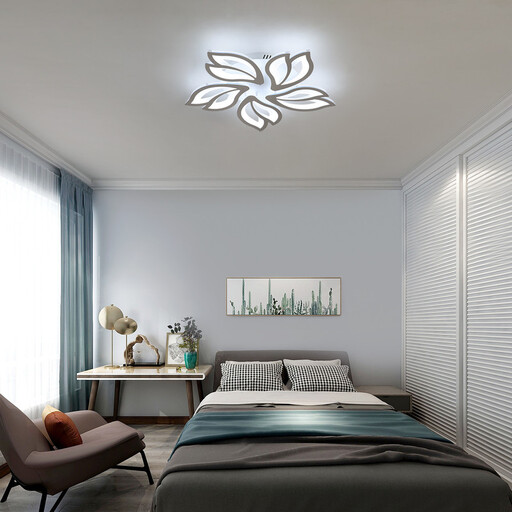
Why this product fits the profile: The floral design appeals to buyers looking for a decorative ceiling light with remote control and variable colour temperature for living or dining areas.
The specifications mention control via remote and app, plus a range of 3000 to 6500 K. That lets buyers check whether the desired operation is actually available.
Five light zones, dimmable control, adjustable colour temperature from 3000–6500 K and memory function as per the product description.
We’ve put together a full, regularly updated list of products that meet these strict selection criteria and comply with EU safety regulations.
That depends on room size, ceiling height, wall colour and any additional lighting. The luminous flux in lumens is the key figure to compare. For larger rooms, a combination of ceiling light, floor lamps or wall lights can also work well.
You can estimate the cost with this formula: Power in kW × hours of use × electricity price. A 24 W light running for 1,000 hours uses roughly 24 kWh. The actual amount depends on your individual electricity tariff.
The lifespan depends on factors such as hours of use, heat dissipation, component quality and how it’s used. With integrated LEDs, replacing a single bulb is usually not possible. With an E27 ceiling light, the bulb can be changed separately. Always check the manufacturer’s specifications and warranty terms before buying.