
Lieferung heute & morgen

Qualitätsgarantie

Willkommens-Angebote freischalten: KOSTENLOSE Lieferung | Bis zu 80 % RABATT | Kostenlose 30-Tage-JoyPlus-Testphase
App herunterladen
The right ceiling light affects the atmosphere of a room, energy consumption and everyday convenience. Even so, many buyers initially choose based on colour or shape, only checking the technical details later. This can lead to common purchasing mistakes: the light is too dim for the room, cannot be dimmed as expected or does not fit the existing ceiling opening.
This buying guide explains which details really matter when choosing ceiling lights and which models suit different living situations.
Wattage describes energy consumption, not brightness itself. The lumen (lm) value is what determines the amount of light. A modern LED ceiling light can produce a high lumen output with comparatively low wattage. A bedroom often needs less light than a kitchen, home office or long hallway.
You should therefore consider:
A light with a high output is not automatically suitable for every room. Light that is too bright or appears too cool can feel out of place in living rooms or bedrooms.
Depending on the model, a dimmable ceiling light may be controlled via a wall switch, remote control, Bluetooth, Wi-Fi or an app. These systems are not automatically compatible with one another. With permanently integrated LEDs, the light source also cannot necessarily be replaced easily.
Check the following before buying:
A light with IP20 is intended for dry indoor areas. For bathrooms, kitchens or basements, moisture conditions are an important consideration. An IP54 ceiling light, for example, provides protection against splashing water, but it does not replace proper planning in areas exposed to direct water or steam.
The installation method must also suit your ceiling. A recessed ceiling light requires a suitable cut-out. For the models featured here, the required openings are approximately 100 to 110 mm, 120 to 130 mm or 150 to 160 mm, for example. Before buying, measure the existing opening and the available installation depth.
Colour temperature is measured in Kelvin (K):
A ceiling light with warm white light creates a subtle, inviting atmosphere. CCT models allow you to switch between warmer and cooler light colours. The colour rendering index, CRI or Ra, indicates how naturally colours appear under the light. A value of Ra ≥80 is specified for several popular indoor lights.
Compare wattage and lumens together. A 36-W light with 3,960 lm produces a different amount of light from an 18-W light with a maximum output of 1,800 lm. With energy-efficient ceiling lighting, service life, switching cycles and standby consumption are also relevant.
Manufacturer specifications such as a service life of 30,000 or 50,000 hours are technical rated values, not a guarantee of the actual operating life in every household. Heat, frequent switching and the quality of the power supply can affect usage.
Depending on its features, a smart ceiling light may support scenes, schedules, voice control or motion sensors. Matter-compatible models can be integrated into various compatible smart home platforms. Bluetooth Mesh lights, on the other hand, require a gateway depending on the function.
The following points are important when choosing:
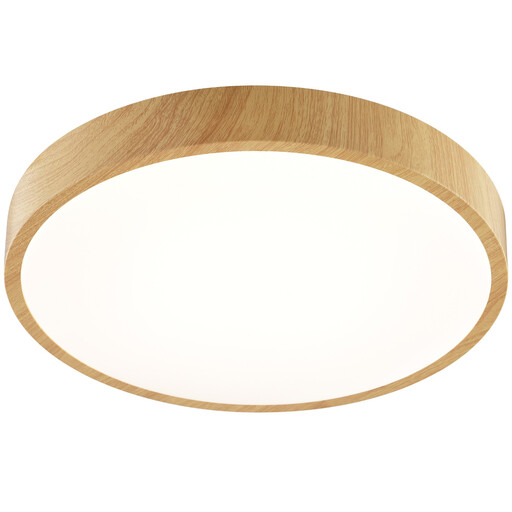
Why this product suits this profile: According to the product information, the permanently integrated 24-W LED provides 2,300 lm at 3,000 K and is suitable for living rooms, bedrooms, hallways or dining areas.
The light output and colour temperature are clearly stated. However, buyers should note that this model is not dimmable.
2,300 lm, warm white light and a diameter of 38.5 cm; intended for dry indoor areas.
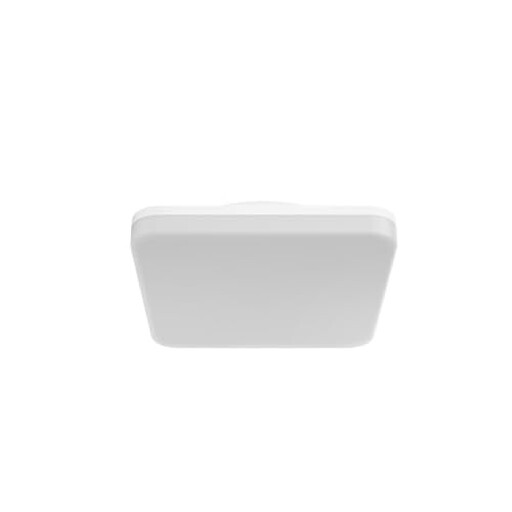
Why this product suits this profile: With app control, this ceiling light combines Matter, Wi-Fi, RGBW, voice control and continuous dimming in a single model.
The supported platforms, 2.4-GHz Wi-Fi information and IP54 protection rating are clearly specified.
Up to 1,800 lm, 2,700–6,500 K, RGBW and Matter support; according to the product information, suitable for indoor areas including bathrooms and kitchens.
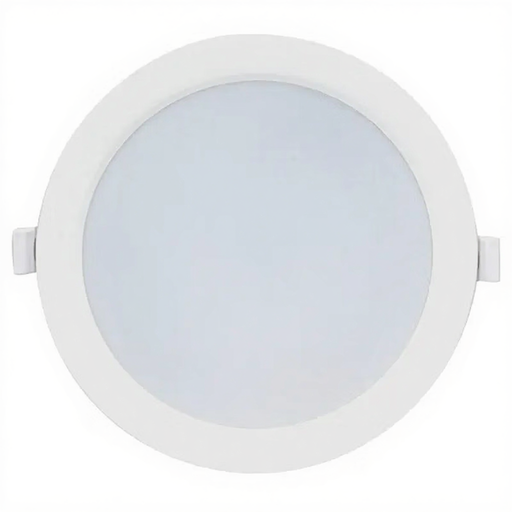
Why this product suits this profile: This recessed ceiling light is designed for users who want a flush-fitting look as well as app, Bluetooth and voice control.
The required ceiling opening of 150–160 mm and IP20 protection rating make the installation and room requirements easy to check.
1,430 lm, RGBW with 160,000 colour options and 2,700–6,500 K; for dry indoor areas.
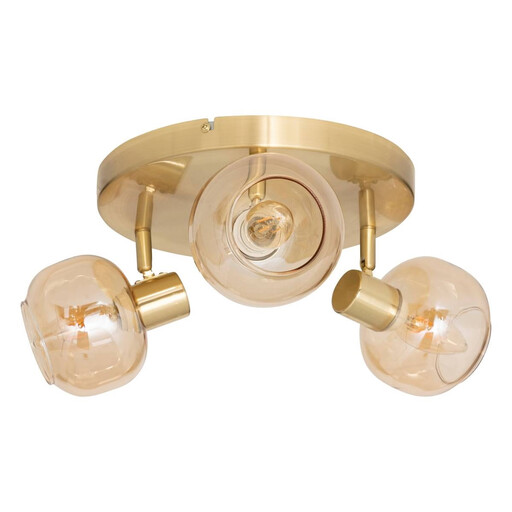
Why this product suits this profile: The three adjustable ceiling spotlights, made from steel and amber-coloured glass, direct the light precisely and complement modern interior styles.
The spotlights are adjustable, while the diameter, height and materials are specified. No IP protection rating is stated, so plan to use it only in dry indoor areas.
25 cm diameter, three adjustable spotlights and amber-coloured glass; according to the product information, light sources are not included via a fitting.
Connection to the 220–240-V mains should be carried out by a qualified electrician in accordance with the applicable national installation regulations. The power supply must be switched off at the fuse box before installation, cleaning or maintenance.
A simple calculation can help you work out the running costs:
Wattage × daily operating hours × 365 ÷ 1,000 = annual consumption in kWh
Multiply this figure by your electricity tariff. Lower wattage reduces consumption, provided the light output is sufficient for the room. Smart models may also have a small standby consumption.
We have put together a complete, regularly updated list of products that fully meet these strict selection criteria and the safety regulations applicable in the EU.
That depends on the room size, how it is used and any additional lights already present. Living rooms and bedrooms often need only a moderate amount of light. Kitchens, offices and work areas usually require more lumens or a combination of ceiling and task lighting.
Service life depends on the model, heat generation, switching frequency and power supply. Figures such as 30,000 or 50,000 hours are technical rated values. With permanently integrated LEDs, the entire light or LED module usually needs to be replaced if it fails.
The key factors are wattage, daily usage time and the electricity tariff. An 18-W light uses less energy than a 36-W model when operated for the same amount of time. However, always check the lumen rating too, so that the desired brightness is achieved.