
Lieferung heute & morgen

Qualitätsgarantie

Willkommens-Angebote freischalten: KOSTENLOSE Lieferung | Bis zu 80 % RABATT | Kostenlose 30-Tage-JoyPlus-Testphase
App herunterladen
The right ceiling light should illuminate the room evenly, complement your interior style and work reliably every day. However, unclear product specifications, unsuitable IP ratings or underestimated installation requirements often lead to disappointing purchases. This is particularly worth considering with LED ceiling lights, pendant lights and smart models, where a close look at the technical details can make all the difference.
Power consumption in watts shows how much electrical energy a light uses. However, the luminous flux in lumens determines the actual brightness. A modern LED light can produce enough light with a comparatively low wattage, while a higher wattage does not automatically mean better illumination.
As a general guide:
The required brightness also depends on the wall colour, ceiling height, position of the light and number of additional light sources.
A ceiling light designed for the living room is not automatically suitable for the bathroom, basement or above a kitchen worktop. The IP rating indicates how well the housing is protected against the ingress of foreign objects and water.
The rating should match the intended location:
In bathrooms, the applicable installation zones and safety requirements must also be taken into account. The electrical connection of permanently installed lights should be carried out by a qualified electrician.
An eye-catching pendant light can look great above a dining table, but may get in the way in a low-ceilinged passageway. Similarly, a kitchen light needs a different light distribution from a cosy living room lamp. Before buying, you should therefore check the ceiling height, installation position and desired lighting effect.
Important questions:
Lumens indicate luminous flux. Kelvin describes the colour temperature:
With an RGBW ceiling light, you can also choose coloured lighting moods. For everyday room lighting, however, the key consideration is whether sufficiently bright white light is also available.
A dimmable ceiling light allows you to adjust the brightness for different activities. You should check whether dimming is controlled via a wall switch, remote control, app or voice assistant. With permanently installed LED lights, it is also important to check whether a compatible dimmer is required.
A smart ceiling light may support scenes, schedules or group controls. Depending on the system, Matter-compatible models can be integrated into Apple Home, Google Home, Samsung SmartThings or Amazon Alexa, for example. Before buying, check the Wi-Fi band, required app and compatibility with your existing smart home system.
The size of the light must suit both the floor area and the position of the electrical outlet. A compact light with a diameter of 44.5 centimetres may be suitable for smaller rooms, while a multi-light pendant above a longer table will require a greater span.
With a hanging lamp or pendant light, the cable length should suit the ceiling height and table position. Mains-powered models require professional installation. A battery-powered lamp, on the other hand, offers greater flexibility, but depends on battery changes and should not be considered a substitute for permanently installed main lighting.
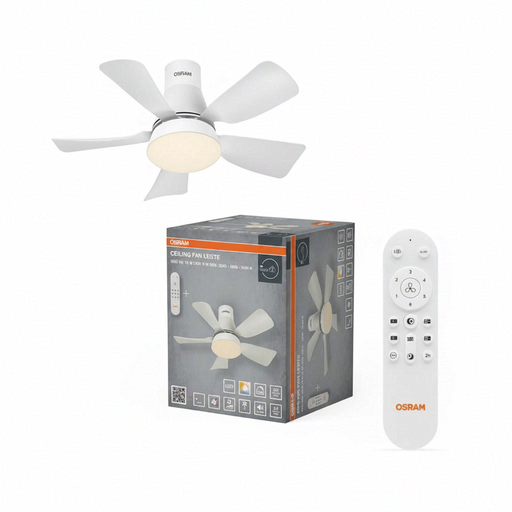
Why this product suits this profile: This compact ceiling light combines LED lighting with a ceiling fan and, according to the product specifications, is intended for rooms of up to around 13 m².
The specifications state 1,200 lumens, 21 watts, three colour temperatures and continuous dimming via remote control.
44.5 cm diameter, integrated LED, three speed settings and remote control.
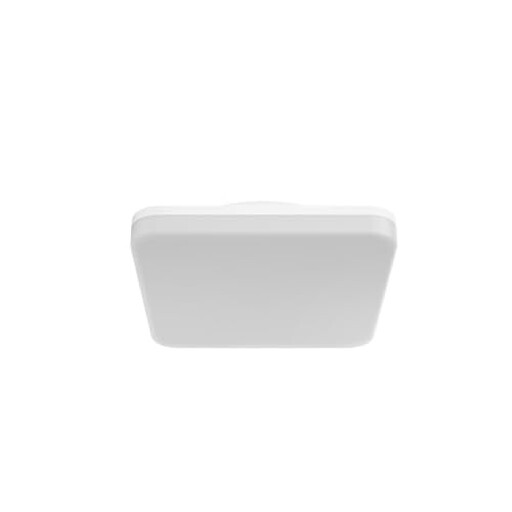
Why this product suits this profile: For homes with connected lighting, this model offers app, voice and Matter control without requiring an additional bridge for the Hama Home app.
The product data specifies a usable white-light range of 2,700 to 6,500 Kelvin, stepless dimming and an IP54 rating.
18 watts, maximum 1,800 lumens, RGBW colour selection, Matter compatibility and scene control.
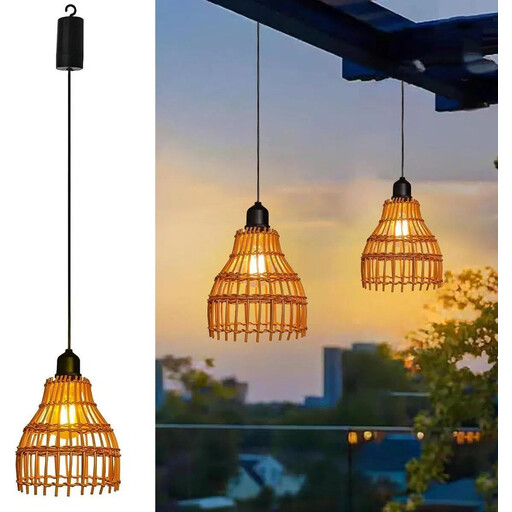
Why this product suits this profile: This battery-powered lamp is ideal for flexible decorative lighting without a fixed electrical connection, such as indoors or on a covered terrace.
The power supply via four AA batteries and the timer with a 6/18-hour setting are clearly stated; batteries are not included.
No mains connection required, 100 cm power cable, hook and A60 Edison bulb.
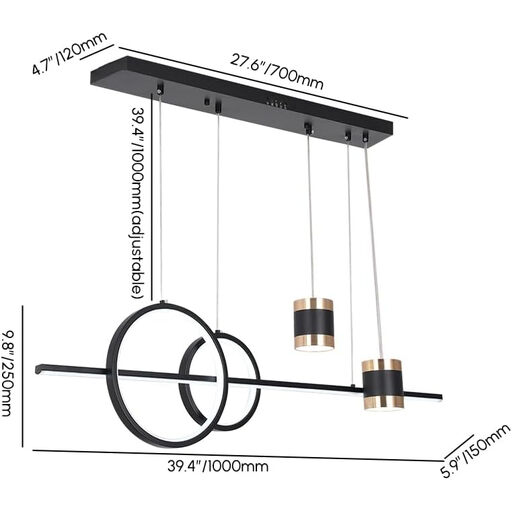
Why this product suits this profile: This elongated light with four light sources is designed for kitchen islands and dining tables where directed downlighting is needed.
The product description explicitly states that the light requires hardwired installation by a qualified electrician.
Geometric design, four LED light sources, 125 cm length and remote control with dimming function.
We have put together a complete, regularly updated list of products that fully meet these strict selection criteria and the safety regulations applicable in the EU.
This depends on the size and use of the room, as well as any additional lights already available. Around 800 to 1,500 lumens may be sufficient for smaller bedrooms or hallways. Living rooms and kitchens often need more light or multiple light sources. Lumens should always be considered alongside light distribution and colour temperature.
Lifespan varies depending on the model and operating conditions. For example, the Osram model in the selection is specified as having 20,000 operating hours. This is a product specification, not a guarantee that it will last for exactly the same length of time in every household. Heat generation, switching cycles and the quality of the power supply can affect the actual lifespan.
Running costs depend on power consumption, daily usage time and the electricity price. The simple calculation is:
Watts ÷ 1,000 × operating hours × electricity price per kilowatt-hour
An 18-watt light running for three hours a day uses a calculated 0.054 kilowatt-hours per day. For a realistic comparison, you should also take standby consumption and dimming levels into account. With a ceiling fan light, remember to include the motor’s energy consumption as well.