
Lieferung heute & morgen

Qualitätsgarantie

Willkommens-Angebote freischalten: KOSTENLOSE Lieferung | Bis zu 80 % RABATT | Kostenlose 30-Tage-JoyPlus-Testphase
App herunterladen
Ceiling lights have a greater impact on brightness, the feel of a room and everyday practicality than product images might suggest. A modern ceiling light may seem too dim in the living room, a large light fitting may look intrusive in a small hallway, or a seemingly practical dimming function may only work with a special switch.
To avoid unnecessary costs when buying, keep these three common pitfalls in mind:
The required luminous flux depends on the size and use of the room, as well as the atmosphere you want to create. A ceiling light for the living room should generally provide even ambient lighting. In work areas such as the kitchen or hallway, additional directional light sources may be useful.
As a practical guide:
A ceiling light with warm white light of around 3,000 Kelvin, as specified for several integrated LED models, is suitable for creating welcoming ambient lighting. 4,000 Kelvin appears more neutral and can work well in hallways or work areas. By contrast, 6,500 Kelvin, as used by the Alusso recessed spotlight described below, produces a noticeably cooler light.
Measure the installation area before buying. A light measuring 35 to 41 centimetres in diameter needs sufficient clearance from walls, furniture and doors. For low ceilings, slim LED ceiling lights or recessed spotlights may be more suitable.
Important dimensions include:
The stated installation depth of the Alusso light is 25.5 millimetres; the ceiling cut-out must measure between 115 and 135 millimetres. Check these measurements against your existing ceiling before placing an order.
LED ceiling lights with an integrated light source are installed as a complete unit. With lights featuring an E14 or E27 fitting, you choose the bulb separately. This offers flexibility in terms of brightness and light colour, but requires an additional purchasing decision.
There are also differences when it comes to dimming:
Switch off the power supply before carrying out any work on the electrical connection. Electrical installation may only be carried out by a suitably qualified professional in accordance with the manufacturer’s instructions.
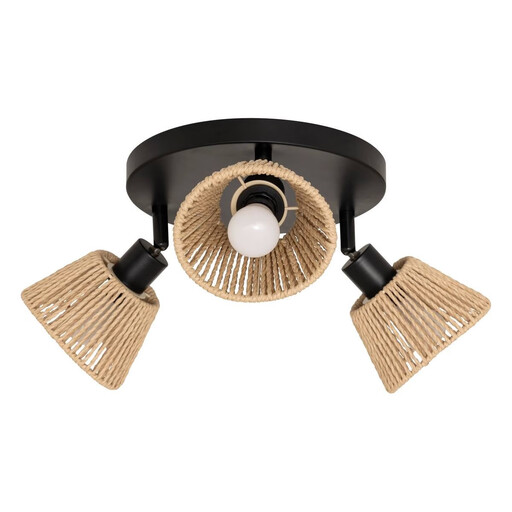
Why this product suits this profile: With its compact 25 cm diameter, this light is suitable for smaller rooms, hallways or bedrooms. Three adjustable light points allow you to direct the light as you wish.
The three adjustable fittings avoid a purely decorative, inflexible distribution of light. E14 bulbs are required separately, however.
Compact design, steel base, FSC-certified paper shades and three adjustable light points.
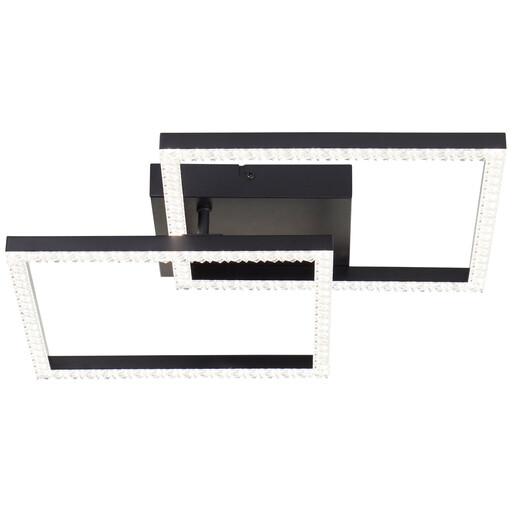
Why this product suits this profile: This square light combines 2,700 lumens with neutral white light and a swivelling element. It is well suited to larger living rooms, dining areas or hallways.
The stated dimensions, 20 W, 2,700 lm and 4,000 K make it easier to compare products using objective criteria rather than design alone.
Integrated LED, swivelling element, 41 × 41 cm, energy efficiency class D and IP20 for dry indoor areas.
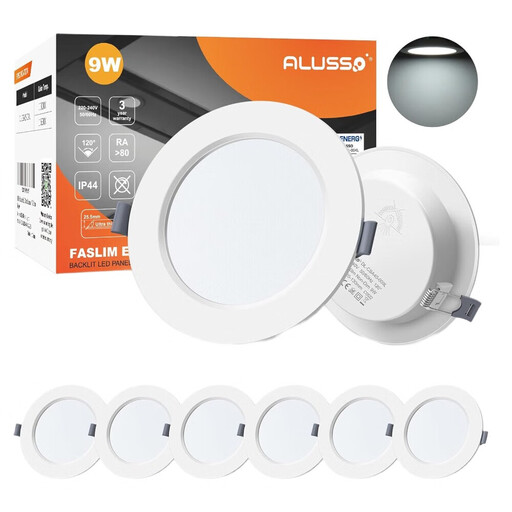
Why this product suits this profile: For a low ceiling, multiple light points or a functional area, these six recessed spotlights offer an alternative way to plan your lighting.
The information on installation depth and ceiling cut-out reduces the risk of an unsuitable installation. This light is explicitly not dimmable.
IP44, 720 lm per spotlight according to the product information, 230 V connection without a transformer and a stated service life of over 30,000 hours.

Why this product suits this profile: The wood-effect finish and 3,000 Kelvin colour temperature make this ceiling light a good choice for a welcoming living room, bedroom, kitchen or hallway.
The 3-stage dimming function is clearly specified. It does not replace a freely adjustable dimmer, but it provides three defined brightness levels and a memory function.
24 W, 2,400 lm, 3,000 K, integrated LED and a diameter of 35 cm; energy efficiency class F is specified.
We have put together a complete, regularly updated list of products that fully meet these strict selection criteria and the safety regulations applicable in the EU.
A modern ceiling light with an integrated LED saves space and does not require a separate bulb. Models with an E27 or E14 fitting, on the other hand, allow you to replace the bulb at a later date. Ceiling spotlights and adjustable light points are ideal when you want to illuminate specific areas, pictures or pieces of furniture.
Slim ceiling lights or recessed spotlights are practical for low rooms. Before installation, however, you should check the ceiling cut-out, installation depth, cable routing and thermal insulation. With smart models, you should also clarify whether a gateway is required and whether dimming works exclusively via an app.
This depends on the size and use of the room, as well as any additional lights already present. The lumen rating indicates the amount of light emitted. Larger rooms generally need more lumens for even ambient lighting than small hallways or bedrooms. Several recessed spotlights can distribute the light, but their spacing and beam angle should be planned carefully.
Not every LED ceiling light is dimmable. Check the manufacturer’s specific information. Options may include three fixed brightness levels, a compatible external dimmer or app control. The Alusso recessed spotlight is explicitly not dimmable, whereas the Baarlo light has an internal 3-stage dimming function with memory.
The IP rating describes protection against solid foreign objects and water. IP20 is intended for dry indoor areas. IP44 provides additional protection against splashing water and may be suitable for certain damp areas, depending on the installation location. In bathrooms, follow the requirements for the relevant installation zone and the installation instructions.