
Lieferung heute & morgen

Qualitätsgarantie

Willkommens-Angebote freischalten: KOSTENLOSE Lieferung | Bis zu 80 % RABATT | Kostenlose 30-Tage-JoyPlus-Testphase
App herunterladen
Ceiling lights and pendant lights shape the feel of a room, but they also need to suit its size, how you use it and the existing electrical installation. Many disappointing purchases aren’t down to the design, but to details that are easy to overlook: a light that’s too large for the hallway, a fitting that isn’t compatible with your bulbs, or a dimming function that only works with extra accessories.
The points below will help you assess product claims and choose the right lighting for your living room, dining room, bedroom, kitchen or hallway.
A modern ceiling light may look compact in product photos but seem much larger once it’s in the room. Check the diameter and height, as well as the maximum cable length for pendant lights. Above a dining table, a light can make a statement, but it shouldn’t block your view or get in the way when you stand up.
Compact models with a diameter of around 25 to 40 cm are often easier to fit into smaller rooms. For a pendant light in a living or dining room, also consider the distance between the light and the table or seating area.
With a dimmable LED pendant light, three components need to be compatible: the light or LED driver, the bulb and the dimmer switch. For lights with E27 or E14 fittings, you’ll need dimmable bulbs and a compatible dimmer. An integrated LED light, on the other hand, may require its own dimming method or a suitable switch.
Also check the colour temperature. 2700 Kelvin gives a warm white light for living rooms and bedrooms, while 3850 Kelvin looks more neutral. 5000 Kelvin is a noticeably cooler, daylight-like colour temperature, better suited to certain work or utility areas.
An E27 fitting cannot be used interchangeably with an E14 fitting. G9 bulbs also need a matching socket. Before buying, check:
Ceiling and pendant lights that are wired directly into the mains must be installed by a qualified electrician. The circuit must be switched off before installation.
A bedroom ceiling light should provide even illumination without glare. Adjustable spotlights can be a good choice for a hallway or small kitchen. A ceiling light with 3 spotlights lets you direct the light at specific areas, such as a coat rack, worktop or walkway.
A kitchen island light with a directional beam works well above a kitchen island. One light may not cover a longer island sufficiently; several pendant lights or a long, linear model will distribute the light more evenly.
Glass, metal, wood, bamboo and fabric all differ in how they need to be cleaned and the kind of light they create. A bamboo ceiling light casts a patterned light through its woven shades. Metal surfaces can usually be cleaned with a soft, dry cloth. Crystal or glass shades need careful handling, as fingerprints and dust can show.
For decorative designs such as a crystal chandelier, also check that the room has enough ceiling height and clearance.
Check the supplied mounting plate, cable routing and the suitability of the ceiling structure for installation. A CE mark is a legally required conformity mark, but it doesn’t replace checking the specific installation requirements. For damp areas, the IP rating is essential; the indoor lights featured here are not automatically suitable for bathrooms or outdoor areas.
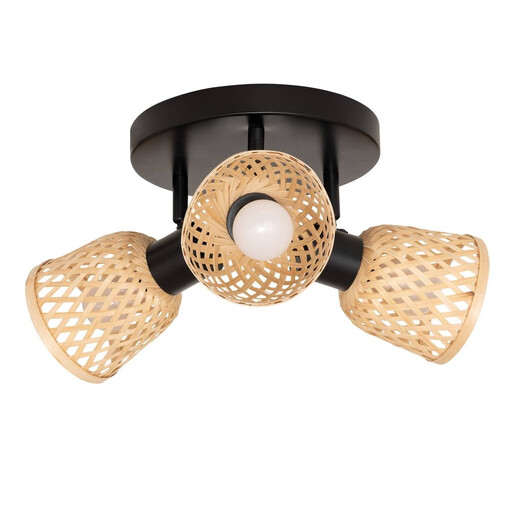
Why this product suits this profile: At 25 cm, this compact light is well suited to hallways, smaller rooms and indoor spaces with limited ceiling space. Three adjustable spotlights let you direct the light where you need it.
The dimensions, E14 fitting and maximum total wattage of 25 W are specified. This reduces the risk of choosing an unsuitable bulb.
Three adjustable spotlights, a compact 25 cm design, bamboo shades and IP20 protection for indoor use.
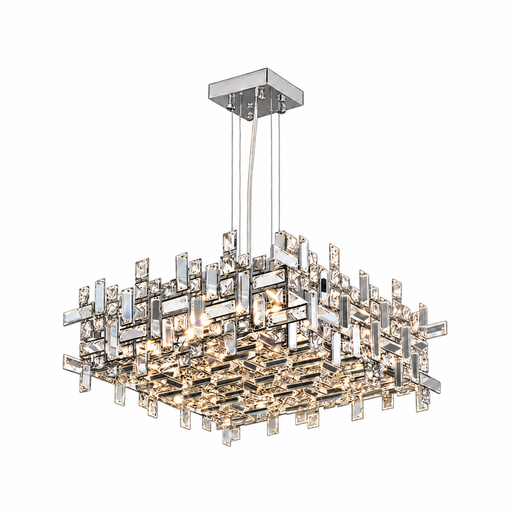
Why this product suits this profile: With its square shape and clear crystal prisms, this light is designed for statement spaces such as dining rooms, living rooms or hallways.
The light is available in several sizes, making it easier to choose a square design that suits your table, room and ceiling height.
E14 fitting, silver finish, crystal prisms and sizes of 40, 50 or 60 cm, according to the product details.
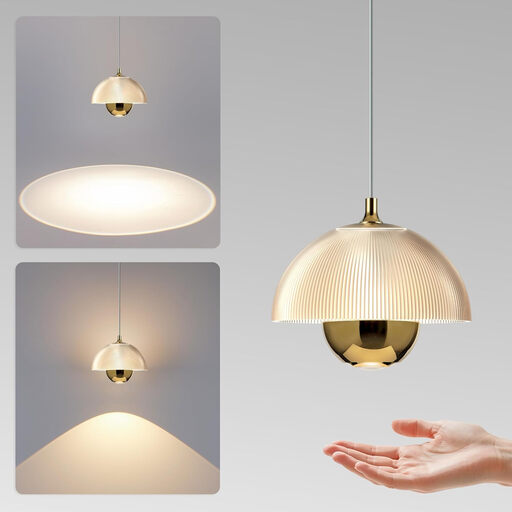
Why this product suits this profile: Designed for kitchen islands, dining tables or a dedicated lighting area in the bedroom, this light offers touch-free control.
The three selectable colour temperatures and stepless dimming are clearly specified, so you don’t have to rely on a vague marketing claim to understand how it works.
Integrated 10-W LED, 2700/3850/5000 K, sensor control, uplight and downlight, and a gold metal finish.
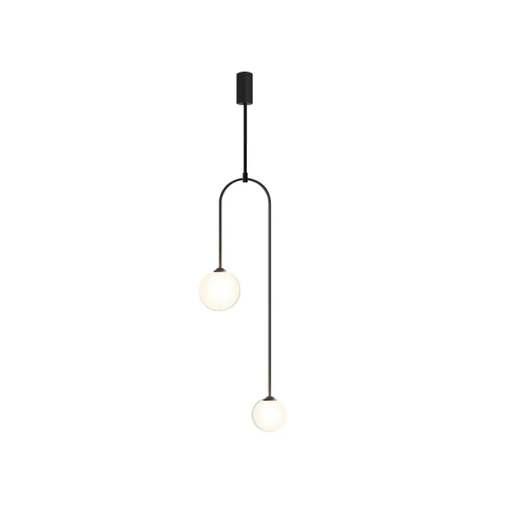
Why this product suits this profile: This black pendant light with two white glass globes suits modern living rooms, bedrooms and hallways of around 5 to 10 m².
The light is clearly labelled as non-dimmable, helping you avoid planning to use an unsuitable dimmer.
Two G9 LED bulbs, each 5 W, included; 220–240 V; black metal construction with white glass shades.
We’ve put together a complete, regularly updated list of products that meet these strict selection criteria and the safety requirements in force across the EU.
Compact ceiling lights or short pendant lights with a warm white colour temperature are well suited to small bedrooms. Check the diameter, fitting height and beam spread. A light with several adjustable spotlights lets you direct the light towards different areas, while a closed shade distributes it more evenly.
Lifespan depends on the LED module, how long it’s used, heat dissipation and operating conditions. For integrated LEDs, check the manufacturer’s stated lifespan. With lights that use E27 or E14 bulbs, you can replace the bulb separately. This makes maintenance easier, but may lead to ongoing replacement costs.
Running costs depend on the wattage, how many hours you use the light each day and your electricity tariff. A simple calculation is: power in kilowatts × hours of use × electricity price. A 10-W LED uses 0.1 kWh when run for ten hours. The actual cost depends on your current tariff.