
Lieferung heute & morgen

Qualitätsgarantie

Willkommens-Angebote freischalten: KOSTENLOSE Lieferung | Bis zu 80 % RABATT | Kostenlose 30-Tage-JoyPlus-Testphase
App herunterladen
A ceiling light should illuminate a room reliably, complement your décor and be easy to use day to day. However, shape and price are not the only factors to consider when buying one. Unclear brightness information, an unsuitable colour temperature or complicated installation can leave you disappointed once the light has been fitted.
This guide explains which technical details are particularly important when choosing an LED ceiling light, a dimmable ceiling lamp or a light fitting with a replaceable bulb.
Wattage describes energy consumption, not brightness directly. For comparisons, the luminous flux in lumens is what matters. A modern LED ceiling light can produce a high luminous flux with comparatively low power consumption. A hallway often needs less light than a large living room or work area.
Images in online shops cannot reliably show how a light will actually look. Check the colour temperature in Kelvin:
A warm-white ceiling light with 3,000 K creates a different ambience from a light with 4,000 K, even if both have similar lumen ratings.
With a dimmable ceiling light, check how the brightness is adjusted. Some models require a suitable wall dimmer, while others have an integrated switch with several brightness levels. A specification such as “3-stage dimmer” does not mean continuously variable dimming. A memory function is also only relevant if the light actually saves the last setting selected.
The luminous flux in lumens indicates how much visible light a fitting produces. Its design is also important: a slim, directly emitting light distributes illumination differently from a modern ceiling lamp with adjustable spotlights.
Before buying, check:
For a living-room ceiling lamp, broad light distribution may be useful. In a narrow hallway or above a particular piece of furniture, adjustable spotlights may be more practical.
With an integrated LED, the light source is permanently built into the fitting. This allows for slim designs, but it also means that if a fault occurs, the entire lighting unit will usually need to be inspected or replaced. The stated lifespan should therefore be verifiable in the product data sheet.
A ceiling light with an E27 fitting uses replaceable bulbs. This allows you to choose the colour temperature, brightness and, in some cases, the dimming function yourself. Check the maximum permitted wattage and whether the LED bulb being used is suitable for a dimmer.
For dry indoor areas, IP20 is a common protection rating. It does not provide any particular protection against water and is therefore not automatically suitable for damp areas. For bathrooms, utility rooms or covered outdoor areas, check the relevant manufacturer’s information and the required IP rating.
A black ceiling light, wood effect or bamboo detailing mainly affects the design. With materials such as wood or bamboo, you should also check the care instructions, mounting method and suitability for indoor use. The electrical connection must only be carried out by a suitably qualified professional.
The following models differ in colour temperature, design, controls and fitting. The selection is based on the product data provided for each model.
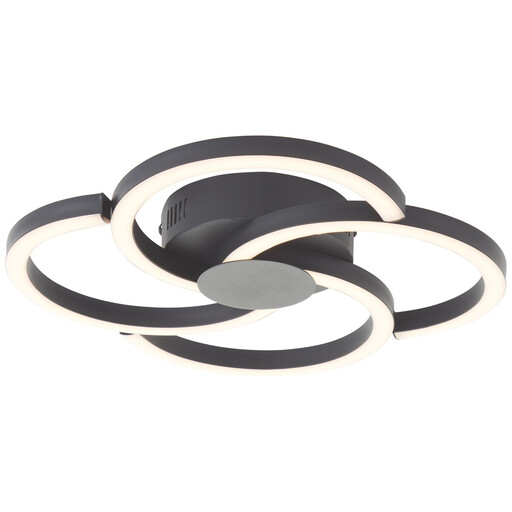
Why this product suits this profile: According to the product information, this compact LED ceiling light has a diameter of 34 cm and is suitable for living rooms, bedrooms, kitchens and hallways. Its 2,300 lumens at 22 W provide a clearly defined combination of luminous flux and energy consumption.
The specifications of 3,000 K, 2,300 lm and 22 W make an objective comparison easier. The integrated LED technology removes the need to find a compatible bulb.
2,300 lm, warm white at 3,000 K and a height of 6 cm; IP20 protection rating for dry indoor areas.
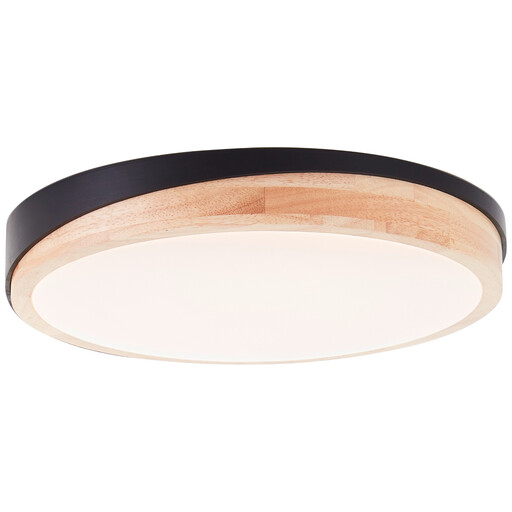
Why this product suits this profile: The combination of wood, metal and plastic appeals to households looking to combine a natural design with adjustable brightness.
The dimming function is specifically identified as an internal 3-stage dimmer. This makes it clear that continuously variable adjustment via any wall dimmer should not be assumed.
2,400 lm, 3,000 K, FSC certification and memory function according to the product description; diameter 35 cm.
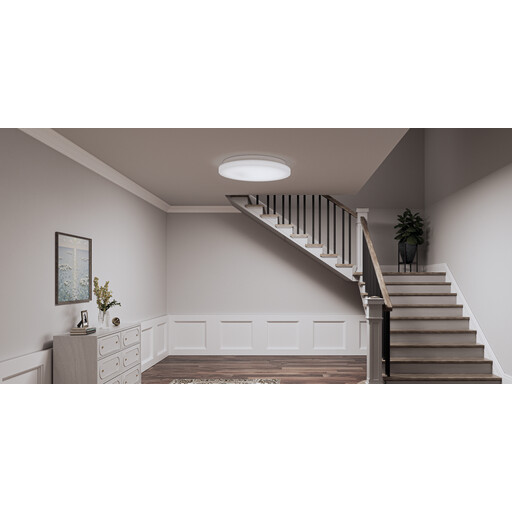
Why this product suits this profile: This model is designed for households looking for a ceiling light with motion or presence detection for frequently used areas such as hallways or entrance areas.
The sensor function is listed as a specific feature. Nevertheless, check the detection range, overrun time and control options in the full product information before buying.
A ceiling light with wood or bamboo can add a natural accent to a bedroom, dining area or hallway. The Atmosphera Lio features three adjustable spotlights, shades made from FSC-certified bamboo and three E14 fittings. This model is intended for indoor use; bulbs are not included.
For a classic, flexible solution, consider a ceiling light with an E27 fitting. The Lameke light combines a fabric shade with wooden and gold-coloured details and is designed for one E27 bulb rated at up to 60 W. When fitting the bulb, make sure the holder, bulb type and maximum wattage are compatible.
This depends on the room size, how it is used and the desired light distribution. Compare the stated luminous flux with the floor area and take additional floor or wall lights into account. A single lumen value is therefore not a universal guideline for every room.
Lifespan depends on the LED module, electronics, operating hours, heat dissipation and usage. With integrated LEDs, check the manufacturer’s stated lifespan and warranty conditions. An E27 light allows you to replace the bulb.
For a rough calculation, multiply the power consumption in kilowatts by the operating hours and the electricity price. For example, a 24-W light uses 0.024 kW. The actual running costs depend on how long the light is switched on each day and which electricity tariff your household uses.
We have put together a complete, regularly updated list of products that fully meet these strict selection criteria and the safety regulations applicable in the EU.