
Lieferung heute & morgen

Qualitätsgarantie

Willkommens-Angebote freischalten: KOSTENLOSE Lieferung | Bis zu 80 % RABATT | Kostenlose 30-Tage-JoyPlus-Testphase
App herunterladen
A ceiling light affects not only how bright a room is, but also its proportions and atmosphere. Even so, many shoppers initially focus on appearance and price, only checking the technical details after buying. This can result in uncomfortably bright light, complicated installation or a fitting that is unsuitable for the intended room.
Wattage describes energy consumption, not brightness directly. For practical selection, the luminous flux in lumens is what matters. For example, an LED ceiling light with 2,400 lumens produces considerably more light than one with 800 lumens, regardless of how decorative the two models look.
Small hallways often need less light. A ceiling light for a living room or kitchen, on the other hand, will generally need to illuminate a larger area evenly.
The colour temperature in Kelvin indicates the lighting effect:
A warm-white ceiling light with 3,000 Kelvin can create a pleasant atmosphere in a living area. For a bathroom mirror or a work surface where precision is important, neutral-white light may be more practical.
A light with IP20 is generally intended for dry indoor areas. It should not be installed directly in places exposed to splashing water or high humidity. For bathrooms, it is therefore important to choose a suitable IP protection rating and comply with the applicable installation zones. Before buying, you should also check the installation location, ceiling material and existing cables.
The diameter should suit the size of the room and its furnishings. A flush ceiling light measuring around 35 to 40 centimetres in diameter is often suitable for small to medium-sized rooms. In large living or dining areas, a single small light may lack sufficient visual presence and functionality.
A wooden ceiling light or bamboo ceiling light adds natural accents. However, you should check carefully whether it is made from real wood, bamboo or simply plastic with a wood-effect finish. The product description should clearly state the material.
With an integrated LED ceiling light, the LEDs are permanently built in. This allows for a slim design and straightforward operation, but it also means that if a fault develops later, the entire fitting will usually need to be inspected or replaced.
A ceiling light with an E27 fitting, by contrast, uses replaceable bulbs. This gives you more flexibility when choosing the colour temperature and brightness, as well as when replacing the bulb later. The stated maximum wattage and bulb compatibility are important.
A dimmable ceiling light can adjust the brightness to suit different situations. The specific type of dimming is crucial. Some models offer preset levels using the wall switch, while others require a compatible dimmer or remote control.
According to the product details, the Brilliant Baarlo features a 3-level dimmer with memory function. It saves the brightness setting used most recently. This is convenient, but it should not be confused with stepless dimming.
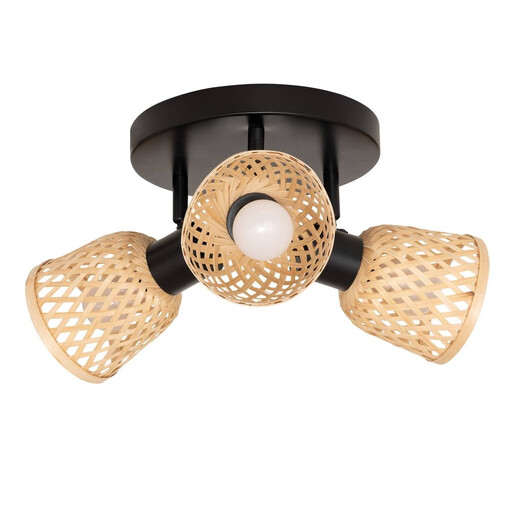
Why this product suits this profile: This compact ceiling light is suitable for smaller rooms and hallways. Three adjustable spotlights allow you to direct the light more precisely.
The three bulbs are not permanently integrated. The E14 fitting makes it clear which bulbs to choose and how to replace them later.
FSC-certified bamboo material according to the product details, three spotlights, an overall size of 25 cm and IP20 for dry indoor areas.

Why this product suits this profile: The combination of wood, warm-white light and an integrated dimming function works well in living rooms, bedrooms, kitchens and hallways.
The specifications state the luminous flux, colour temperature and dimming levels. This makes it easier to assess the light output than by looking at wattage alone.
2,400 lm, 3,000 K, three dimming levels, memory function, a construction height of 7.5 cm and FSC certification according to the product data.
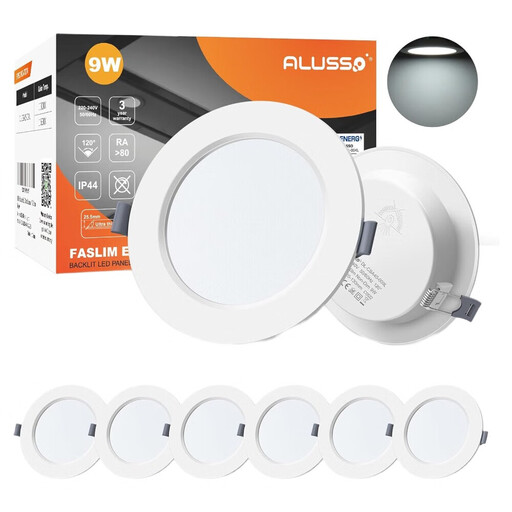
Why this product suits this profile: This set is designed for households that need several light points in the bathroom, kitchen, hallway or living area and prefer a shallow installation depth.
The product specifications explicitly state that the spotlights are not dimmable. This prevents incorrect expectations about lighting control.
25.5 mm installation depth, IP44, 230 V direct connection and 720 lm per spotlight according to the product description.
For a ceiling light with a fixed electrical connection, the wiring should be carried out by a suitably qualified professional. The power supply must be switched off before installation. Tenants should also check whether drilling holes or making changes to the connection are permitted under their tenancy agreement.
Electricity costs are based on consumption in kilowatt-hours. A 24 W light uses 24 kWh when operated for 1,000 hours. The actual cost depends on your electricity tariff and how long the light is used. The energy efficiency class, such as F for some of the LED models mentioned, should therefore be considered alongside wattage, brightness and operating time.
Warm-white models with around 2,700 to 3,300 Kelvin are often suitable for living rooms. Room size, the desired luminous flux and whether you need a dimmable ceiling light are also important. If you have several seating or work areas, adjustable spotlights or additional floor lamps may be useful.
There is no one-size-fits-all lumen figure. Small hallways need less light than large living areas. When choosing an LED ceiling light, shoppers should consider the luminous flux in lumens, the beam spread and the size of the room together. A very bright light is not automatically suitable if it causes glare or cannot be dimmed.
Wooden or bamboo models are not automatically approved for use in damp areas. The manufacturer’s instructions on use and the IP protection rating are decisive. In the bathroom, you should only use lights that are expressly approved for installation in the intended location.
We have put together a complete, regularly updated list of products that fully meet these strict selection criteria and the safety regulations applicable in the EU.