If celery is regularly your main ingredient, ETM TESTMAGAZIN’s general guidance points towards a slow juicer. Even so, check how the specific model handles fibres and how easy it is to clean. For occasional get-togethers with a variety of ingredients, a centrifugal juicer could be a good fit if speed matters most – but it may be noisier and isn’t automatically the better choice for fibrous greens. A large feed chute also tells you nothing about the capacity of the juice or pulp container.
Which type of juicer is right for you?
Hosts who want to make celery juice the star
You mainly want to juice celery sticks for friends, and need to assess how well the juicer handles fibrous greens as well as how much cleaning is involved. ETM TESTMAGAZIN looks at the suitability of each type of juicer, while COMPUTER BILD also assesses how easy specific models are to clean.
Hosts short on preparation time
You’re making several glasses from different ingredients when guests visit, so speed and serving drinks quickly are high priorities. ETM TESTMAGAZIN describes the speed advantage centrifugal juicers can offer when processing larger quantities of ingredients.
Occasional users who want to keep cleaning to a minimum
You don’t juice every day and want to spend as little time as possible cleaning the sieve, pulp and removable parts after guests have left. ETM TESTMAGAZIN and COMPUTER BILD both note that cleaning can vary from one appliance to another.
What should you look for when buying?
A slow juicer for celery
A good fit if: you often juice celery sticks or other fibrous greens, and a quieter juicing process matters more to you than maximum speed.
The trade-off: The type of juicer alone doesn’t tell you how well a specific model handles fibres. Check the pulp outlet, reverse function and cleaning process for the model you’re considering.
A centrifugal juicer for quick get-togethers
A good fit if: you only occasionally make larger quantities from a variety of fruit and vegetables, and speed matters more than optimising for celery.
The trade-off: ETM TESTMAGAZIN notes that centrifugal juicers can be faster with larger quantities of ingredients, but may also be noisier. A slow juicer may be a better fit for fibrous greens.
| Buying priority |
What to check |
Who it matters most to |
| Juicing fibrous celery |
Check how the model moves celery fibres through the pulp outlet and whether it has a reverse function. |
If I mainly juice celery, I want to know how likely the fibres are to clog the machine and how easy it is to clean. Around 36% of consumers are likely to prioritise how well a juicer handles celery. |
| Making several glasses |
Consider the juice and pulp containers separately, and check how often they need emptying. |
If I’m making several glasses for guests, I want to know how often I’ll need to empty the containers. Around 29% of consumers are likely to prioritise quantity for guests and speed. |
| Cleaning up after guests |
Check which parts need to be taken apart and which the manufacturer says are dishwasher-safe. |
If I want to spend as little time as possible cleaning the sieve and pulp channel after juicing, the specific cleaning process matters. Around 21% of consumers are likely to put cleaning first. |
| Cost of occasional use |
Weigh up how often you’ll use the juicer and whether replacement parts are available; distinguish a voluntary guarantee from your statutory rights. |
If I only juice occasionally, I want to weigh the purchase price and potential follow-up costs against how often I’ll use it. Around 14% of consumers are likely to prioritise costs for occasional use. |
Common pitfalls when buying a juicer
-
Confusing feed-chute capacity with the amount of juice produced
Hurom Europe lists a 1.8-litre ingredient hopper and a 500-ml juicing chamber for the H70ST. These are separate components with different capacities, and neither tells you how much juice the juicer will produce.
When making drinks for guests, consider the juice container, pulp container and how often you may need to top up the ingredients separately.
-
Assuming results with oranges apply to celery
COMPUTER BILD highlights the orange juice yield of the Klamer 90820. This doesn’t show how well the model handles celery fibres.
Look for model-specific information or tests using fibrous ingredients. If celery isn’t mentioned, that doesn’t prove anything about the juicer’s performance.
-
Assuming dishwasher-safe parts mean no cleaning is needed
Unold says the non-electrical parts of the Sam 78275 are dishwasher-safe; COMPUTER BILD still describes cleaning the auger as time-consuming.
Before you buy, check which parts need to be cleaned individually and whether you’re happy to do this after every use.
Brands to consider
Hurom
The H70ST is a slow juicer for buyers who make green juices and want a large ingredient hopper.
- Hurom Europe lists a 1.8-litre ingredient hopper for the H70ST.
- The juicing chamber has a stated capacity of 500 ml; this doesn’t indicate the volume of juice produced.
Unold
The Sam 78275 is a slow juicer option with a large feed opening.
- Unold lists a 110-mm feed opening and says the non-electrical parts are dishwasher-safe.
- COMPUTER BILD describes cleaning the auger as time-consuming and says ingredients need to be pushed down.
Bosch
The VitaExtract MESM731M is a slow juicer option if you want to adjust the amount of pulp in your juice.
- On an official product page for another market, Bosch describes the MixControl function and a 1,000-ml juice container.
- This information doesn’t confirm the features or contents of a German model variant; check the exact version before buying.
KLAMER
The Slow Juicer 150, article number 90820, has a small feed opening, so you’ll need to do more preparation.
- COMPUTER BILD lists a cleaning brush as an accessory for this model.
- KLAMER states that the slow juicer can run for a maximum of 15 minutes, followed by a break of at least 30 minutes.
Braun
The SJ5000BK is a centrifugal alternative if speed and a variety of ingredients are your priorities when entertaining guests.
- Braun lists a 75-mm feed opening for the SJ5000BK and advertises up to 2 litres of juice without having to empty the pulp container in between.
- These manufacturer claims don’t prove a particular celery juice yield or an advantage over a slow juicer for fibrous greens.
Kuvings
The REVO830 is a slow juicer option with separate feed chutes for celery sticks and larger fruit.
- Kuvings describes two feed chutes and an automatic cutting function.
- The manufacturer’s advertised juice yield isn’t backed up here by an independent comparison using celery; weigh the added convenience against how often you’ll use it.
Joybuy products for celery-based juices
The following Joybuy offers are slow juicers suited to celery-based juices. When juicing fibrous ingredients, how each model feeds them through and how easy it is to clean are key considerations.
 No image available
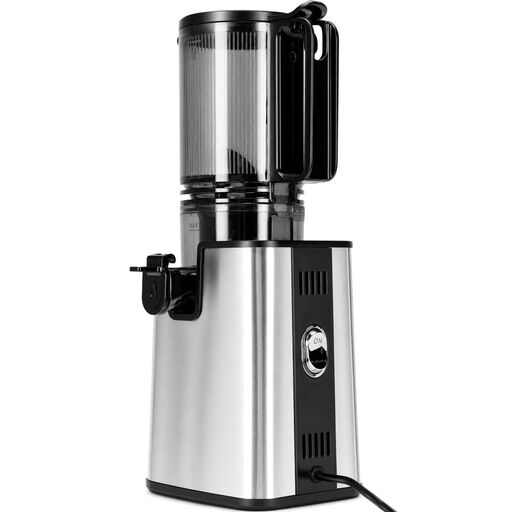
Slow juicer with a 110-mm feed opening
A slow juicer is a good fit for celery-based juices; check how the specific model handles the pulp outlet and cleaning when used with fibrous ingredients.
The product name lists a 110-mm feed opening, 40 Nm torque, a double-filter system and a reverse function.
View at Joybuy
 No image available
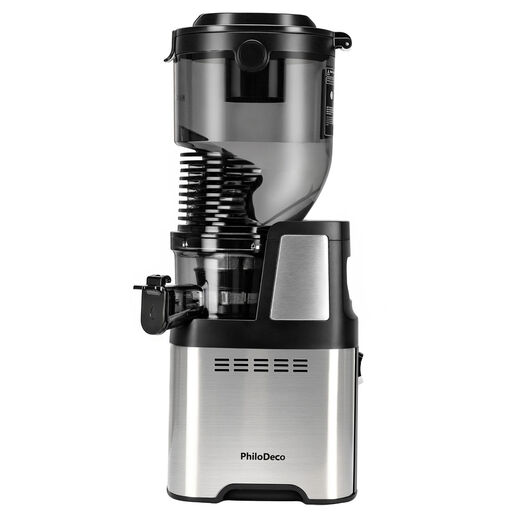
Cold-press slow juicer with a 9.5-cm feed opening
As a slow juicer, this appliance type is well suited to celery-based juices; check how well this model handles celery fibres.
The product name lists a 9.5-cm XXL feed opening and separate outlets.
View at Joybuy
 No image available
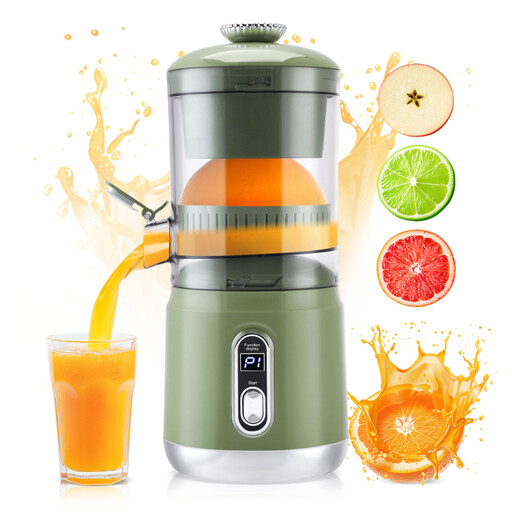
Slow juicer with variable speed
This slow juicer is designed for celery-based juices; also consider how easy it is to clean the removable parts.
The product name lists variable speed.
View at Joybuy
 No image available
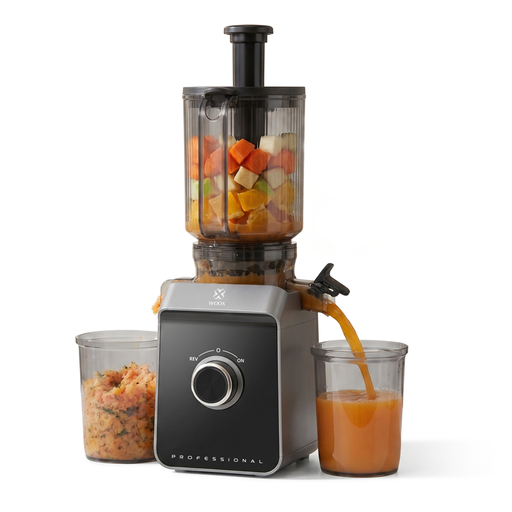
WOOX MX0289 slow juicer, 150 W
The product information lists celery as a suitable ingredient and recommends cutting the sticks into 3–4 cm pieces.
The product name lists 150 W and a 130-mm feed opening. The product information says to run the juicer for no more than 10 minutes at a time, then let it cool for 20 minutes.
View at Joybuy
 No image available
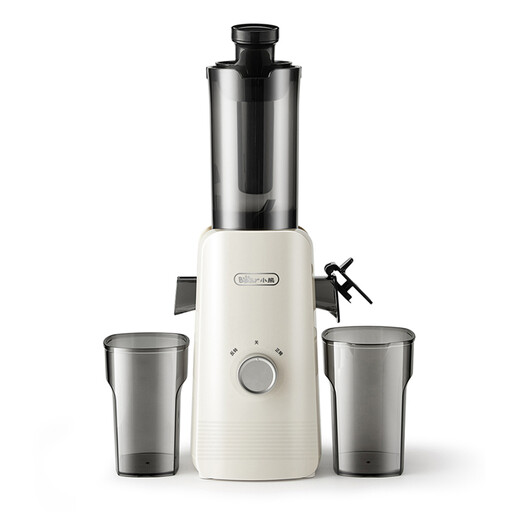
Bear YZJ-F01D6 slow juicer, 1 L
A slow juicer is a good fit for celery-based juices; before buying, check whether the stated running time suits the quantity you plan to make.
The product name lists an 80-mm feed opening. The product information limits use to a maximum of 15 minutes at a time.
View at Joybuy
Frequently asked questions
Is a slow juicer always the right choice for celery juice?
No. ETM TESTMAGAZIN recommends slow juicers in particular for celery and other green ingredients. If speed is your priority for occasional get-togethers, a centrifugal juicer could be a better fit. How well the specific appliance handles fibres and how easy it is to clean also matter.
What should I bear in mind before serving and after juicing?
Wash celery and other raw ingredients thoroughly with drinking water, and clean the appliance parts according to the instructions. The German Federal Institute for Risk Assessment lists celery as a possible cause of food allergies, so ask guests whether they have a celery allergy if needed.
If something goes wrong, what’s the difference between a guarantee and your statutory rights?
Your statutory rights apply against the seller; an additional guarantee is voluntary and subject to its own terms and conditions. The consumer advice centre recommends distinguishing between guarantees and statutory rights, and checking before you buy which parts are covered by an advertised manufacturer’s guarantee.
Does CE marking matter for an electric juicer?
It matters if the specific appliance falls under EU harmonisation rules that require CE marking. The European Commission lists electrical and electronic equipment among the product groups that may be subject to such requirements; the rules that apply to the specific product are what count. CE marking doesn’t prove a particular celery juice yield.


