If you often juice fibrous celery, a suitable slow juicer is a natural place to start; check how much preparation and cleaning the specific model requires. If getting several portions ready quickly is your main priority in the morning, a centrifugal juicer could also be an option: ETM TESTMAGAZIN describes this type as faster for larger quantities, but noisier, and notes that juice yields may vary.
Which juicer is right for you?
Families who drink celery juice every day
If you regularly want to make several glasses from fibrous celery, consider whether feeding, juicing and cleaning the machine will fit into your breakfast routine in the long term. ETM TESTMAGAZIN identifies suitability for fibrous ingredients as one of the key differences between types of juicer.
Families short on time in the morning
If you need to prepare several portions quickly, juicing speed is only part of the picture: think about how much chopping is needed, the container sizes and noise levels too. ETM TESTMAGAZIN describes centrifugal juicers as faster for larger quantities, but also noisier than slow juicers.
Families short on time after breakfast
If you want to clean the machine quickly after each use, look at the removable parts, how easy they are to reach and the cleaning instructions for the specific model. For example, Bosch lists a cleaning brush and certain dishwasher-safe parts for the MESM500W.
What should you look for when buying?
Slow juicer
A good fit if: celery is often your main ingredient and you value handling fibrous produce or a quieter process more than sheer speed. ETM TESTMAGAZIN notes that this type of juicer has advantages with fibrous ingredients.
Things to weigh up: Preparation and cleaning can take time; feeding, operating time and ease of cleaning vary from model to model.
Centrifugal juicer
A good fit if: getting larger quantities ready in the morning is your priority. ETM TESTMAGAZIN describes centrifugal juicers as faster for this kind of use.
Things to weigh up: In ETM TESTMAGAZIN’s comparison, they were noisier; results with celery depend on the specific model and ingredients.
| Buying priority |
What to check |
Who should consider this? |
| Juicing fibrous celery |
Explicit suitability for fibrous ingredients; compare juice yields only when the quantity of ingredients and the measuring method are the same. |
If celery regularly goes into my juicer, I want to know whether the specific model is designed for it. Around 28 % of consumers put celery suitability first. |
| Preparing several portions |
Feeding chute, how much chopping is needed, the size of the juice and pulp containers, and operating and pause times. |
If I need to get several glasses ready in the morning, I look for a process that fits the time I have available. Around 22 % of consumers prioritise speed at breakfast. |
| Managing the cleaning |
Removable parts, access to the filter and pulp channel, and a clear list of the parts that are dishwasher-safe. |
If I need to clean the machine soon after breakfast, how easy it is to reach the parts that need regular cleaning matters to me. Around 22 % of consumers put cleaning first. |
| Keeping morning noise down |
Comparable noise measurements or a demonstration of the specific model in similar conditions. |
If others still need some peace and quiet at breakfast, I want to weigh the operating noise against preparation speed. Around 17 % of consumers prioritise a quieter process. |
| Service and spare parts |
Check the availability of suitable spare parts and the terms of any voluntary warranty for the exact model. |
If I plan to use the machine regularly, I check whether suitable parts and clear service terms are available. Around 11 % of consumers put service and spare parts first. |
Common buying misconceptions
-
Confusing hopper capacity with the amount of juice produced
A large feeding hopper tells you how ingredients are added, not how much juice you will get at the end. Hurom lists a 2-litre hopper for the H400.
Compare the feeding hopper, juice container and pulp container separately. To assess yield, measurements using the same quantity of celery and a comparable method are essential.
When preparing several portions, extra batches or more frequent emptying can slow things down.
-
Assuming a slower speed automatically means better juice
The type of juicer alone does not prove a particular yield from celery or an advantage for every model. ETM TESTMAGAZIN also notes that centrifugal juicers have a speed advantage when preparing larger quantities.
Weigh up how often you juice celery, how much you need, the time available and how much noise you can tolerate. Then check the information and suitability of the specific machine.
-
Overlooking cleaning and breaks in operation
How a juicer works and how you maintain it varies by model. Gastroback, for example, lists around 15 minutes of continuous operation for the Advanced Vital 40145, followed by a break of around 30 minutes.
Before buying, check the operating limits and cleaning instructions for all the parts you will need to clean regularly on your chosen model.
When preparing larger quantities, a required break can interrupt the process.
Key brands at a glance
Hurom
Slow juicer ranges; according to the manufacturer, the H400 is designed to process larger quantities of ingredients.
- Hurom lists a 2-litre feeding hopper for the H400.
- The hopper capacity does not indicate juice yield. The description of easy-to-clean components comes from the manufacturer.
Bosch
VitaExtract slow juicers, including the MESM500W model.
- Bosch lists a 1,000-ml juice container, a cleaning brush and certain dishwasher-safe parts for the MESM500W.
- These model specifications do not prove a particular yield from celery.
Gastroback
According to the manufacturer, the Advanced Vital 40145 slow juicer is also suitable for leafy vegetables.
- Gastroback lists a reverse function, dishwasher-safe attachments and a graduated juice container with a capacity of 100 to 600 ml.
- The manufacturer specifies around 15 minutes of continuous operation, followed by a break of around 30 minutes. These figures apply to model 40145.
Braun
The MultiJuice 7 and MultiJuice 5 ranges include centrifugal juicers.
- Braun lists an XL feeding chute and a 2-litre pulp container for the MultiJuice 7 SJ7000GY.
- ETM TESTMAGAZIN’s comparison of juicer types does not prove the celery yield of this model.
Kenwood
The PureJuice One JMP400WH is a slow juicer with a separate pulp container.
- Kenwood lists a cleaning brush and the ability to process fibrous vegetables among the product’s features.
- The manufacturer’s information does not include a comparable measurement of yield from celery.
Juicers at Joybuy
These Joybuy products relate to choosing a juicer for family breakfast. Always check whether the specific model is suitable for celery and fits your routine.
 No image available
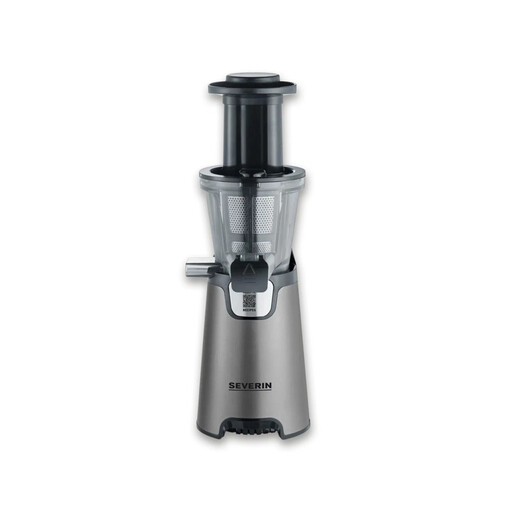
Severin Slow Juicer ES 3571
If you are comparing slow juicers, you can consider this model as one option for your breakfast routine; its product name does not prove a particular yield from celery.
The title lists a 1-litre juice container, 150 W and an Easy-Clean design.
View at Joybuy
 No image available
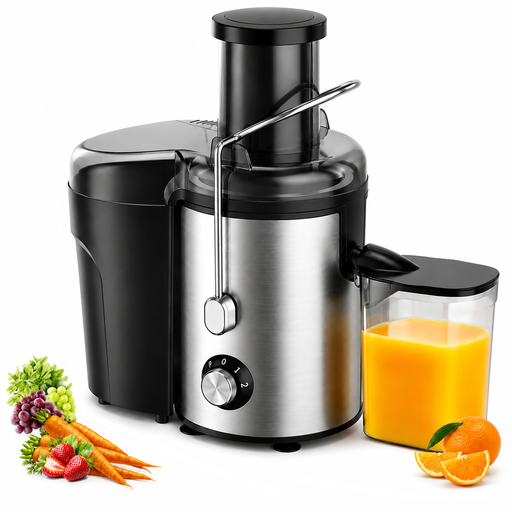
Centrifugal juicer, 600 W
ETM TESTMAGAZIN describes centrifugal juicers as faster for larger quantities, but noisier; this comment about the type of juicer is not a test of this individual model’s yield from celery.
The product title lists 600 W, a 75 mm feeding chute and a stainless steel finish.
View at Joybuy
 No image available
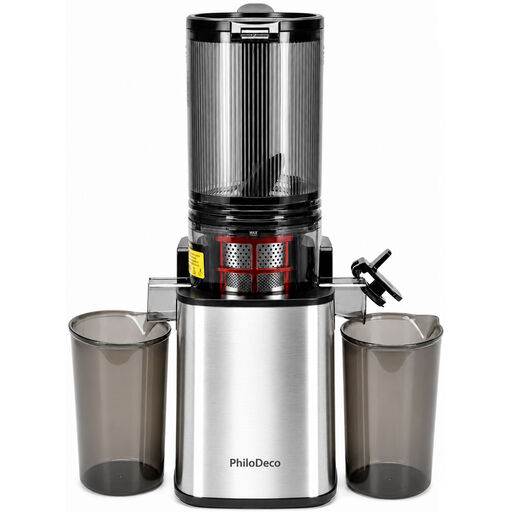
Cold Press Slow Juicer, 110 mm
If you are considering a slow juicer, check what preparation the manufacturer recommends for celery; the listed specifications do not prove a particular yield.
The title lists a 110 mm opening, 40 Nm, a dual filter and a reverse function. The description mentions separate containers.
View at Joybuy
 No image available
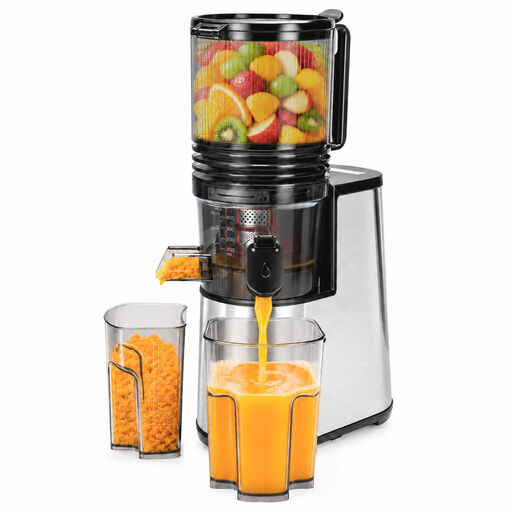
Slow-press juicer, 145 mm
If a wide opening would suit your routine, check the instructions for the specific model to see how celery should be prepared.
The product title lists a 145 mm opening, 250 W and a reverse function. The description mentions separate containers.
View at Joybuy
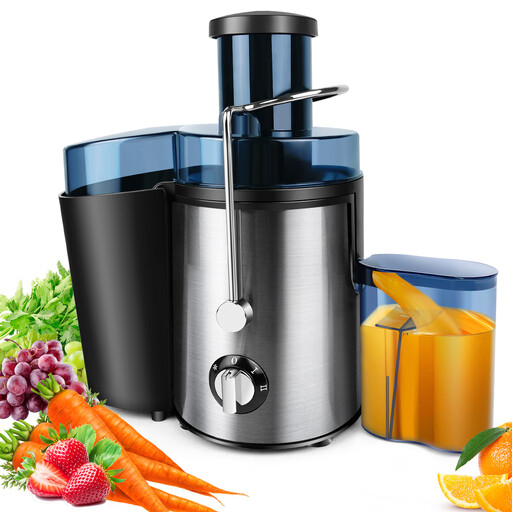 No image available
DayPlus Juicer, 1000 W
Check the full product details for this model to see whether its type and preparation requirements suit your celery breakfast routine.
The product title lists 1,000 W, a 65 mm feeding chute, two speed settings and a capacity of 500 ml.
View at Joybuy
Frequently asked questions
Does celery need to be prepared before juicing?
Yes. The Federal Centre for Nutrition recommends separating the stalks and washing them thoroughly; you can remove any tougher strings if needed. You should also cut them to the size specified in your juicer’s instructions.
Are all parts of a slow juicer dishwasher-safe?
No, that is not true of every part across all models. Bosch lists certain parts of the MESM500W as dishwasher-safe, while Gastroback says the attachments for model 40145 are dishwasher-safe. Always check the parts list and instructions for the model you choose.
What should I know about faults or an advertised warranty?
In Germany, your statutory rights for faulty goods are against the seller; a warranty is an additional voluntary service with its own terms. The Verbraucherzentrale (Federation of German Consumer Organisations) clearly distinguishes between the two. If you use your juicer frequently, it is also worth checking whether suitable replacement wear parts are available for the exact model.
What labelling matters for an electric juicer sold in Germany?
CE marking is required for products covered by relevant harmonised EU legislation. It is the manufacturer’s declaration of conformity, not an independent quality mark. For market surveillance of electrical household products, the Bundesnetzagentur (Federal Network Agency) lists checks including the marking, manufacturer information and German-language instructions; this does not mean that any individual listing has been checked.
Is celery juice suitable for everyone in the family?
There is no one-size-fits-all answer. The German Federal Institute for Risk Assessment lists celery as a possible trigger of pollen-associated food allergies. If you have a known celery allergy, choosing a juicer does not remove this dietary risk.


