
Lieferung heute & morgen

Qualitätsgarantie

Willkommens-Angebote freischalten: KOSTENLOSE Lieferung | Bis zu 80 % RABATT | Kostenlose 30-Tage-JoyPlus-Testphase
App herunterladen
If you’re thinking of buying a Celimax Retinal Retinol Serum Set, you’ll often come across claims about smoother-looking skin, refined pores and a firmer complexion. But what matters isn’t just whether a product is called “retinal” or “retinol”. The combination of active ingredient, concentration, use and packaging is important too.
The Celimax The VITA-A Bundle contains two different vitamin A products: the Celimax The VITA-A Retinal Shot Tightening Booster, 15 ml, and the Celimax The VITA-A Retinol Shot Tightening Serum, 30 ml. Together, this retinal and retinol skincare set contains 45 ml. It’s aimed at anyone looking to build a Korean skincare routine gradually or use different strengths of retinoid as part of their routine.
A higher percentage doesn’t automatically mean a product is better suited to your skin. Retinal and retinol are different vitamin A derivatives, so you shouldn’t judge them by percentage alone. According to the product description, the Celimax Booster contains 0.1% retinal, while the retinol serum combines retinol with bakuchiol and peptides.
Other products may also use terms such as “retinal liposome” or “shot”, but that doesn’t mean they’re directly comparable. Always check the full ingredients list, concentration and directions for use.
Retinoids can cause dryness, redness, stinging or flaking. A formula described as low-irritation isn’t necessarily suitable for every skin concern. Take extra care, particularly if your skin is sensitive, irritated or already heavily exfoliated.
An anti-wrinkle serum, a firming face serum or a serum for enlarged pores is no substitute for advice from a dermatologist. Many factors can affect the visible texture of your skin, including hydration, sun exposure and your individual skin type.
Retinol and retinal are light-sensitive ingredients. After use, make sure the products are sealed and stored somewhere cool, away from direct light. Retinoid products are generally best used in your evening routine. The next morning, it’s a good idea to use a broad-spectrum sunscreen with an appropriate SPF.
In skincare, retinal is often positioned as a more active vitamin A derivative, while retinol first needs to be converted into other active forms. However, this doesn’t mean you can make a blanket assumption about how well your skin will tolerate either one.
If you’re new to retinoids, a retinol product with a lower concentration or a gradual introduction may be a good choice. More experienced users may prefer a retinal serum with a clearly stated concentration. The Celimax set gives you both options, but you shouldn’t automatically apply both products to your entire face at the same time.
Look for:
Product information can change between batches, so always refer to the packaging of the product you actually receive.
Start with a small amount and use the product just a few times a week. You can gradually adjust how often you apply it, depending on how your skin responds. Don’t layer retinal and retinol in the same evening routine without a good reason.
At first, avoid using them at the same time as high-concentration vitamin C, AHA, BHA, salicylic acid or other strongly exfoliating products. Stop using the product if you experience persistent redness, stinging or significant flaking.
Products containing retinoids should only be used during pregnancy, when trying to conceive or while breastfeeding after consulting a doctor. If you’re unsure, seek medical advice.
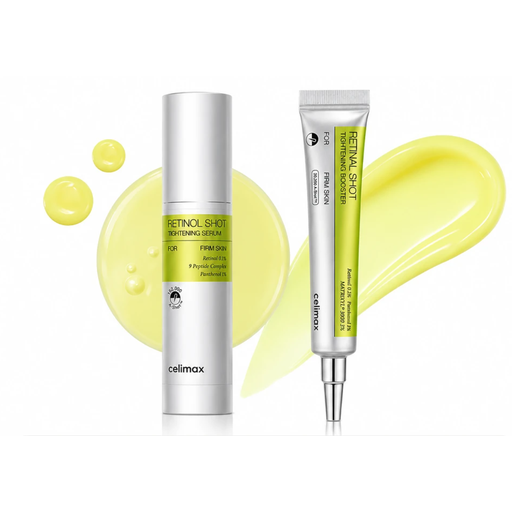
Why it suits this profile: The bundle includes two different vitamin A products in one order, making it a good option if you’re planning to build a routine gradually.
The two products are clearly separated, making it clear that retinal and retinol aren’t the same thing. This makes it easier to plan how to use them separately.
Includes a 15 ml retinal booster and a 30 ml retinol serum; total volume 45 ml.
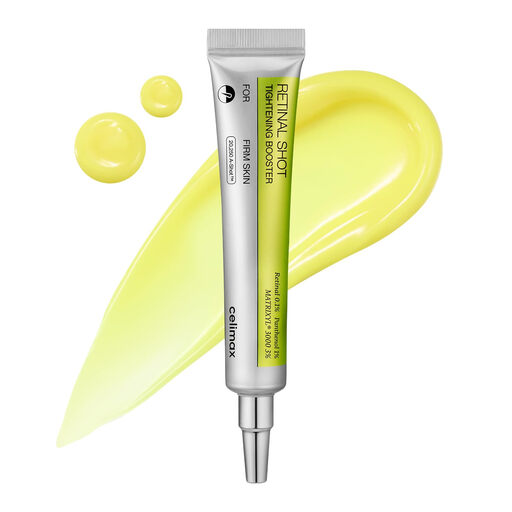
Why it suits this profile: According to the product description, the booster contains 0.1% retinal. It’s aimed at shoppers looking for a retinal product with a clearly stated concentration.
The retinal concentration is stated in the product details, making it easier to compare with other retinal serums.
15 ml; according to the product description, the retinal is encapsulated and the product is intended for evening use.
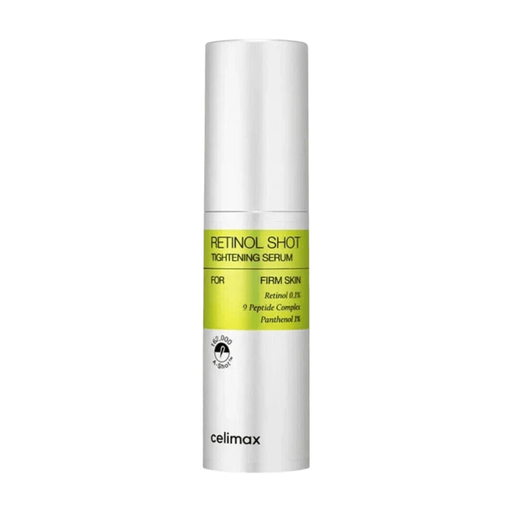
Why it suits this profile: At 30 ml, this is the larger product in the set. It’s a good option if you’re planning to make retinol a regular part of your evening routine.
Introducing the product gradually helps prevent the larger size from tempting you to use it too often.
30 ml; according to the product description, formulated with bakuchiol, peptides, Ceramide NP and sodium hyaluronate.
If you’d like to try both products, you could start with the retinol serum and add the retinal booster later on a separate evening. You don’t need to use both at once while you’re getting your skin used to them.
We’ve put together a complete, regularly updated list of products that meet these strict selection criteria and fully comply with the safety regulations in force in the EU.
They’re two different vitamin A derivatives. To make it easier to see how well your skin tolerates them, use them on separate evenings at first. You don’t need to combine them in the same routine, and doing so could make irritation harder to manage.
That depends on how much you use, how often you apply it and where you apply it. The bundle contains 45 ml in total. As only a very small amount of the retinal booster is recommended, it may last longer if you apply it to specific areas than if you use it all over your face every day. The retinol serum contains 30 ml.
It may be suitable if you introduce it gradually. Start with one product, a small amount and just a few evenings a week. It’s a good idea to patch test and follow the warnings on the packaging. If your skin is sensitive or already irritated, seek medical advice before use.