
Lieferung heute & morgen

Qualitätsgarantie

Willkommens-Angebote freischalten: KOSTENLOSE Lieferung | Bis zu 80 % RABATT | Kostenlose 30-Tage-JoyPlus-Testphase
App herunterladen
As a Joybuy Product Recommendation Officer, I see countless people every day searching for a simple, damage-free solution for sun protection and privacy. A no-drill roller blind is often the ideal answer, especially for renters or those who want to avoid DIY projects. However, the market is flooded with products of widely varying quality. Before you make a decision, it's crucial to understand the common pitfalls that can lead to frustration and unnecessary expense.
This guide will help you separate the wheat from the chaff and find a solution that truly fits your windows and your needs.
Many products promise easy installation, but the reality is often quite different. Watch out for these three typical problems to avoid a bad purchase:
To avoid these problems, you should carefully check three core aspects before buying. These determine whether a blind will be functional and aesthetically pleasing in the long run.
The choice of installation system is fundamental. Both no-drill methods have specific requirements:
Not all blinds are created equal. Think carefully about what function it needs to perform:
To avoid side light gaps, getting the measurements right is crucial. Follow this simple rule:
Based on these criteria, we have identified a few products that represent a well-thought-out solution for specific user profiles.
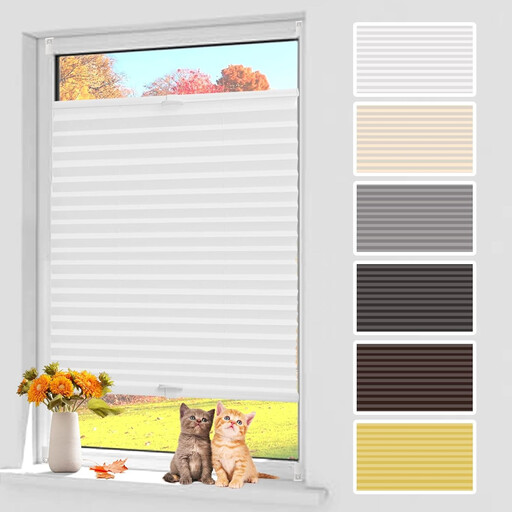
Why This Fits Their Persona: Ideal for renters seeking a straightforward, residue-free, and functional solution for standard uPVC windows. The adhesive mount installation is fast and requires no tools.
The adhesive mount is specifically designed for smooth surfaces, bypassing the problem of ill-fitting clamp brackets. The product description clearly indicates its blackout function.
Tool-free installation via adhesive; offers high blackout performance according to the manufacturer.
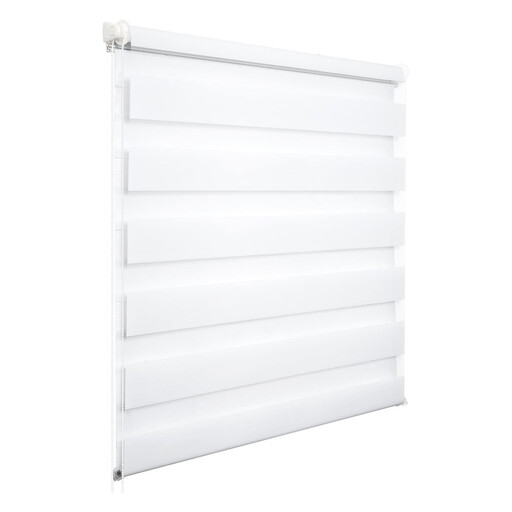
Why This Fits Their Persona: Perfect for users who want a modern aesthetic and full control over light levels. The zebra blind design allows for a seamless transition between privacy and brightness.
The clamp-fit bracket is designed for a clearly defined frame thickness (13-23 mm), which minimises fitment issues. The measuring instructions are precise to help avoid light gaps.
Infinitely adjustable light control via two fabric layers; stable clamp-fit installation.
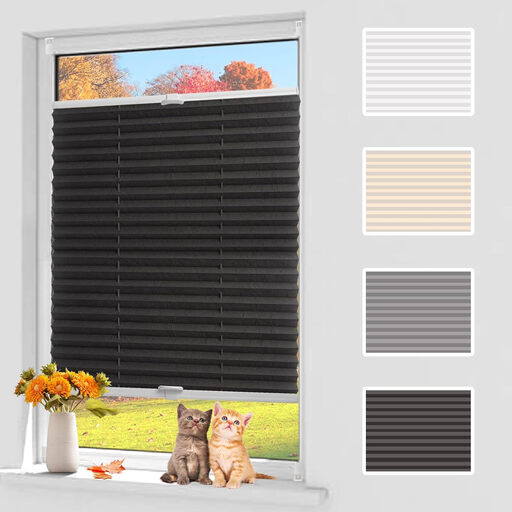
Why This Fits Their Persona: Designed for shift workers, parents of young children, or anyone who needs maximum darkness for restful sleep. The blackout function is the key factor here.
This product is explicitly advertised as "Blackout," which prevents confusion with fabrics that only dim the light. The clamp-fit mount ensures a secure fit on the window frame.
High blackout performance for bedrooms and quiet spaces; flexible positioning of the pleated blind from both top and bottom.
Reliability heavily depends on correct installation and the specific conditions. Clamp-fit systems are very robust and durable when used with the correct frame thickness. Adhesive mounts work excellently on smooth, clean uPVC frames but can lose adhesion on rough or uneven surfaces. In any case, it is crucial to follow the manufacturer's installation instructions precisely.
Caution is advised. Many manufacturers advise against installation on wooden windows. Clamp brackets can leave pressure marks in the softer material or damage the paint. Adhesive strips often don't bond permanently to painted wood and can pull off the paint upon removal. Always check the product description for explicit suitability information.
A dual roller blind (also known as a zebra blind) consists of two parallel layers of fabric with alternating transparent and opaque stripes. A chain mechanism is used to infinitely adjust the light level. A pleated blind consists of a single, pleated piece of fabric. It is usually moved directly by a handle and can often be positioned flexibly from top to bottom as well as bottom to top, allowing for highly variable window coverage.