
Lieferung heute & morgen

Qualitätsgarantie

Willkommens-Angebote freischalten: KOSTENLOSE Lieferung | Bis zu 80 % RABATT | Kostenlose 30-Tage-JoyPlus-Testphase
App herunterladen
Ceramic bakeware combines baking and serving: casserole dishes, cake tins or ramekins can often go straight from the oven to the table. Even so, it pays to take a close look at the product specifications. An attractive glaze alone tells you little about temperature range, cleaning or everyday practicality.
The term oven-safe bakeware should always be accompanied by a specific temperature rating. Many ceramic and stoneware dishes are suitable for the oven, but must not be used on the hob, a hotplate or a direct heat source. Moving from the freezer to a hot oven can also be problematic if the manufacturer hasn’t explicitly approved it.
A glazed surface may be stain- and odour-resistant according to the manufacturer. However, knocks, metal edges or sudden temperature changes can still cause chipping or cracking. Before each use, check the dish for any visible damage.
A dishwasher-safe bakeware makes cleaning easier, but not every product is designed for it. Some ceramic dishes must only be washed by hand. Plastic lids, if included, may also have different temperature limits than the dish itself. The care instructions for each product are therefore more important than general marketing claims.
Ceramic is a broad term for fired ceramic materials. Stoneware is fired at high temperatures and is often dense and suitable for oven use. What matters most, however, isn’t just the material name, but the combination of glaze, temperature range and usage instructions.
A ceramic casserole dish is typically ideal for gratins, lasagne, vegetable dishes and desserts. A stoneware baking dish may also be intended for bread, sponge cakes or meatloaf. Check whether the dish has the size and capacity you need.
Look for three key details:
“Oven-safe up to 260 °C” does not automatically mean the dish can be used on the hob. Hot dishes should be placed on a stable, heat-resistant surface. Allow them to cool before washing or coming into contact with cold surfaces.
For a household with several people, dishes with a capacity of around 1.1 to 2.4 litres are practical for side dishes and casseroles. A 23 cm baking dish with 1.4 litres can be used for bread, cakes or smaller bakes, while a larger ceramic bakeware set covers different portion sizes.
For desserts and individual portions, ramekins, soufflé dishes or crème brûlée dishes of 200 ml or 8 oz are common. Stackable dishes save space in your kitchen cupboard. With a cake tin, tart tin or bread loaf pan, you should also check that the diameter, internal height and rim shape match your recipe quantities.
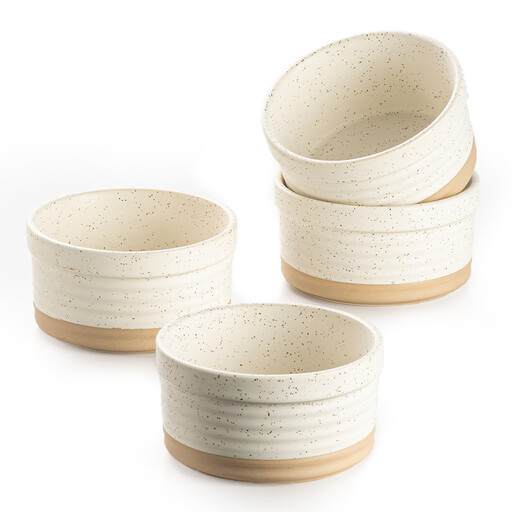
Why this product fits the profile: The set of four covers multiple individual portions and is ideal for desserts, quiches, dips and soufflés. The stated capacity of 8 oz equates to approximately 237 ml per ramekin.
The product details explicitly state suitability for oven, freezer and dishwasher. Even so, you should avoid a direct switch between extreme temperatures.
Set of four ceramic ramekins with a scratch-resistant glaze and stated suitability for oven, freezer and dishwasher.
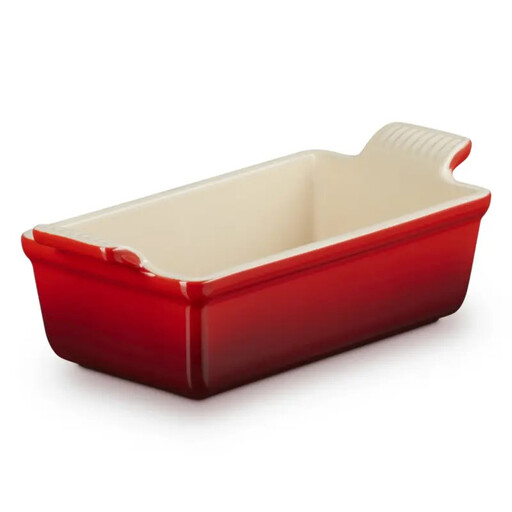
Why this product fits the profile: The 23 cm stoneware bread loaf pan offers a capacity of 2.8 litres according to the product details, and is intended for bread, cakes, meatloaf and casseroles.
The stated temperature range of -23 °C to 260 °C makes the usage limits clearer. According to the manufacturer, use on the hob or over direct heat is not permitted.
Stoneware with a non-porous, scratch-resistant glaze; according to the product description, suitable for oven, microwave, freezer and dishwasher.
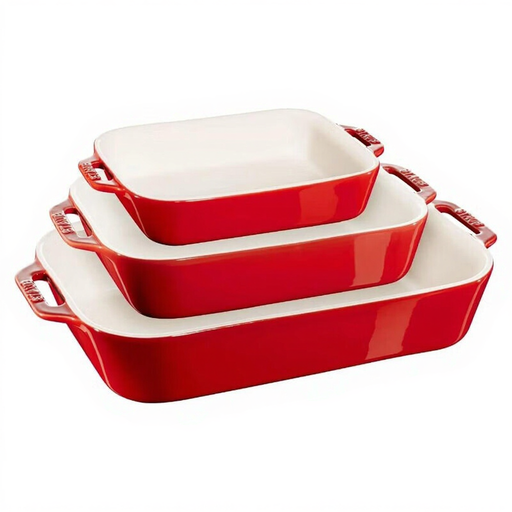
Why this product fits the profile: Three rectangular dishes measuring 20 × 16 cm, 20 × 27 cm and 24 × 34 cm cover different quantities – from side dishes to a family-sized casserole.
The three sizes reduce the risk of using an oversized dish for small portions. According to the product description, the dishes are stackable and designed for temperatures up to 260 °C.
Three-piece ceramic bakeware set with a total capacity of 4.5 litres, stackable storage and stated dishwasher suitability.
We’ve put together a full, regularly updated list of products that fully meet these strict selection criteria and the safety regulations in force in the EU.
Many models are suitable for the oven, but the temperature limit and additional functions vary. Always check the specific manufacturer’s instructions. Oven-safe does not automatically mean hob-safe or direct-heat-safe.
This is only advisable if the manufacturer explicitly allows this change and the stated temperature range covers it. Otherwise, the temperature shock can cause thermal stress. It’s safer to let the dish come to room temperature gradually first.
Some models are dishwasher-safe, while others are intended for hand washing only. For sets with lids, the care instructions for the dish and accessories often differ. Check the details on the product page before purchasing and before the first clean.