
Lieferung heute & morgen

Qualitätsgarantie

Willkommens-Angebote freischalten: KOSTENLOSE Lieferung | Bis zu 80 % RABATT | Kostenlose 30-Tage-JoyPlus-Testphase
App herunterladen
A ceramic bowl set should be versatile, easy to care for and a good fit for your home. In practice, unclear sizing, the wrong number of pieces or overlooked care instructions can quickly lead to a disappointing purchase. It’s worth checking the product details carefully, especially for cereal bowls, dessert bowls and pasta bowls, rather than relying on photos and marketing claims alone.
A bowl with a large diameter may work well for pasta or salad, but it takes up more space in your kitchen cupboard. Compact rice bowls around 11 to 16 cm in diameter are often more practical for rice, yoghurt, fruit or side dishes. Larger, shallower designs are better suited to pasta or soup.
Ceramic is a broad term. Stoneware bowls are fired at a high temperature and are usually heavier and more robust than thinner ceramic varieties. Porcelain bowls often look lighter and more delicate, but they can still be damaged by knocks. Check the stated material, wall thickness, weight and specific usage instructions.
A glaze or decorative rim alone doesn’t tell you whether a bowl is safe to use in an appliance. Check the product description to see whether the bowls are explicitly microwave-safe and dishwasher-safe. Handmade or reactive-glazed finishes may vary in colour and size. As a general rule, avoid exposing ceramic to sudden, extreme changes in temperature.
The right size depends on how you plan to use the bowl:
Check whether the stated capacity refers to the volume filled right up to the rim. In everyday use, you’ll rarely fill a 600 ml bowl to the very top.
A bowl set with four or six matching bowls is a good choice for families and regular meals. Individual bowls make more sense if you want different sizes or colours. Check that the product really includes several bowls, rather than simply being described as a “set”. Snack and serving sets may also include boards, dishes or stands.
These details are worth checking for everyday use:
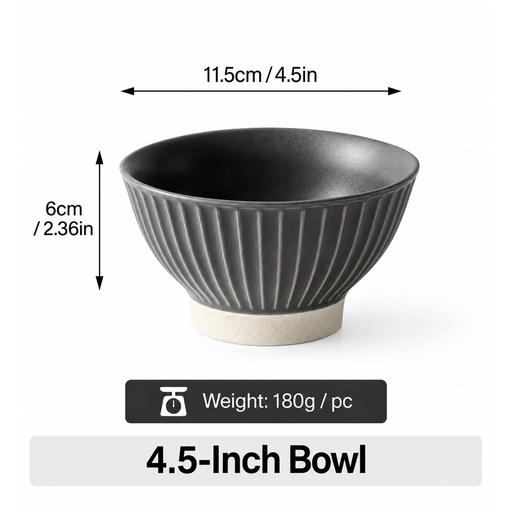
Why it suits this profile: This single bowl, measuring around 11.5 cm in diameter and 6 cm in height, is suitable for rice, yoghurt, desserts, fruit and dips. It’s a straightforward option if you only need one extra piece of tableware to start with.
The product description clearly states the number of pieces, dimensions and suggested uses. This makes it easier to judge the compact size before you buy.
Around 180 g per bowl; according to the product description, it’s suitable for the dishwasher, fridge and microwave.
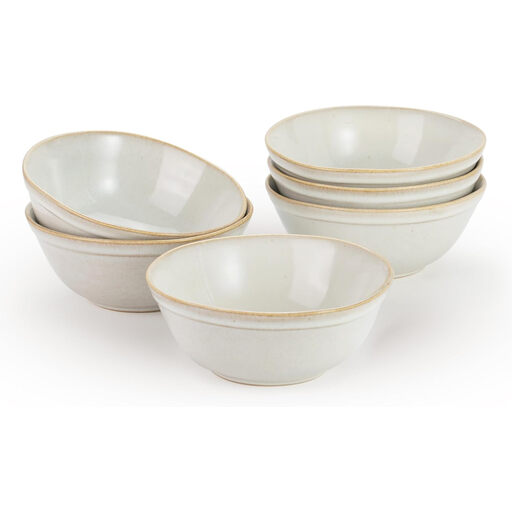
Why it suits this profile: This six-piece cereal bowl set offers around 600 ml of capacity per bowl, with a diameter of 15.88 cm. It’s a good fit for families looking for matching tableware for breakfast, desserts, rice and fruit.
The number of pieces and capacity are clearly stated. Guidance on stacking carefully and avoiding sudden temperature changes also helps you use the bowls correctly.
Stoneware with a reactive glaze; according to the product description, it’s microwave- and dishwasher-safe. Six bowls make it suitable for several people.
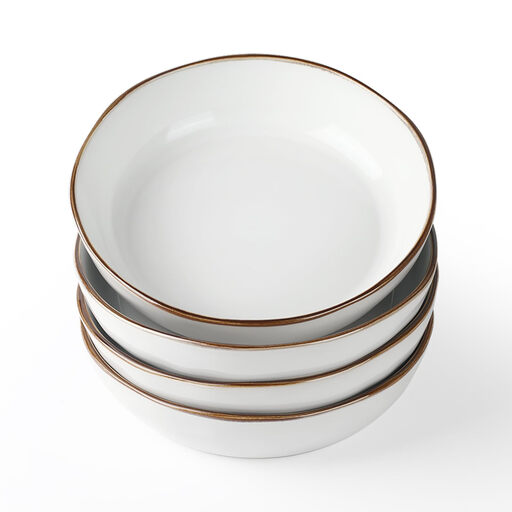
Why it suits this profile: These four shallow bowls, measuring 22 cm in diameter with a capacity of around 900 ml, are designed for pasta, salads, soups and dishes with plenty of sauce. They’re also well suited to frequent use in larger households or in catering.
The large design isn’t presented as a universal option for small portions; it’s clearly intended for main courses and liquid dishes. Guidance on stacking and avoiding sudden temperature changes is still important.
Four stoneware bowls; according to the product description, they’re microwave- and dishwasher-safe and have a scratch-resistant surface.
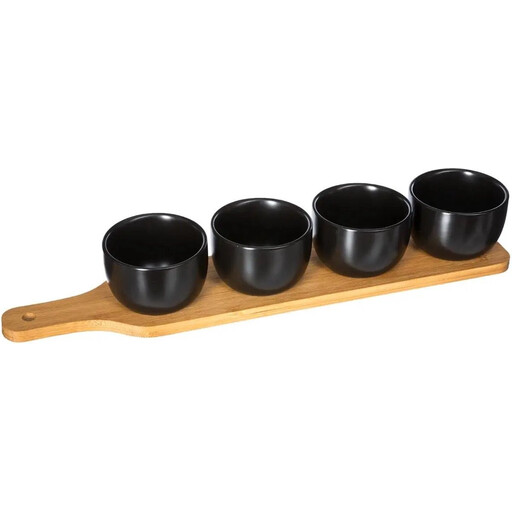
Why it suits this profile: This five-piece set combines a 41 cm bamboo board with four porcelain bowls. It’s ideal for serving dips, tapas, nuts and small side dishes to share at mealtimes.
The product description lists the five components separately. This makes it clear that the set doesn’t contain five identical ceramic bowls.
Four porcelain bowls plus a serving board; according to the product description, the ceramic pieces are dishwasher-safe.
We’ve put together a complete, regularly updated list of products that meet these strict selection criteria and fully comply with the safety regulations in force in the EU.
For cereal, yoghurt and fruit, a diameter of around 14 to 16 cm and a capacity of 400 to 600 ml is often a practical choice. If you serve larger portions or add extra ingredients, compare the capacity and internal depth.
Only if the manufacturer explicitly says they are. Even bowls labelled microwave-safe shouldn’t be exposed to sudden changes in temperature. Metallic decoration or damaged glaze may make them unsuitable for microwave use.
Their lifespan depends on the material, glaze, cleaning and how they’re handled. Stoneware and porcelain can last for many years if used with care. Knocks, abrasive sponges and sudden temperature changes can increase the risk of cracks, chips or scratches.