
Lieferung heute & morgen

Qualitätsgarantie

Willkommens-Angebote freischalten: KOSTENLOSE Lieferung | Bis zu 80 % RABATT | Kostenlose 30-Tage-JoyPlus-Testphase
App herunterladen
A ceramic bowl set should be versatile, easy to care for and well suited to your kitchen. However, product descriptions do not always make the right choice obvious. Terms such as “handmade”, “robust” or “microwave-safe” say little on their own if the capacity, contents or temperature limits are unclear.
It is therefore worth taking a closer look at three common pitfalls before buying:
Ceramic, porcelain and stoneware differ in structure, weight and typical uses. Stoneware is often used for larger cereal bowl sets or a dinnerware set for 4 people. It feels comparatively substantial and is suitable for everyday use. Porcelain often has a smooth surface and is popular for dessert bowls, ramekins or finer Japanese tableware.
Look for a smooth, intact glaze without visible cracks or sharp edges. With artisan-style glazes, slight variations in colour and size may be product-related. Details such as lead-free and cadmium-free composition or suitability for food contact should be clearly supported by the product information. In the EU, food-contact materials are subject, among other things, to the requirements of Regulation (EC) No 1935/2004.
Volume has a greater impact on everyday practicality than design:
Tall inner walls help to contain liquids, while wider, shallower shapes are suitable for pasta and salads. Also check the diameter and height if the bowls need to fit inside existing kitchen cupboards or your dishwasher.
A microwave-safe bowl should be explicitly labelled as microwave-safe. Take extra care with ceramic featuring gold rims, metal details or unclear decoration. Oven suitability requires a separate check: several of the sets in this selection are microwave- and dishwasher-safe, but explicitly not oven-safe.
It is also important to consider temperature shock. Placing a bowl straight from the freezer into a hot microwave, or from a hot appliance onto a cold stone worktop, can cause cracks. Dishwasher-safe bowls make cleaning easier, but abrasive sponges can damage glazes and decorative finishes over time.
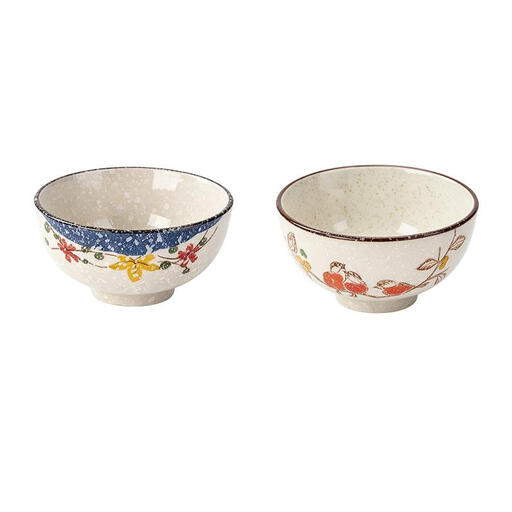
Why this product suits this profile: The two-piece set covers breakfast, rice, fruit and smaller portions of soup for singles or couples, while taking up less storage space than a larger dinnerware set.
The stated quantity comprises two bowls. The product description also specifies ceramic and Japanese style; use in the oven is not intended.
Two versatile ceramic bowls with a smooth glaze; according to the product details, they are suitable for use in the microwave and dishwasher.
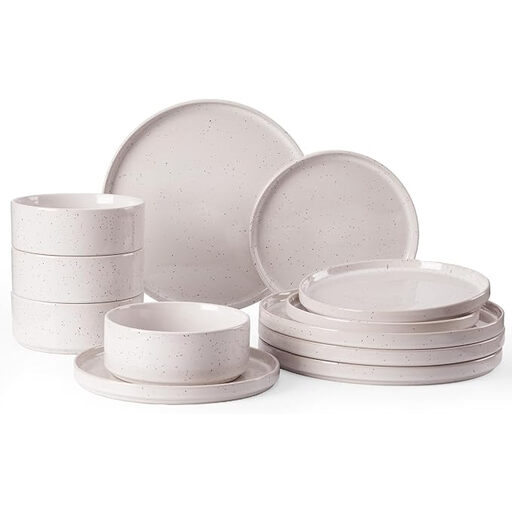
Why this product suits this profile: Families and hosts receive 12 pieces: four dinner plates, four side plates and four cereal bowls, each with a capacity of 650 ml.
The contents, bowl capacity and dimensions are clearly listed. The set is stackable and, according to the details, is not intended for use in the oven.
12-piece stoneware set that is microwave- and dishwasher-safe, stackable and, according to the product details, lead-free and cadmium-free.

Why this product suits this profile: Keen cooks and baking enthusiasts can bake and serve individual portions, then store them in the fridge or freezer with the lids on.
The six porcelain dishes each hold 12 oz and come with matching plastic lids. The lids should not be treated as equivalent to the ceramic dishes and should be handled separately.
Suitable for the oven, microwave, dishwasher and freezer; lids feature a date indicator and a temperature limit of up to 120 °C.
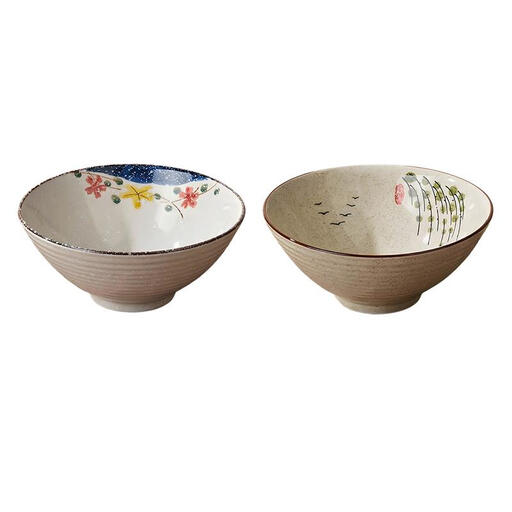
Why this product suits this profile: With a capacity of 1,200 ml per bowl, the two-piece set provides plenty of room for ramen, soup, pasta, salads and larger rice dishes.
The generous capacity is clearly stated. It is also made clear that the bowls are not intended for use on the hob or in the oven.
Two large ceramic bowls with Japanese underglaze decoration; according to the product details, they are microwave-safe and suitable for the dishwasher.
We have put together a complete, regularly updated list of products that fully meet these strict selection criteria and the safety regulations applicable in the EU.
Wash new ceramic bowls with warm water and mild washing-up liquid before using them for the first time. Do not remove food residue with wire wool or highly abrasive cleaners. Check bowls regularly for chips and cracks. Damaged tableware should no longer be used for food.
With bowls with lids, the bowl and lid must be considered separately. Plastic lids are often not suitable for use in the oven and should only be used while heating according to the manufacturer’s instructions. If necessary, open the vent on sealed containers to prevent pressure from building up.
For standard portions of soup, around 600 to 750 ml is often sufficient. If you serve ramen, large portions of pasta or hearty stews, you can choose a capacity of around 1,000 to 1,200 ml. Alongside volume, tall sides and a stable base are also important.
No. Suitability depends on the glaze, decoration and manufacturer’s instructions. A microwave-safe bowl should be labelled accordingly. Metallic decorations are not suitable for microwave use. Also avoid sudden changes in temperature.
Their service life depends on the material, glaze, cleaning method and how they are handled. Stackable and dishwasher-safe bowls can make everyday use easier, but they are not unbreakable. Impacts, abrasive cleaners and temperature shocks can cause cracks or chips even in durable stoneware.