
Lieferung heute & morgen

Qualitätsgarantie

Willkommens-Angebote freischalten: KOSTENLOSE Lieferung | Bis zu 80 % RABATT | Kostenlose 30-Tage-JoyPlus-Testphase
App herunterladen
A ceramic bowl set often looks similar in product photos: a light glaze, a decorative pattern and descriptions like "versatile." In everyday use, however, the differences show up in details that are easy to overlook in short listings. For British households, families and catering businesses, the key factors are the right dimensions, reliable care instructions and a sensible set composition.
A bowl with a 15 cm diameter can be very different from a shallow 20 cm bowl. For soups and ramen, height, interior shape and capacity are also crucial. A wide rim may look generous, but it can reduce the usable area.
Microwave-safe bowls are not automatically suitable for use on the hob or in the oven. A lid may also have its own limitations. Especially with hot liquids, sudden temperature changes should be avoided, as they can damage the ceramic and glaze.
Relief patterns, irregular edges and hand-painted designs can make a visual impact on the table. However, they say little about cleaning or stackability. Before buying, you should check whether the bowls are dishwasher-safe and whether the manufacturer provides guidance on abrasive cleaning products.
For daily use, you can roughly select bowls by their intended application:
A 20 cm model can cover several main courses, while a 15 cm model is better suited to soups, rice or smaller portions. The specification "8 inches" is roughly equivalent to 20 cm.
Ceramic and porcelain are made from mineral raw materials, but they differ in density, weight and surface finish depending on the product. The following details are relevant for your buying decision:
A product description stating "dishwasher-safe" or "microwave-safe" refers to the manufacturer's specific claim. Additional restrictions may apply to decorations, lids and metal rims.
A 4-piece ceramic bowl set covers use by four people or across several meals. Singles and couples may manage with a 2-piece set, while restaurants, hotels and cafés should calculate their needs based on seating capacity, washing cycles and replacements. A mixed ceramic dinner set can be useful if bowls are regularly combined with plates and side plates.
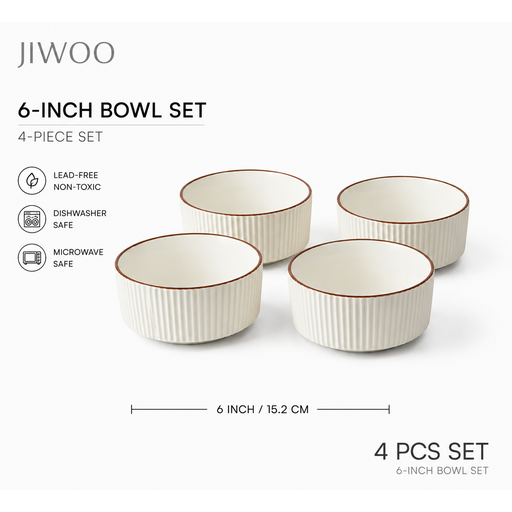
Why this product suits the profile: The 4-piece set with 6-inch bowls covers breakfast, rice, soups, fruit, desserts and side dishes. The cream-coloured surface with a brown rim works with a variety of table settings.
The size is clearly stated and the set includes four bowls. According to the product information, they are suitable for microwave and dishwasher.
Four pieces, versatile portion size and textured surface; described as dishwasher-safe and microwave-safe.
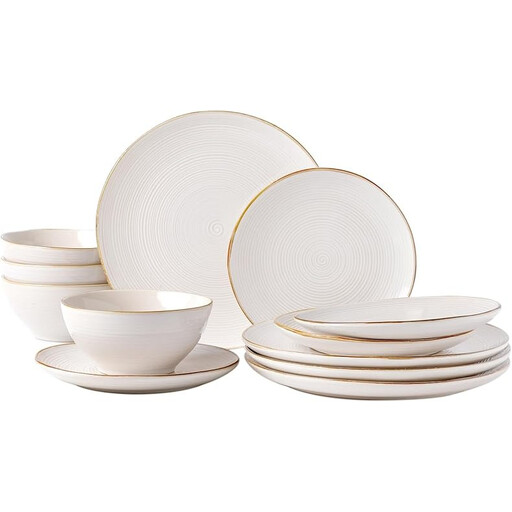
Why this product suits the profile: The 12-piece ceramic dinner set is put together for four people and combines dinner plates, dessert plates and soup bowls.
The specific contents reduce the risk of buying mismatched individual pieces. The product information mentions stackability as well as suitability for dishwasher and microwave.
12 pieces for four place settings, 600 ml bowl capacity and white stoneware with a swirl pattern.
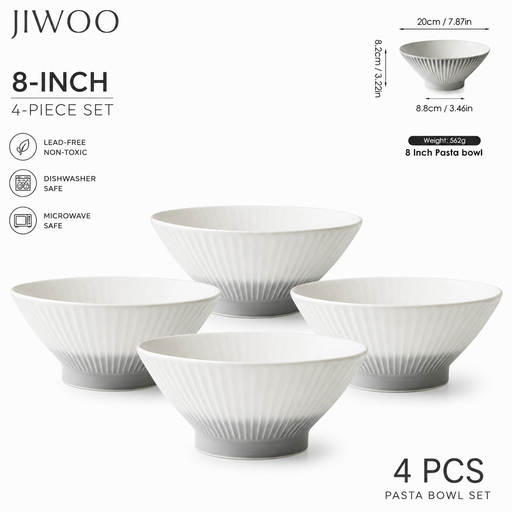
Why this product suits the profile: The four 20 cm bowls are designed for larger portions and work well with pasta, salad, noodle soup, stew, curry rice and main courses.
The 8-inch diameter is clearly stated, preventing confusion with smaller cereal bowls. According to the product information, the bowls are dishwasher-safe and microwave-safe.
Four large pasta bowls with a white surface, grey base and embossed stripe design.
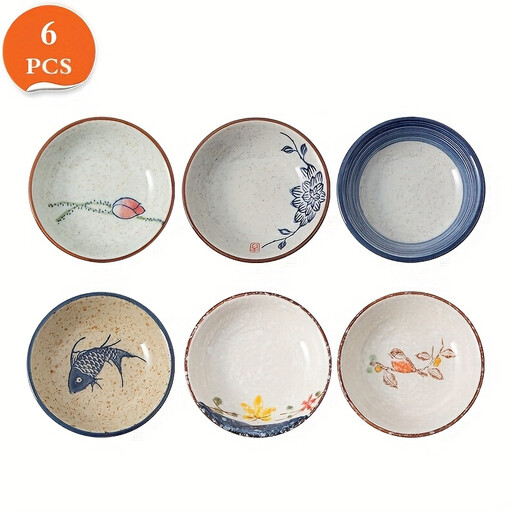
Why this product suits the profile: Six small bowls are ideal for soy sauce, dips, spices, starters and side dishes. This makes them suitable for sushi bars, cafés or a Japanese-inspired table setting.
The six-piece set is clearly defined for small portions. According to the product information, the porcelain bowls are suitable for microwave and dishwasher; steel wool should be avoided.
Six pieces, smooth porcelain surface and retro-Japanese glaze look for dips and side dishes.
We have put together a full, regularly updated list of products that fully meet these strict selection criteria and the safety regulations in force in the EU.
For a longer lifespan, ceramic bowls should not be taken straight from the fridge and placed into a very hot microwave. Hot bowls can also transfer heat to delicate surfaces. When cleaning, mild washing-up liquid and soft sponges are a good starting point. Always follow the manufacturer's specific instructions.
Before buying for catering or frequent family use, it is also worth checking availability of replacements, stackability and spare parts. For commercial use, details about daily cleaning, storage space and the permitted temperature range should be documented.
This depends on the individual product. A relevant statement must be explicitly included in the product description or instruction manual. Microwave suitability does not automatically mean the bowl is oven-safe or hob-safe.
For pasta, salad and ramen, wide bowls around 20 cm in diameter are often practical. The right choice also depends on depth, rim shape and the desired portion size. For breakfast and side dishes, smaller models are often sufficient.
It is not possible to give a fixed lifespan. It is influenced by the material, glaze, usage, cleaning and knocks. Cracks, chips and visible damage are reasons to retire the affected piece.