
Lieferung heute & morgen

Qualitätsgarantie

Willkommens-Angebote freischalten: KOSTENLOSE Lieferung | Bis zu 80 % RABATT | Kostenlose 30-Tage-JoyPlus-Testphase
App herunterladen
Ceramic bowls are among the most versatile pieces of tableware. They can be used as cereal bowls, rice bowls, soup bowls, dessert bowls or serving bowls. But having plenty of choice doesn’t automatically make it easy to find the right one. Bowls are often chosen for their colour and shape, while important details such as size, quantity and suitability for everyday use are overlooked.
A bowl with a diameter of 11.5 cm is usually suitable for rice, yoghurt, side dishes or desserts. However, this size is rather small for ramen, noodle soups or larger salads. Looking only at the measurement in inches can lead you to misjudge how the bowl will work in practice.
That’s why you should always check the dimensions in centimetres, the height and, where stated, the capacity. A bowl that is 20 cm wide and around 9 cm deep offers considerably more room for soups, pasta and main courses.
A microwave-safe bowl isn’t automatically suitable for the oven or for use over an open flame. Moving ceramic straight from the fridge into a hot microwave can also cause thermal stress. Check the manufacturer’s instructions before buying and before using the bowl for the first time.
Take particular care with decorative glazes or metallic detailing. A bowl with metal accents shouldn’t be used in the microwave unless the manufacturer explicitly says it’s safe to do so.
Buying a single bowl gives you the flexibility to put together your own tableware. For families, house shares or catering businesses, a set of bowls containing four or six pieces is often more practical. Consider the number of pieces, whether the bowls are stackable and whether you can buy additional ones later.
Differences in colour between production runs can also matter. If you prefer a coordinated look, choose bowls from the same range wherever possible.
Ceramic is a broad term for materials made from fired clay and other components. Weight, finish and durability vary according to the composition, firing temperature and glaze. Stoneware often feels a little heavier and more rustic, while porcelain usually has a finer, smoother finish.
A porcelain bowl is particularly well suited to pared-back, classic or formal table settings. Ceramic bowls with a matt glaze, on the other hand, work well with Nordic, modern or Japanese tableware. The material label isn’t the only thing that matters: check the care instructions for the specific product too.
As a general guide:
The shape also affects how you can use a bowl. A wide, shallow bowl makes pasta and salad easier to serve. A deeper bowl holds broth, making it a good choice for ramen or soup.
A dishwasher-safe bowl takes some of the effort out of cleaning, but it should be loaded according to the manufacturer’s instructions. Abrasive cleaners or steel wool can scratch matt glazes. Smooth glazes are generally easier to clean of food residue.
If you’re considering stackable bowls, take a look at the foot ring and the shape of the rim. These details affect how much space the bowls take up in your cupboard and how securely they can be stacked.
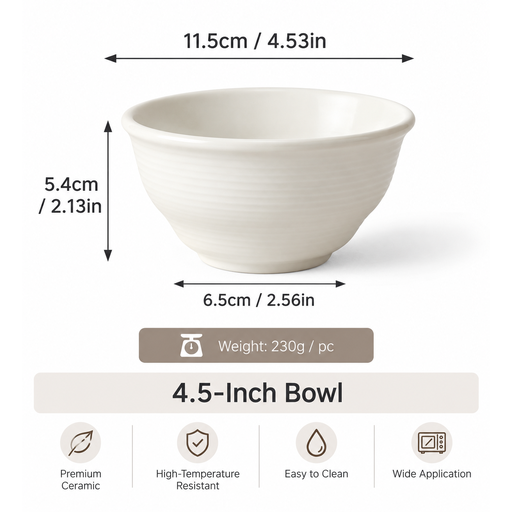
Why this product suits these needs: This single ceramic bowl, measuring around 11.5 cm in diameter and 5.4 cm high, is ideal for rice, side dishes, fruit, cereal, yoghurt and desserts. It’s a good addition if you only need one bowl to start with.
The clearly stated dimensions help you avoid mistaking this compact bowl for a large soup or ramen bowl. According to the product description, it’s suitable for use in the fridge, microwave and dishwasher.
A compact single bowl in a creamy white shade, with a smooth glaze and versatile uses for smaller portions.
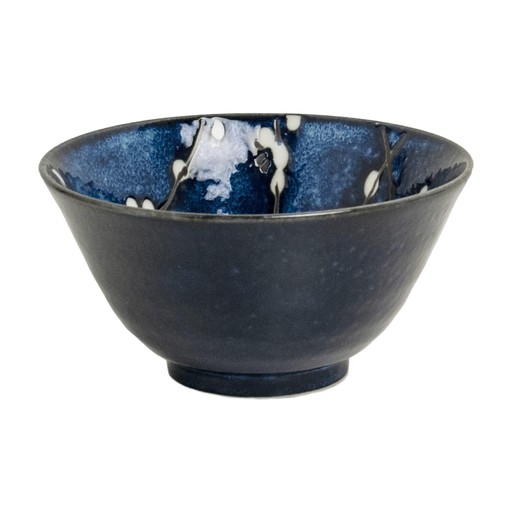
Why this product suits these needs: Measuring 13 cm in diameter and 7 cm high, with a stated capacity of 400 ml, this bowl combines Japanese decoration with a practical size for rice, noodles, soup and desserts.
The dimensions and capacity give you a realistic idea of portion sizes. The product information also states that it’s microwave- and dishwasher-safe.
A Japanese blue-and-white pattern, 400 ml capacity and a rounded shape suited to a variety of dishes.
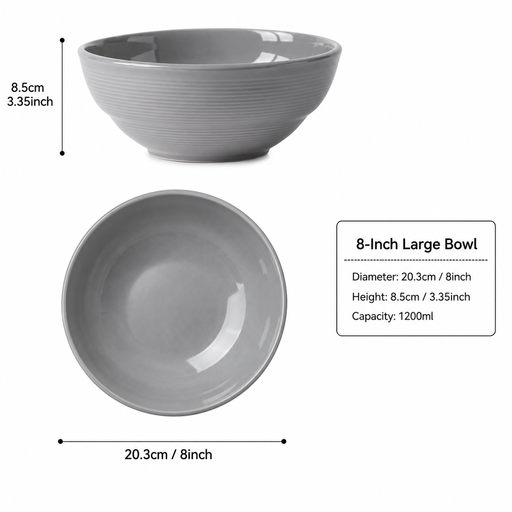
Why this product suits these needs: Measuring around 20.3 cm in diameter and 8.5 cm high, with a capacity of around 1,200 ml, this large bowl is designed for ramen, noodles, soup, pasta, salads and more generous breakfast portions.
Its generous capacity clearly sets it apart from small rice bowls. According to the product description, it’s suitable for use in the fridge, microwave and dishwasher.
Generous capacity, a deep shape, glossy grey glaze and a design suited to liquid dishes.
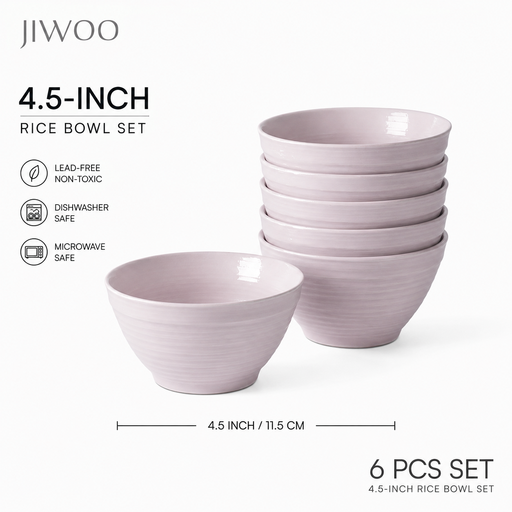
Why this product suits these needs: The set includes six bowls, each measuring around 11.4 cm in diameter and 6 cm high. They’re a handy size for rice, cereal, soup, desserts and side dishes when serving several people.
The number of bowls is clearly stated, so you won’t accidentally plan for a single bowl when you need enough for a household. The care instructions advise against sudden temperature changes and abrasive cleaners.
Six matching bowls, a stackable design and a matt finish. The product information also states that they’re microwave- and dishwasher-safe.
We’ve put together a complete, regularly updated list of products that meet these strict selection criteria and fully comply with the safety regulations in force in the EU.
For ramen, udon and noodle soups, deep bowls measuring around 20 cm in diameter and with enough height are a good choice. A capacity of roughly 1,000 ml or more gives you extra room for broth, noodles and toppings. For smaller portions, a bowl measuring around 13 to 16 cm may be enough.
It depends on the product. Only bowls specifically labelled as microwave-safe should be used for reheating. Metallic decoration, sudden changes in temperature and prolonged heating at a high power setting can all cause problems. Always follow the manufacturer’s instructions.
Their lifespan depends on the material, glaze, how often they’re used and how well they’re cared for. Knocks, cracks and sudden temperature changes can damage ceramic. Damaged bowls shouldn’t be used for food. A dishwasher-safe, stackable design can make everyday use more convenient, but it’s no substitute for careful handling.