
Lieferung heute & morgen

Qualitätsgarantie

Willkommens-Angebote freischalten: KOSTENLOSE Lieferung | Bis zu 80 % RABATT | Kostenlose 30-Tage-JoyPlus-Testphase
App herunterladen
Ceramic bowls are among the most versatile pieces of tableware. Use them for cereal, rice, soup, dessert or serving side dishes. Designs also vary considerably in diameter, height, capacity, glaze and care requirements.
If you’re looking to buy ceramic bowls, don’t base your choice on colour or surface texture alone. Some common buying mistakes can leave you with bowls that aren’t practical: a bowl may be too shallow for soup, not fit in the dishwasher or take up unnecessary space in the cupboard. The following criteria will help you narrow down your options.
A bowl with a diameter of 11 to 12 cm is usually suitable for rice, yoghurt, fruit, desserts or small side dishes. It’s often too small for ramen, noodles or a full meal. A bowl for ramen and noodles should be deep enough and have a stable base.
Measurements in inches aren’t always intuitive:
The outside diameter isn’t the only thing that matters. Check the internal depth and usable capacity, too.
Matt glazes, reactive glazes and textured exteriors all have a distinctive look, and can complement Nordic, Japanese or minimalist table settings. However, care instructions can vary. A dishwasher-safe bowl should be clearly labelled as such. Avoid scouring pads, steel wool and harsh cleaners on delicate surfaces.
A smooth interior is practical, too: it’s less likely to hold food residue and is generally easier to clean than a heavily textured surface.
A microwave-safe bowl is intended for reheating, but that doesn’t mean it’s suitable for every kind of prolonged or intense heating. Ceramic can be damaged by a sudden change in temperature, so don’t move a bowl straight from the freezer into a very hot environment. Always follow the manufacturer’s instructions for the model you choose.
It’s also worth checking the following before you buy:
Ceramic is a broad term for fired ceramic materials. Bowls made from high-fired stoneware often have a sturdier, heavier feel. Porcelain usually looks finer and lighter. However, how well any bowl stands up to everyday use depends on its finish, wall thickness and glaze.
When buying products intended for food contact, it’s important to check the supplier’s information. Tableware sold in the EU must meet requirements for materials intended to come into contact with food, including those set out in Regulation (EC) No 1935/2004. A declaration of conformity can provide additional reassurance, but it doesn’t replace checking the product’s own specifications.
The right size depends on how you plan to use the bowl:
Remember to consider storage space, too. Stackable designs are especially useful in smaller kitchens, cafés and catering businesses.
A smooth, non-porous interior is easier to clean. A stable foot helps prevent the bowl from slipping when you serve food. A rounded rim can feel more comfortable to hold and eat from, while a wide rim makes food easier to arrange.
Glazes with a handmade look may vary slightly in colour or pattern. If you need a matching set of bowls, check that they’re from the same range and that enough pieces are available.
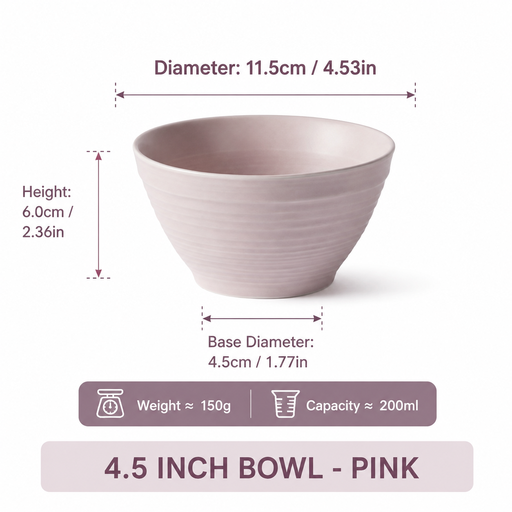
Why it suits this profile: This compact bowl is designed for rice, yoghurt, fruit, cereal, desserts and small side dishes. Its matt pink finish and concentric texture complement minimalist table settings.
The 4.5-inch size makes its intended use clear, so you’re less likely to mistake a small bowl for a ramen bowl.
Ceramic with a matt finish, a stackable design and, according to the product information, suitability for the microwave, dishwasher and freezer.
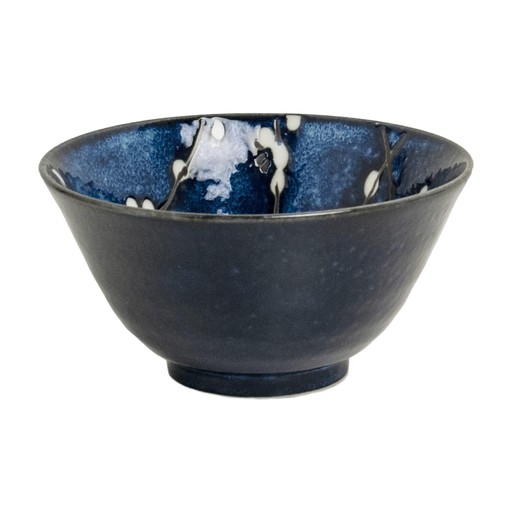
Why it suits this profile: This porcelain bowl, decorated with a blue and white floral motif, combines a well-defined size of 13 × 7 cm with Japanese-inspired tableware. It’s suitable for rice, noodles, soup and desserts.
The product information specifies the material, dimensions, 400 ml capacity and suitability for the microwave and dishwasher.
Porcelain, a smooth glaze and clear information confirming that the product includes one bowl.
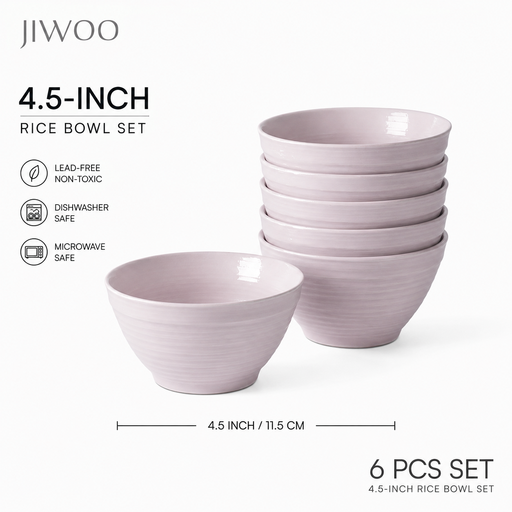
Why it suits this profile: This set is ideal for households, cafés and catering businesses that need several matching rice or dessert bowls.
The set is clearly listed as containing six bowls, making it easier to plan what you need than if you were buying several individually.
High-fired stoneware, a 4.5-inch size, stackable storage and, according to the product information, suitability for the microwave and dishwasher.
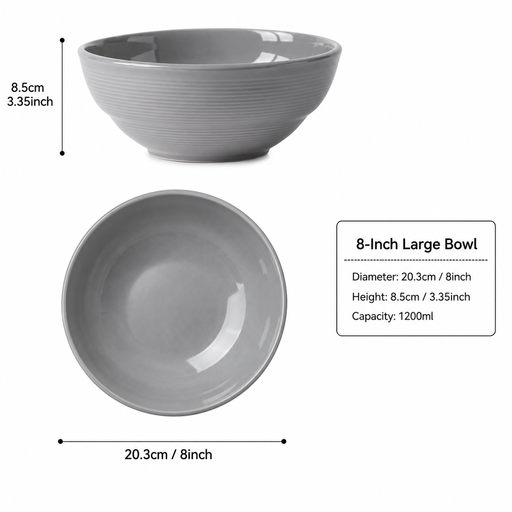
Why it suits this profile: With a diameter of around 20.3 cm and a capacity of roughly 1,200 ml, this deep bowl is designed for ramen, udon, pasta, salads, soup and generous breakfast portions.
The large diameter and stated capacity reduce the risk of choosing a bowl that’s too small for a liquid-based main meal.
Large 8-inch size, glossy grey glaze, horizontal texture and, according to the product information, suitability for the fridge, microwave and dishwasher.
Wash ceramic bowls in warm water with mild washing-up liquid before using them for the first time. For textured or matt glazes, soft sponges are a better choice than abrasive cleaning tools. Don’t use bowls with cracks or chips for food.
When heating:
A diameter of around 11 to 15 cm is typical for cereal, yoghurt, fruit and smaller breakfast portions. A higher rim helps prevent spills, while a wide rim makes filling the bowl easier.
Only if the product description explicitly says so. Even a microwave-safe bowl shouldn’t be heated for a long time at maximum power. Metallic decorations or damaged glazes may affect whether it’s safe to use.
Their lifespan depends on the material, glaze, how often they’re used and how they’re handled. With proper care, high-fired ceramic or porcelain can last for many years in the home. However, knocks, sudden temperature changes and abrasive cleaning products increase the risk of cracks, chips and scratches.