
Lieferung heute & morgen

Qualitätsgarantie

Willkommens-Angebote freischalten: KOSTENLOSE Lieferung | Bis zu 80 % RABATT | Kostenlose 30-Tage-JoyPlus-Testphase
App herunterladen
A ceramic cocotte combines cooking and serving in one dish. Small soups, gratins, side dishes and desserts can go straight from the oven to the table. However, when it comes to decorative designs, not every product will meet the practical demands of everyday cooking.
So before you buy, look beyond colour and design. Capacity, temperature range, lid, cleaning requirements and compatible heat sources are all important considerations.
Whether it’s shaped like a pumpkin, pepper or tomato, an eye-catching design makes a cocotte look appealing but says nothing about whether it can be used on a hob, in an oven or in a microwave. Many ceramic dishes are not suitable for direct heat sources such as gas flames, ceramic hobs or induction hobs.
So, make sure an ovenproof ceramic dish is explicitly labelled as suitable for oven use. The same applies to microwave use. If the manufacturer doesn’t provide clear information, don’t take a chance.
A 0.5-litre mini cocotte is generally suitable for a small portion, a side dish or a dessert. Depending on the recipe, it may not hold enough for a substantial main meal. A 0.7-litre model gives you a little more room for soup, stew or a small bake.
It’s also worth checking whether the stated capacity refers to the usable internal volume or the entire dish. The lid, handles and decorative outer shape add to the overall dimensions without creating more space for food.
Even glazed ceramic can be damaged by knocks, abrasive cleaners or sudden temperature changes. A cocotte described as a dishwasher-safe ceramic dish can be cleaned in the dishwasher, but it shouldn’t be exposed to cold water straight after baking.
Place hot dishes on a heat-resistant surface and let them cool before washing. This helps reduce the risk of cracks caused by thermal shock.
These guidelines can help you choose a small ceramic baking dish:
Also check the external diameter and the height with the lid on. A few centimetres can make all the difference in a small oven, a narrow drawer or a microwave with a turntable.
A ceramic cocotte for oven and microwave use should be explicitly approved for both appliances. The selected STAUB ceramic models featured here are stated to be oven-safe up to 300 °C. This is a technical maximum, not a recommendation for every recipe.
Look out for the following information:
A ceramic pot with a lid also requires heat-resistant oven gloves. The lid and handles can get very hot during cooking.
A well-fitting ceramic lid is useful for serving and keeps food covered while it stands for a short time. It’s particularly handy for soups and bakes when you’re taking the cocotte straight from the oven to the table.
When it comes to cleaning, the glaze, manufacturer’s instructions and handle design all matter. A smooth, glazed surface is usually easier to wipe clean. Even so, avoid abrasive sponges and harsh cleaning products.
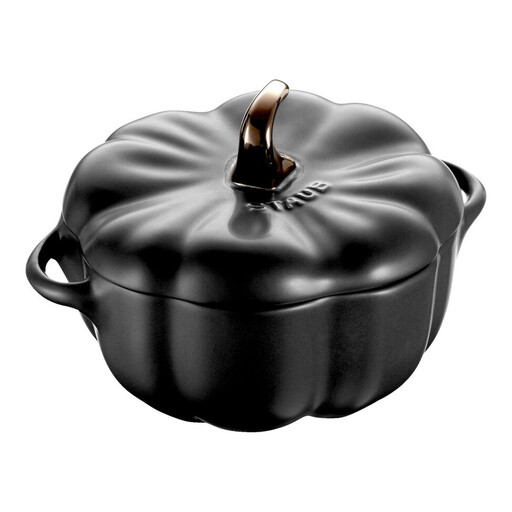
Why it suits this profile: With a capacity of 0.5 litres, it’s designed for small individual portions, soups, side dishes and desserts. The included ceramic lid makes it easy to take the dish straight from the oven to the table.
The product details specify its capacity, lid, suitability for the oven, microwave and dishwasher, and a maximum oven temperature of 300 °C.
0.5-litre capacity, glazed interior, matching lid, and suitability for the oven, microwave, freezer and dishwasher.
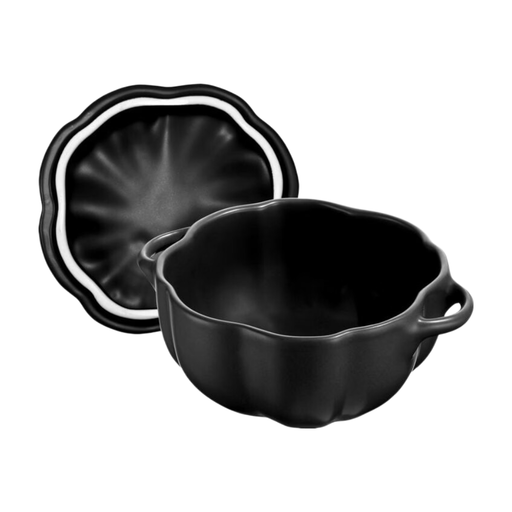
Why it suits this profile: With a capacity of 0.7 litres, this black ceramic cocotte offers more room than compact 0.5-litre models, while remaining a manageable size for individual portions.
The technical details make its limitations clear: it isn’t suitable for a hob or open flame, but can be used in the oven up to 300 °C and in the microwave.
0.7-litre capacity, ceramic lid, 14.8 cm diameter, and suitability for the oven, microwave, freezer and dishwasher.
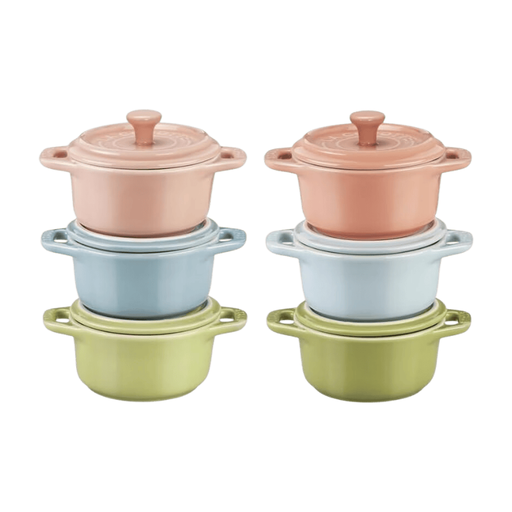
Why it suits this profile: The six-piece set is ideal for serving several individual portions, desserts or gratins, as well as dips and seasonings.
The product details list six ceramic dishes and state that they’re suitable for the oven, microwave, grill, freezer and dishwasher. According to the product information, a lid isn’t included.
Six colours, individual portion sizes and a stated oven-safe temperature of up to 343 °C or 650 °F.
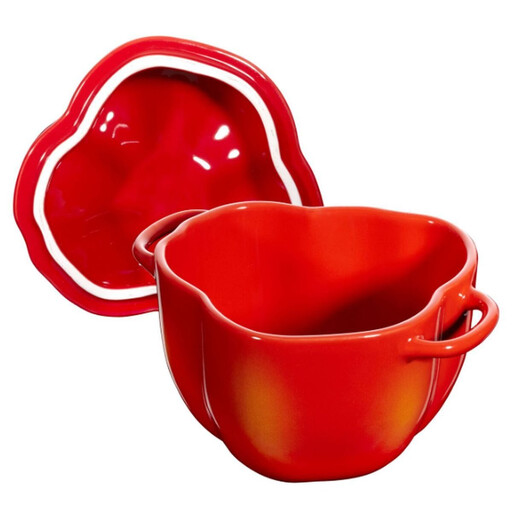
Why it suits this profile: The pepper-shaped design combines a compact size with a capacity of around 0.47 litres, making it a decorative way to serve small dishes.
The product details specify where it can be used and where it can’t: it’s suitable for the oven, microwave and dishwasher, but not for direct heat on a hob.
Around 470 ml capacity, ceramic lid, two side handles, and stated suitability for the oven, microwave, freezer and dishwasher.
We’ve put together a complete, regularly updated list of products that meet these strict selection criteria and fully comply with the safety regulations in force in the EU.
Ceramic is durable, but it isn’t resistant to knocks. For everyday use, follow these steps:
You should also avoid using a ceramic cocotte on the hob unless the manufacturer explicitly says it’s suitable. Direct heat on the hob requires cookware made from materials designed for that purpose.
Many models are microwave-safe, but this must be confirmed in the product details. Lids, decorations and metal components may restrict how you can use them. The STAUB ceramic cocottes mentioned here are listed as suitable for microwave use.
Around 0.4 to 0.5 litres is often enough for desserts, side dishes and smaller soups. If you’d like to make larger bakes or a more substantial main portion, you could choose a model with a capacity of around 0.7 litres.
The ceramic models featured here are designed for use in the oven and microwave, not on hobs or over open flames. Using one on the hob can cause cracks due to uneven heating. Always follow the manufacturer’s instructions.